Information & Media eISSN 2783-6207
2026, vol. 104, pp. 55–63 DOI: https://doi.org/10.15388/Im.2026.104.4
The Power of Digital Silence: A Conceptual Analysis of the ‘Read Receipt’ as a Micro-Power Practice
Eyyüp Akyüz
Independent researcher, Türkiye
eyyupakyuz@gmail.com
https://orcid.org/0009-0009-4835-2965
Abstract. This conceptual study explores the sociological and psychological dynamics of digital silence following ‘read receipts’ in instant messaging. Methodologically grounded in critical conceptual analysis, the study synthesizes empirical findings from cyber-psychology with classical and contemporary sociological frameworks (focusing on power, temporality, and emotional capitalism). The analysis suggests that, in a digital age characterized by speed and forced transparency, reading a message and leaving it unanswered can function as an asymmetrical micro-power domain. On the receiver’s end, this silence may be strategically instrumentalized for boundary maintenance, tactical agency, and consumption-oriented relationship management. Conversely, on the sender’s end, prolonged inaction has the potential to trigger feelings of cyberostracism, which can lead to anxiety and an internalized sense of subjection. Ultimately, the article proposes that digital inaction is not merely a void interruption, but, rather, a structurally laden message through which interacting parties attempt to navigate power dynamics by concealing their true intentions.
Keywords: digital silence; micro-power; read receipt; emotional capitalism; cyberostracism.
Skaitmeninės tylos galia: konceptualinė „skaitymo patvirtinimo“ („read receipt“) analizė kaip mikrogalios praktika
Santrauka. Ši konceptualinė studija nagrinėja sociologinę ir psichologinę skaitmeninės tylos, atsirandančios po „skaitymo patvirtinimo“ momentinėse žinutėse, dinamiką. Metodologiškai tyrimas grindžiamas kritine konceptualine analize, sujungiant kibernetinės psichologijos empirinius tyrimus su klasikinėmis ir šiuolaikinėmis sociologinėmis teorijomis (ypač pabrėžiant galią, laikiškumą ir emocinį kapitalizmą). Analizė rodo, kad skaitmeniniame amžiuje, kuriam būdingas greitis ir priverstinė skaidrumo logika, žinutės perskaitymas be atsakymo gali veikti kaip asimetriškos mikrogalios sritis. Gavėjo pusėje ši tyla gali būti strategiškai pasitelkiama ribų palaikymui, taktiniam veiklumui ir santykių, orientuotų į vartojimą, valdymui. Tuo tarpu siuntėjo pusėje užsitęsęs neveikimas gali sukelti kibernetinės atskirties (cyberostracism) jausmus, kurie gali virsti nerimu ir internalizuotu pavaldumo išgyvenimu. Galiausiai straipsnyje teigiama, kad skaitmeninis neveikimas nėra vien tuščia pertrauka, bet veikiau struktūriškai reikšminga žinutė, per kurią sąveikaujantys asmenys, slėpdami tikruosius ketinimus, mėgina naviguoti galios santykius.
Pagrindiniai žodžiai: skaitmeninė tyla; mikrogalia; skaitymo patvirtinimas; emocinis kapitalizmas; kibernetinė atskirtis.
Received: 2026-04-20. Accepted: 2026-06-01.
Copyright © 2026 Eyyüp Akyüz. Published by Vilnius University Press. This is an Open Access article distributed under the terms of the Creative Commons Attribution Licence, which permits unrestricted use, distribution, and reproduction in any medium, provided the original author and source are credited.
“Whatever remains from all this madness I have lived
Is as treacherous as everything that failed to arrive on time.”
— Bülent Parlak
Introduction
The historical evolution of communication technologies has dramatically accelerated the speed of information transfer while fundamentally redefining the spatial and temporal boundaries of interpersonal interaction. The routine delays inherent to the asynchronous nature of traditional communication forms have been replaced by the expectation of perpetual availability and immediacy, following the central positioning of instant messaging applications in everyday life. The ‘read’, or, commonly termed ‘read receipt’, notifications provided by digital interfaces have not only technically verified that a message has reached the receiver and been consumed, but have also added a layer of absolute transparency to the communication process. However, rather than smoothing communication, this visibility has generated a complex social dynamic and a domain of anxiety shaped entirely around response latency.
The state of inaction following the ‘read/seen’ notification constitutes one of the fundamental crisis areas in the interpersonal communication literature of the digital age. The axiom “one cannot not communicate”, established by Paul Watzlawick et al. (1967) in the pragmatics of human communication, finds a definitive resonance in the digital realm through the practice of leaving messages ‘on read’. In a plane where both parties are aware of the interaction, and where mutual awareness is technologically confirmed, leaving a message unanswered is not merely a cessation or an absence. On the contrary, silence can act as a highly active and heavily laden message – harboring intentions such as de-prioritization, distancing, or establishing dominance – delivered directly to the counterpart.
The primary analytical focus of this study is the power asymmetry generated in interpersonal communication due to such temporal delays. While platform governance and emotional economies provide the broader late-modern conditions facilitating this phenomenon, the core object remains the relational power dynamics enacted between the sender and the receiver. An individual’s retention of the initiative regarding when to respond to a message they have acknowledged reading, thereby confining the counterpart to a digital waiting room, functions as a novel micro-power practice constructed within everyday life.
Methodological Framework and Literature Corpus
This study is designed as a critical conceptual analysis rather than an empirical investigation. The primary methodological objective is not to produce universal empirical generalizations, but rather to offer heuristic, interpretive propositions regarding modern digital communication practices. To achieve this, the logic of synthesis is constructed upon a dual-layered literature corpus. The first layer comprises empirical studies from cyber-psychology and human-computer interaction (e.g., Williams et al., 2000; Kato et al., 2018; Lynden & Rasmussen, 2017) which document the behavioral and emotional responses (such as anxiety or avoidance) triggered by read receipts. The second layer, which forms the primary theoretical backbone of the study, focuses on the sociology of power and temporality (Bourdieu, 2000; Foucault, 1977; Virilio, 1986). Other perspectives, such as Bauman’s (2003) liquid modernity and Illouz’s (2007) emotional capitalism, are explicitly subordinated to support this core framework, illustrating how temporal power operates within modern digital conditions. By employing document analysis, the empirical indicators of ‘waiting’ and ‘visibility’ on digital platforms are critically recontextualized. Consequently, the arguments presented herein should be evaluated as theoretical interpretations of digital power dynamics, inherently contingent upon the users’ relational contexts and emotional investments.
The Arrogance of the Digital Waiting Room: Time, Speed, and Absolute Power
The act of ‘leaving on read’, often perceived as a mundane technological feature in daily communication practices, functions as an asymmetrical display of power where time is politicized when viewed through a sociological microscope. Indeed, the theory of ‘dromology’ (the science of speed), whose foundations were laid by Paul Virilio (1986), reveals that speed – which annihilates distances and confines time to an absolute ‘now’ – is the primary form of power in the modern era. This dictatorship of speed transforms into a structural reality of everyday life in Hartmut Rosa’s (2013) critique of late modernity, where society accelerates technologically and socially. The expectation of perpetual accessibility imposed by instant messaging interfaces is a flawless apparatus of this acceleration. However, in a universe where the pace of life flows at such a dizzying speed, the true analytical tension lies not in the speed itself, but in the sudden, unilateral, and intentional interruption of this accelerated flow.
Pierre Bourdieu provides a profound anatomy of such a moment of interruption – where time turns into an instrument of domination – in his work Pascalian Meditations. Bourdieu removes time from being a physical void measured by clocks, and he positions it directly as a weapon of power. According to him, to have a say over someone’s time is to claim rights over their mind and existence. Bourdieu (2000, p. 228) defines the most naked form of power with this striking sentence: “The all-powerful is he who does not wait but who makes others wait”. The two blue ticks appearing on the digital interface serve as the technical certification of this moment in communication. The sender loses control of their own time the second they realize their message has been read, becoming tethered to the receiver’s initiative to respond. In Bourdieu’s sharp articulation, “waiting implies submission”. When the receiver reads the message and retreats into silence, they lock the sender in a digital waiting room. The one who makes the other wait attempts to establish power by usurping not only the time but also the cognitive energy of the waiting party.
While explaining the tension caused by the power of time, Bourdieu references the trial process of Josef K. in Franz Kafka’s novel The Trial, where the court derives its power entirely from “unpredictability and absolute arbitrariness”. The power held by the person who leaves a message on read and remains silent for hours – or perhaps days – mirrors this Kafkaesque arbitrariness. The sender is dragged into a state of vigilance because they do not know when the digital tribunal will conclude. This ‘absolute uncertainty’ leaves the waiting party defenseless. However, Bourdieu adds a crucial caveat: any time game outside of absolute power is not a unilateral dictatorship but a contract agreed upon by the parties. For digital silence to inflict a wound, create anxiety, or serve as a punishment, the waiting person typically must attribute value to that relationship or that message – they must be engaged in the game (illusio). Consequently, the ‘read receipt’ practice is not merely a communication interruption; it can operate as a profound sociological game of domination where parties silently test each other through time, uncertainty, and expectation.
The Burden of Perpetual Contact and Inaction as a Cognitive Chasm
The time and power equation discussed on a philosophical ground finds sharp behavioral equivalents in daily digital practices. The comprehensive research conducted by Lynden and Rasmussen (2017) on mobile instant messaging applications reveals with empirical data the potential psychological distress caused by the read receipt and the micro-resistance tactics developed against this transparency. The fundamental finding of the research is that the ‘read/seen’ notification mimics the feedback mechanism in face-to-face communication, but, by elevating the action to an involuntary and automatic dimension, it compromises the individual’s autonomy over communication. The digital interface automatically reports the information that the message has been read, transforming communication into an imposition of forced transparency.
Forced transparency confines individuals in a web of availability, which Katz and Aakhus (2002) term ‘perpetual contact’. The surveillance mechanism, as defined by Michel Foucault (1977) through Bentham’s ‘Panopticon’ is resurrected as a digital architecture in instant messaging interfaces. According to Foucault (1977, p. 201), the true power of this architecture lies in its creation of a “conscious and permanent state of visibility”. The automatic ‘read’ report renders the receiver entirely visible (like the inmate in the peripheral ring), while concealing what the observing sender is thinking (the darkness of the central tower).
At this point, Byung-Chul Han (2015), in his work The Transparency Society, takes Foucault’s observation tower a step further. According to Han, the inhabitants of the digital panopticon are not isolated by an external pressure; rather, they illuminate themselves voluntarily. When this voluntary transparency turns into an ideology, it creates a new type of ‘violence’ that renders anything not visible suspicious. The individual instantly sees on that transparent surface that their message has been read, but the ‘silence’ that appears in the midst of absolute transparency can create a massive void of anxiety. As David Maister (1985, p. 115) notes on the psychology of waiting, “unexplained waits feel longer than explained waits”. This ambiguous silence on the digital interface transforms into a chronemic expectancy violation (Kalman & Rafaeli, 2011). The ultimate effect of this violation on the subject is shaped by the ‘reward value’ of the source, framed within Judee Burgoon’s (1978) Expectancy Violations Theory (EVT). A high-reward (high-status) figure leaving a message on read can stretch the victim’s ‘threat threshold’ by generating an allure of inaccessibility, whereas the same inaction from a low-reward source is often directly coded as ‘disrespect’.
Typologies of Silence and Tactical Resistance
It is crucial to analytically differentiate the typologies of digital silence based on relational contexts. Silence on the digital screen does not operate uniformly; it manifests in at least three distinct conditions: (1) as an intentional power move utilized to establish hierarchy and test boundaries; (2) as tactical resistance, where the receiver protects their autonomy against forced panoptic visibility; and (3) as benign neglect resulting from digital cognitive overload, devoid of any manipulative intent. The transition of silence from benign neglect to an instrument of power depends heavily on the relational asymmetry and the emotional investment of the waiting party.
Focusing on the aspect of tactical resistance, Lynden and Rasmussen’s (2017) findings show that the sender’s knowledge that the message has been read creates an immense pressure to respond. Users who wish to escape this tension often employ ‘avoidance strategies’ to avoid triggering the read receipt. Justine Gangneux (2021) conceptualizes the practice of using lock screens and message previews as ‘tactical agency’. The user temporarily suspends the imposition of perpetual accessibility and regains momentary control over their own time. The user chooses to hide behind the digital display to avoid surrendering power over their time, and, as Foucault (1977, p. 202) states, to avoid becoming “the principle of his own subjection”.
This spiral of power deepens as digital silence is utilized strategically between parties. A study by Guest and Chang (2024) on developing romantic relationships reveals how individuals may construct a power domain by enacting ‘intentional violations’ of response times. The receiver’s conscious disruption of the speed norm can be interpreted as an effort at subjectification. Relying on Waller’s (1938) ‘principle of least interest’, the delaying party attempts to seize the reins of control. That delay keeps the waiting party in a state of vigilance, which tends to grant the delaying party hierarchical superiority.
On the other pole, the sender’s experience of the notification is related to uncertainty reduction theory. The message being read and left unanswered often triggers anxiety in the sender, leading to obsessive app-checking behavior. This anxiety may signify the invisible victory of power over the victim. Research conducted by Chou et al. (2022) demonstrates that the silent time frame where a message remains unanswered transforms into a ‘sense-making conflict’ where parties attempt to establish domination over each other’s minds. The read receipt and the subsequent silence act as a digital Rorschach test where both parties project their own insecurities, desires, and hidden agendas.
Covert Power Moves and Emotional Capitalism
From the receiver’s perspective, inaction is not always a random communication mishap. Lucio Buffalmano and Ali Scarlett (2024) define such unprovoked delays as a ‘covert power move’ in interpersonal relationships. The issue appears heavily tied to prioritization and hierarchy design. By delaying the response, the receiver slyly pushes the waiting party into a subservient position while flawlessly staging Erving Goffman’s ‘front stage’ construction. When this illusion is deepened with Zygmunt Bauman’s (2003) ‘liquid modernity’ thesis, the critical chasm between ‘connecting’ and ‘relating’ emerges. The ‘read receipt’ is the technological instrument of these light-cloaked connections: the receiver confirms the connection by reading but refuses to engage by not responding. Digital silence can transform into a ‘waste management’ strategy utilized by the receiver while managing their social capital.
This transformation of digital silence into an instrument of display is directly related to the economic logic of modernity that rationalizes emotions, a concept that Eva Illouz (2007) terms ‘emotional capitalism’. According to Illouz, social relationships have begun to follow the trajectory of economic exchange logic. ‘Leaving on read’ and remaining silent may act as a practice of rational distance management in this emotional marketplace. Leaving the counterpart’s emotional demand unanswered becomes the digital reflection of unilaterally managing the power balance in the relationship.
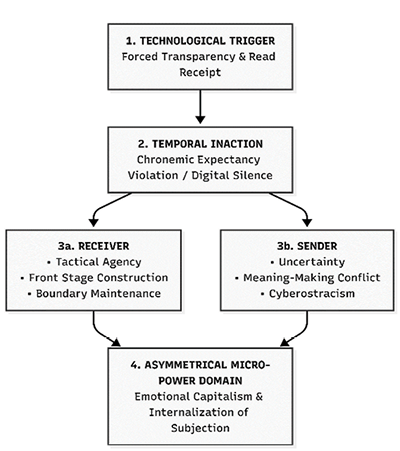
Figure 1. Conceptual model of digital silence and power dynamics
This asymmetrical market logic may trigger profound existential anxiety on the ‘waiting’ side. As Illouz (2007) emphasizes, emotional capitalism paves the way for the construction of a self “defined by its own psychic insufficiencies and flaws”. The pioneering research on ‘Cyberostracism’ by Williams et al. (2000) exposes the anatomy of this psychological distress. According to the researchers, being deliberately ignored in virtual environments threatens four fundamental human needs simultaneously: belonging, self-esteem, control, and meaningful existence. As highlighted in the literature, ostracism can evoke a sense of ‘existential threat’ in the victim.
The temporal course of the crisis created by virtual exclusion is materialized by Kato et al. (2018). Their findings highlight not only the existence of this distress but also its hierarchical relationship that emerges over time. Compared to the ‘delivered’ status, transitioning to the ‘read/seen’ status statistically shortens the onset time of feelings of anxiety, sadness, anger, and guilt in the victim. The read receipt acts as a catalyst accelerating potential psychological tension. In Foucault’s (1977, p. 202) formulation, a person subjected to a field of visibility assumes responsibility for the constraints of power, thus becoming “the principle of his own subjection”. The sender’s self-judgment in the face of inaction suggests that power can become automated in the victim’s mind.
Conclusion
This study has explored with theoretical depth how the ‘read/seen’ indicator transforms into an asymmetrical micro-power instrument within late modernity’s regimes of speed and transparency. The synthesized findings demonstrate that inaction in instant messaging interfaces re-verifies Watzlawick’s (1967) communication axiom in cyberspace: digital silence is not the absence of communication; it may act as a high-intensity war of sense-making conducted by parties over status, expectations, and intentions.
The most fundamental proposition of the research is that in a dromological era where speed has become the norm, the act of ‘delay’ itself can evolve into a mechanism of domination. In Bourdieu’s (2000) terms, “the all-powerfulness of making someone wait” materializes in the digital age in the form of ‘leaving on read’. This control established over the counterpart’s time may act as a form of symbolic violence which unilaterally establishes hierarchy. When read within the context of Rosa’s (2013) acceleration theory, this suggests that suddenly stopping (inaction) at the peak of social speed can be interpreted as a radical display of power.
Secondly, the study has identified that the compulsion of transparency created by the digital panopticon pushes individuals into a tension between ‘tactical agency’ and ‘defensive inaction’. While the knowledge that the message has been read traps the receiver in a domain of absolute visibility, the choice not to respond functions as a type of underground resistance to escape this digital prison. However, this resistance may trigger the feeling of ‘cyberostracism’ on the sender’s end, creating a potential zero-sum conflict zone.
One of the original contributions of the study is outlining how the nature of silence changes according to relational contexts and the “reward value of the source” (Burgoon, 1978). When digital silence is combined with the social capital of the source, it may transform either into a tool of devaluation through the logic of ‘relational waste management’ (Bauman, 2003) or into a mysterious field of allure. Illouz’s (2007) ‘emotional capitalism’ thesis comes into play here, certifying a cold interaction regime where intimacy can turn into a bargaining chip.
In conclusion, digital silence is not the absence of sound; it is an active communication form in which power dynamics are quietly negotiated and reproduced. That void where a message is read and unanswered is a realm of ‘front stage construction’ (Goffman) for the receiver, and a realm of ‘self-subjection’ (Foucault) where the sender may judge themselves. The anxiety generated by digital silence is not merely a technological malfunction, but rather a modern fragility where the individual’s ontological security intersects with the implications of a ‘blue tick’.
Future research focusing on digital silence in hierarchical contexts within professional life (manager-employee relationships), across different cultural perceptions of time (monochronic and polychronic cultures), and the transformative role of AI-assisted response systems will offer vital contributions to the literature on digital micro-power.
References
Bauman, Z. (2003). Liquid love: On the frailty of human bonds. Polity Press.
Bourdieu, P. (2000). Pascalian meditations (R. Nice, Trans.). Stanford University Press.
Bowen, G. A. (2009). Document analysis as a qualitative research method. Qualitative Research Journal, 9(2), 27–40. https://doi.org/10.3316/QRJ0902027
Buffalmano, L., & Scarlett, A. (2024). The social strategist: How to master your social life, raise your status, and win more negotiations. TPM Press.
Burgoon, J. K. (1978). A communication model of personal space violations: Explication and an initial test. Human Communication Research, 4(2), 129–142. https://doi.org/10.1111/j.1468-2958.1978.tb00603.x
Chou, Y. L., Lin, Y. H., Lin, T. Y., You, H. Y., & Chang, Y. J. (2022). Why did you/I read but not reply? IM users’ unresponded-to read-receipt practices and explanations of them. In Proceedings of the 2022 CHI Conference on Human Factors in Computing Systems (CHI ’22) (pp. 1–15). Association for Computing Machinery. https://doi.org/10.1145/3491102.3517496
Foucault, M. (1977). Discipline and punish: The birth of the prison (A. Sheridan, Trans.). Pantheon Books.
Gangneux, J. (2021). Tactical agency? Young people’s (dis)engagement with WhatsApp and Facebook Messenger. Convergence: The International Journal of Research into New Media Technologies, 27(2), 458–471. https://doi.org/10.1177/1354856520918987
Guest, C., & Chang, P. F. (2024). What to expect when you are texting: An exploration of direct mobile messaging expectations among women in developing romantic relationships. The Journal of Social Media in Society, 13(2), 201–222. https://thejsms.org/index.php/JSMS/article/view/1077
Han, B.-C. (2015). The transparency society (E. Butler, Trans.). Stanford University Press.
Illouz, E. (2007). Cold intimacies: The making of emotional capitalism. Polity Press.
Kalman, Y. M., & Rafaeli, S. (2011). Online pauses and silence: Chronemic expectancy violations in written computer-mediated communication. Communication Research, 38(1), 54–69. https://doi.org/10.1177/0093650210378229
Kato, S., Ozawa, Y., & Kato, Y. (2018). Time before negative emotions occur while waiting for a reply in text messaging with read receipt functionality. In ACHI 2018: The Eleventh International Conference on Advances in Computer-Human Interactions (pp. 165–167). IARIA.
Katz, J. E., & Aakhus, M. (2002). Perpetual contact: Mobile communication, private talk, public performance. Cambridge University Press.
Lynden, J., & Rasmussen, T. (2017). Exploring the impact of ‘read receipts’ in mobile instant messaging. Tidsskrift for Medier, Erkendelse Og Formidling, 5(1), 5–34. https://tidsskrift.dk/mef-journal/article/view/28781
Maister, D. H. (1985). The psychology of waiting lines. In J. A. Czepiel, M. R. Solomon, & C. F. Surprenant (Eds.), The service encounter: Managing employee/customer interaction in service businesses (pp. 113–123). Lexington Books.
Rosa, H. (2013). Social acceleration: A new theory of modernity (J. Trejo-Mathys, Trans.). Columbia University Press.
Schwartz, B. (1974). Waiting, exchange, and power: The distribution of time in social systems. American Journal of Sociology, 79(4), 841–870.
Virilio, P. (1986). Speed and politics: An essay on dromology (M. Polizzotti, Trans.). Semiotext(e).
Waller, W. (1938). The family: A dynamic interpretation. Cordon Company.
Watzlawick, P., Bavelas, J. B., & Jackson, D. D. (1967). Pragmatics of human communication: A study of interactional patterns, pathologies, and paradoxes. W. W. Norton & Company.
Williams, K. D., Cheung, C. K. T., & Choi, W. (2000). Cyberostracism: Effects of being ignored over the Internet. Journal of Personality and Social Psychology, 79(5), 748–762. https://doi.org/10.1037/0022-3514.79.5.748
Yıldırım, A., & Şimşek, H. (2018). Sosyal bilimlerde nitel araştırma yöntemleri. Seçkin Yayıncılık.