Acta Paedagogica Vilnensia ISSN 1392-5016 eISSN 1648-665X
2025, vol. 55, pp. 91–107 DOI: https://doi.org/10.15388/ActPaed.2025.55.6
Ciptro Handrianto
State University of Padang, Indonesia
Ahmad Jazimin Jusoh*
Sultan Idris Education University, Malaysia
E-mail: jazimin@fpm.upsi.edu.my
Mansor Abu Talib
UCSI University, Malaysia
Rembulan Catra Banyu Biru
State University of Padang, Indonesia
Ridha Husnul Hayati
State University of Padang, Indonesia
Fitri Dwi Arini
State University of Padang, Indonesia
Abstract. This paper presents up-to-date literature on the drug education curriculum from 2015 to December 2024. It identifies the key elements of the drug education curriculum and implementation of this curriculum in the school setting. We have conducted a systematic review to clearly define methodologies, search strategies, criteria employed, and recommendations of the current studies of the drug education curriculum. Essentially, a 350-page review has been summarized in this paper, and 16 articles from this body of literature are high-quality, prestigous article reviews. Several studies related to drug curriculums from various countries have been highlighted in this paper, along with extracts of components of these curriculums, encompassing the objective, content, experience, and evaluation, for the purpose of developing a new form of a drug education curriculum. This paper has also provided a tabular form of critical elements of the drug education curriculum based on the current literature. According to a review of several highly relevant and related papers, it has been concluded that the drug education curriculum in some countries outlines components and implementation methods to create a moderately high level of drug prevention among students in the school setting. However, there is a need for future studies that would be capable to synthesize the current challenges and develop alternative solutions to the drug education curriculum that are more robust and effective.
Keywords: drug curriculum, psychosocial, school, self-efficacy, systematic review.
Santrauka. Straipsnyje pateikiama naujausia literatūra apie narkotikų švietimo programas nuo 2015 m. iki 2024 m. gruodžio įvairiose pasaulio šalyse. Nurodomi pagrindiniai narkotikų švietimo programos elementai ir aptariamas šios programos įgyvendinimas mokyklose. Sistemine apžvalga siekiama aiškiai apibrėžti metodikas, paieškos strategijas, taikomus kriterijus ir naujausiuose narkotikų švietimo programos tyrimuose pateikiamas rekomendacijas. Straipsnyje pateikiama apibendrinta 350 puslapių santrauka, 16 aukštos kokybės prestižinių apžvalginių straipsnių. Aptariami keli su narkotikų švietimo programomis įvairiose šalyse susiję tyrimai ir šių programų sudedamųjų dalių pavyzdžiai nurodant jų tikslą, turinį, patirtį bei vertinimą, siekiant suteikti narkotikų švietimo programai naują formą. Straipsnyje taip pat pateikiama naujausią literatūrą apibendrinanti svarbiausių narkotikų švietimo programos elementų lentelė. Remiantis kelių labai aktualių ir susijusių straipsnių apžvalga daroma išvada, kad kai kurių šalių narkotikų švietimo programose yra apibrėžti reikiami programų komponentai ir įgyvendinimo metodai, kuriais tikimasi pasiekti pakankamai aukštą narkotikų prevencijos lygį tarp mokyklų moksleivių. Tačiau reikia atlikti tolesnius tyrimus, kurie leistų apibendrinti dabartinius iššūkius ir sukurti alternatyvius, tvirtesnius ir veiksmingesnius sprendimus narkotikų švietimo programose.
Pagrindiniai žodžiai: narkotikų švietimo programa, narkotikų prevencija.
________
*Corresponding author
Received: 18/12/2024. Accepted: 25/08/2025
Copyright © Ciptro Handrianto, Ahmad Jazimin Jusoh, Mansor Abu Talib, Rembulan Catra Banyu Biru, Ridha Husnul Hayati, Fitri Dwi Arini, 2025. Published by Vilnius University Press. This is an Open Access article distributed under the terms of the Creative Commons Attribution Licence (CC BY), which permits unrestricted use, distribution, and reproduction in any medium, provided the original author and source are credited.
In many parts of the world, drug abuse has seen an upsurge among young people since the mid-1990s (Cheung & Cheung, 2019). The phenomenon of substance abuse has become a global issue that incurs significant social, economic, and health costs (United Nations Office on Drugs and Crime, 2019). The widespread availability of drugs, along with new cultural and social norms, access to greater knowledge, and shifting attitudes towards drugs are some of the factors that have deeply influenced the proliferation of this global problem (Jiloha, 2017). Other reasons for the spike in drug abuse among adolescents include limited information pertaining to serious complications of drug abuse, poor academic levels, unhealthy home environment, hedonist mindset, and compromised cognitive functioning (King et al., 2013; Collins, 2019). In the school context, teachers still face challenges with their self-preparedness and teaching competency regarding drug education. Efforts have been made by both government and non-government organizations (NGOs) to develop strategies to meet the challenges posed by young people’s rising drug abuse.
The drug education curriculum has been an urgent subject of academic discussion for decades. A large body of literature, including books and modules, frameworks and governmental policies related to drug education are currently widely available (Meehan, 2017; Lundgren et al., 2018; Rashishi et al., 2018). The element of pedagogy in drug abuse prevention among students is increasingly becoming more crucial in current years. Nowadays, the drug education curriculum seeks to provide newer approaches for students in understanding the impact and consequences of drug abuse. Therefore, a comprehensive integration strategy between a drug prevention curriculum for school programs, co-curriculum activities, and the academic curriculum in classroom, needs to be put in place for the purpose of bolstering drug abuse prevention.
Teachers can play a more significant role in drug abuse prevention among students by improving their teaching competency, having more commitment in the teaching-learning process, and becoming more empathetic counselors rather than strict authority figures. Studies related to the quality of drug education for adolescents have been performed by teachers in schools of both rural or urban areas (Hecht et al., 2018). A number of studies pertaining to the drug education curriculum have provided extensive statistical data, highlighting salient problems in drug use among school students (Marsiglia et al., 2018). A study based on a set of meaningful criteria is needed so that it can collect relevant information in order to explore the quality of the drug education curriculum. This review enables readers to assess summarized, current literature regarding the curriculum of drug education in several countries, thereby enabling them to gain a better understanding and appreciation of this body of knowledge.
For this current project, the researchers have explored an extensive body of literature on drug education that spans across several decades in order to gain a more profound understanding of this subject matter. The review of literature on drug education curriculum comprises peer-reviewed journal articles, books, and governmental reports on education and health over the past 10 years (2015 to December 2024). Due to the availability of such a wide range of literature on school-based drug education, the researchers have attempted to effectively correlate and streamline this information, while focusing on the quality and scope, so that it can effectively contribute to upgrading the drug education curriculum. The structure of this research project is presented in the next section, and it involves a brief description of the methodology employed to review the literature, including the criteria for inclusion, the search method, and a summary of the search results.
To summarize, this review surveys the methodologies employed in various bodies of literature, and thereafter attempts to synthesize the results. Additionally, it also highlights the components of the school curriculum related to drug education and explores how the curriculum is being implemented in schools.
Effective school-based drug education programs must be grounded in sound theoretical foundations that would explain not only how students acquire knowledge, but also how they develop attitudes, behaviors, and resistance strategies toward drug use. This review draws upon three widely recognized theoretical approaches to support both the selection of studies and the interpretation of findings: the Social Cognitive Theory (SCT), the Health Belief Model (HBM), and the Harm Reduction Approach. Each of these frameworks provides distinct but complementary perspectives that can deepen the understanding of the mechanisms behind drug education interventions and their implementation across diverse educational settings.
Bandura’s Social Cognitive Theory (1986) posits that learning occurs in a social context and is facilitated by the reciprocal interaction of behavioral, personal, and environmental factors. Within the context of drug education, SCT emphasizes the role of observational learning (e.g., peer modeling), reinforcement, self-regulation, and – most crucially – self-efficacy. Students who believe they are capable of resisting peer pressure and making informed decisions are more likely to avoid substance abuse. As numerous interventions reviewed in this study incorporate role-playing, skill-building exercises, and peer-led discussions, SCT provides a robust explanatory framework for understanding how these strategies cultivate drug resistance skills (Hecht et al., 2018; Marsiglia et al., 2018).
The Health Belief Model (Becker, 1974) adds another layer of explanation by suggesting that an individual’s readiness to engage in health-related behavior (such as abstaining from drugs) is influenced by several core perceptions: susceptibility to harm, the perceived severity of consequences, the perceived benefits of action, and the perceived barriers to taking that action. This model helps explain why drug education programs that focus on clarifying the long-term health, academic, and social consequences of drug use – while also enhancing students’ perception of their own vulnerability – may be more effective. The HBM is especially pertinent in analyzing studies that integrate health literacy, risk awareness, and decision-making components within school curricula.
The Harm Reduction Approach serves as both a theoretical stance and a practical philosophy. Unlike abstinence-only models, harm reduction acknowledges that some students may experiment with substances, and thus aims to minimize the negative consequences of such behavior (McCarthy, 2024). While more commonly used in community and public health settings, this approach is increasingly being adapted for use in educational programs, especially in contexts where zero-tolerance policies have failed to deter substance use. The integration of harm reduction principles into the curriculum – as seen in programs that teach safer choices, refusal strategies, and contextual awareness – challenges the traditional punitive frameworks and aligns with the global shifts toward more compassionate, evidence-informed drug education (Meehan, 2017; Knopf, 2019).
Taken together, these three theoretical frameworks illuminate different dimensions of drug education: SCT explains how students learn and practice drug resistance, HBM explains why students may be motivated to change their behavior, whereas Harm Reduction explains how to engage students realistically and respectfully, even when abstinence is not immediately achievable. These theories inform the analysis and synthesis of the findings in this review by identifying which components are most effective, under what circumstances, and for which student populations.
The main goal of this review is to identify the components of the school curriculum in relation to drug education. The current literature (2015 to December 2024) was studied for the purposes of collecting information based on academic findings or policies adopted in certain countries. The second step involved was to review the implementation of the drug prevention curriculum in schools. This systematic review followed the PRISMA (Preferred Reporting Items for Systematic Reviews and Meta-Analyses) protocol intended to ensure the methodological transparency and reproducibility.
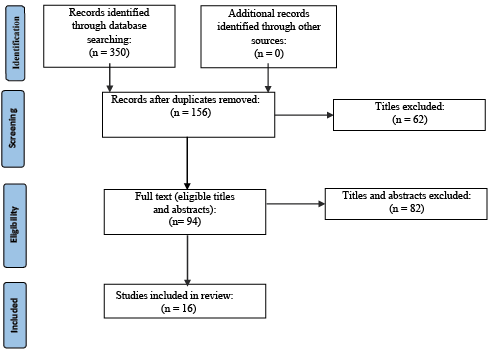
During this period (2015 – December 2024), there emerged several pieces of literature discussing the school drug curriculum at various levels and scope, whereby numerous researchers devoted a great deal of time to conduct multiple studies in this field. This research presented quality data empirically to be accessed by government bodies, academicians, and practitioners involved in the field of drug education and prevention. In reviewing the literature of the drug education curriculum, the search method plays a significant role as it guides the researcher to determine the inclusion criteria of a particular study. Initially, 350 records were identified through database searches and imported into a reference manager (e.g., Mendeley) for duplicate removal. After this process, 156 unique records remained and were further screened. Titles and abstracts were assessed for relevance, and full texts were evaluated by using pre-established criteria.
The most current studies, specifically, from 2015 to 2024, about the curriculum of drug education are already included in this review which also discusses the curriculum pattern of drug education in the last six years. Multiple papers during this six-year-period have been identified for reviewing purpose, after extensive searching. After applying the inclusion and exclusion criteria, only 16 studies were found to meet the eligibility requirements and were included in the final synthesis. These studies offered relevant insights on the structure, components, implementation, and evaluation of school-based drug education curricula.
The strategy used in searching literature involved combining keywords in the search machine database. The keywords are as follows: curriculum, drug education, school, drug abuse, review, study, and evaluation. Databases, including Scopus, Science Direct, Dimension, and Google Scholar, were utilized to find the necessary articles.
Boolean operators such as AND/OR were used to construct search strings. For example, combinations such as (“drug education” AND “school curriculum”) OR (“substance abuse prevention” AND “students”) were applied across all databases. The search covered literature published between January 2015 and December 2024.
The inclusion criteria included:
(a) Quantitative and qualitative study designs;
(b) Published in English;
(c) Current sources from 2015 to December 2024; and
(d) Discussing drug education curriculum.
Whereas, the exclusion criteria included:
(a) Studies not related to the school-based curriculum (e.g., clinical or community-based only);
(b) Articles not in English;
(c) Opinion pieces, editorials, or conference abstracts; and
(d) Studies lacking accessible full text.
|
Review authors |
Date |
Publication details |
|---|---|---|
|
McCarthy, C. |
2024 |
Harm‐reduction approach to drug‐education programming can save students’ lives. Campus Legal Advisor, 24(5), 3–14. |
|
Hansen, W. B., Beamon, E. R., Saldana, S., Kelly, S., & Wyrick, D. L. |
2023 |
DARE/keepin’it REAL elementary curriculum: Substance use outcomes. Plos One, 18(4), e0284457. |
|
Fischer, N. R. |
2022 |
School-based harm reduction with adolescents: a pilot study. Substance Abuse Treatment, Prevention, and Policy, 17(1), 79. |
|
Darcy, C. |
2021 |
Drug education best practice for health, community and youth workers: A practical and accessible tool-kit. Health Education Journal, 80(1), 28–39. |
|
Okamoto, S. K., Helm, S., Chin, S. K., Hata, J., Hata, E., & Okamura, K. H. |
2020 |
The implementation of a culturally grounded, school‐based drug prevention curriculum in rural Hawai’i. Journal of Community Psychology, 48(4), 1085–1099. |
|
Darcy, C. |
2020 |
Precarious positions of understanding: the illicit drug landscape and drug education in Ireland. Irish Educational Studies, 1–13. |
|
Knopf, A. |
2019 |
Free prevention curriculum teaches responsible use, no‐use at the same time. The Brown University Child and Adolescent Behavior Letter, 35(10), 3–4. |
|
Cheung, Y. W., & Cheung, N. W. |
2019 |
Adolescent drug abuse in Hong Kong: Prevalence, psychosocial correlates, and prevention. Journal of Adolescent Health, 64(6), S28–S33. |
|
Okamoto, S. K., Helm, S., Ostrowski, L. K., & Flood, L. |
2018 |
The validation of a school-based, culturally grounded drug prevention curriculum for rural Hawaiian youth. Health promotion practice, 19(3), 369–376. |
|
Tan, H. R., Yee, A., Sulaiman, A. H., Said, M. A., Danaee, M., & Lua, A. C. |
2018 |
Effects of a school-based substance use prevention program on students in Malaysia. Journal of Health and Translational Medicine, 21(1), 40–46. |
|
Borloti, E., García, M. V. H., Jiménez, V. S., & Sudbrack, M. F. O. |
2017 |
Drug use prevention projects in schools in Vitória, Brazil: quality analysis and improvement proposals. Psicologia: Reflexão e Crítica, 30 (1), 1–12. |
|
Chukwu, E. O., Pius, V. T., Fiase, T. M., Haruna, H., Terkuma, C., & Evangeline, A. C. |
2017 |
Effects of substance/drug abuse on the academic achievement of secondary school students in Mkar Metropolis, Gboko, Benue State. Int J Psychol Brain Sci, 2(2), 40–45. |
|
Farrugia, A., & Fraser, S. |
2017 |
Young brains at risk: co-constituting youth and addiction in neuroscience-informed Australian drug education. BioSocieties, 12(4), 588–610. |
|
Afrassiab, S., & Cox, C. |
2016 |
Effect of using only the educational curriculum of a comprehensive substance abuse prevention program on the perception of harm in US elementary students. Journal of Elementary Education, 26(2), 29–39. |
|
Okamoto, S. K., Kulis, S., Helm, S., Lauricella, M., & Valdez, J. K. |
2016 |
An Evaluation of the Ho’ouna Pono Curriculum: A Pilot Study of Culturally Grounded Substance Abuse Prevention for Rural Hawaiian Youth. Journal of Health Care for the Poor and Underserved, 27(2), 815. |
|
Cheloti, S. K., Okoth, U. A., & Obae, R. N. |
2015 |
Effectiveness of school curriculum as a strategy to Curb drug and substance abuse in public secondary schools in Nairobi County, Kenya. International Journal of Educational Science and Research, 5(2), 91–102. |
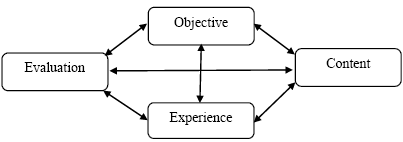
The drug education curriculum is indeed an incredibly broad matter to discuss. It correlates many aspects such as philosophy, sociology, economics, and human development in the education context. In this study, there are four main components of the curriculum, which are interrelated with each other, for the purposes of examining drug education. These components are presented in the curriculum design. Figure 1 explicitly describes the curriculum components of drug education and their correlation.
Objective of Curriculum
This component refers to the aim of teaching-learning in drug education, and considers the aspects of policy, local wisdom, philosophy, and sociological foundations. The objective of the curriculum endeavors to highlight the learning structures of drug education (Gajauskaitė, 2022; Dündar & Kaya, 2023).
Content of Curriculum
This refers to the materials that should be delivered while conducting drug education in schools. Knowledge and skills transmission to the young generation in relation to drug abuse are emphasized. It also considers how the integration of the already existing academic subject matter with information regarding drug education can be performed (Santamaría-Cárdaba & Martínez-Scott, 2023).
Curriculum Experience
The accrued experience of the curriculum promotes teaching-learning with constantly evolving strategies, approaches, and activities, all of which engage both teachers and students. This component is a prime factor in any meaningful undertaking in bringing about effectual change in students with regards to drug abuse. Harnessing and giving priority to curriculum experience is thus vital in making inroads in the battle against drugs, especially among students (Zhukova et al., 2020).
Curriculum Evaluation
Curriculum evaluation is part of curriculum assessment, and is vital in determining the effectiveness of the particular curriculum in drug education among students, and this, in turn, is done by measuring to what extent the curriculum has achieved its goals. In addition, the strategies used by teachers in drug education are measured to determine to what extent these strategies have elicited positive feedback from students in a classroom situation (Sikorska et al., 2023).
|
Elements of Drug Education Curriculum |
||||||||||||||||
|
Administrative strategy |
Practice |
Family and community involvement |
Refusal of commitment |
Explanation |
Avoiding situation |
Learning topic |
Introduction |
Review past lesson |
Activities |
Interactive learning |
Learning media |
Skill |
Discussion |
Material (learning content) |
Teachers’ training |
|
|
McCarthy, 2024 |
✓ |
✓ |
✓ |
✓ |
✓ |
|||||||||||
|
Hansen et al., 2023 |
✓ |
✓ |
✓ |
✓ |
✓ |
|||||||||||
|
Fischer, 2022 |
✓ |
✓ |
✓ |
|||||||||||||
|
Darcy, 2021 |
✓ |
✓ |
||||||||||||||
|
Okamoto et al., 2020 |
✓ |
✓ |
✓ |
✓ |
✓ |
✓ |
✓ |
✓ |
✓ |
✓ |
✓ |
✓ |
✓ |
|||
|
Darcy, 2020 |
✓ |
✓ |
||||||||||||||
|
Cheung & Cheung, 2019 |
✓ |
✓ |
✓ |
✓ |
✓ |
|||||||||||
|
Knopf, 2019 |
✓ |
✓ |
✓ |
|||||||||||||
|
Tan et al., 2018 |
✓ |
✓ |
✓ |
|||||||||||||
|
Borloti et al., 2017 |
✓ |
✓ |
✓ |
✓ |
✓ |
|||||||||||
|
Afrassiab & Cox, 2016 |
✓ |
✓ |
✓ |
✓ |
✓ |
|||||||||||
|
Cheloti, Okoth, & Obae, 2015 |
✓ |
✓ |
✓ |
|||||||||||||
|
Chukwu et al., 2017 |
✓ |
✓ |
✓ |
✓ |
||||||||||||
|
Farrugia & Fraser, 2017 |
✓ |
✓ |
✓ |
|||||||||||||
|
Flynn, Falco, & Hocini (2015 |
✓ |
✓ |
✓ |
|||||||||||||
The drug education curriculum in rural Hawai’i, known as the Ho’ouna Pono Curriculum, actively encourages an exchange of students’ ideas related to drug topics. Students participate in a project-based learning approach in their classroom to practice their skills in avoiding drug abuse. This curriculum also involves family and cultural relations to prevent students from getting involved in drug use. School institutions and communities have a strong sense of commitment to support the government’s policy in drug prevention among students. In the curriculum context, the message of drug prevention is delivered via three strategies, namely, refusal, explanation, and situation. The refusal strategy means that students are trained to refuse drugs offered by their environment. The explanation strategy in the curriculum involves teachers and school administrators who deliver narratives and provide discussions that foster drug prevention, highlighting how succumbing to this threat could pose a grave threat to themselves, and also to their loved ones. The situation strategy enhances students’ awareness and deters them from performing specific actions, such as going to places which can expose them to drugs (Okamoto et al., 2020). These strategies can be applied in the drug education curriculum to prevent drug use among students in a comprehensive manner.
The implementation of a drug education curriculum through physical and health education courses for secondary high school students is scheduled once a week for the academic quarter. There exists a format for the sessions, such as an introduction, a review of the past lesson, a discussion, learning media, an interactive classroom, and games. This format cannot be separated from prevalent cultural concepts in order to support students in their resolve to refuse drug use in their lives. Community plays a significant role as psychosocial protection in drug abuse prevention, and thus the curriculum is designed primarily by collecting the required data and information from community stakeholders and government bodies. It is necessary that the relevant parties such as principals, teachers, counsellors, and parents be involved to validate the curriculum. The keystone of the drug education curriculum is that it has to supply the requisite skills, besides developing and fortifying the character of the students (Okamoto et al., 2020). This is especially so because the students of today need not only to protect themselves from the threat of drugs as they also have to create a safe and positive environment for their subsequent generation of youngsters.
The approach of drug education in Ireland involves both formal and non-formal settings. The formal setting can be defined as students joining teaching-learning in the classroom using contents materials on drug prevention topics. The curriculum is integrated into the Social, Personal and Health Education (SPHE) course. In these classes, students discuss issues related to drug abuse topics and participate in group activities. Meanwhile in a non-formal approach, students engage in activities such as youth volunteer work, social care and services, and also cultural activities, all of which are designed to improve their understanding and awareness, with the ultimate goal of avoiding drug abuse (Darcy, 2020).
In Hong Kong, drug education has been promoted actively since the 1980s. The government and NGOs are heavily invested in conducting drug prevention programs in communities and schools. The programs are run in close coordination with the Narcotic Division of the Government. It is part of a collaborative effort by all parties to eradicate drug use among youth and students. A multitude of methods and media tools such as video, TV broadcasts, seminars, and drug information centres are intensively used to promote drug education. The curriculum of drug education in school is infused and molded into existing subject materials. Training is provided by the schools to improve teacher competency in drug abuse prevention. Students also participate in community hall sessions to gain more exposure about drug and substance abuse (Cheung & Cheung, 2019).
The Drug Policy Alliance (DPA), an organization in the US, has introduced a new curriculum for drug education in schools, namely Safety First: Real Drug Education for Teens. This curriculum aims to give support to students so that they have a safer experience when using drugs, without adopting a heavy-handed stance, exemplified by slogans such as “War on drugs”, which tends to put undue stress on students. The organization believes that students, for the most part, only experiment with drugs, and they only need to be taught how to control themselves in order to minimize the harm to themselves. The DPA likens its curriculum approach with sex education, by arguing that if there is a high likelihood of individuals engaging in a certain action that is not condoned but seems inevitable, there might as well be proper education to mitigate the entailing risks (Knopf, 2019). However, this is not part of the US policy in general because, in some areas, such as Hawai’i, drug is still strictly prohibited. This curriculum also does not seem viable in Malaysia and Hong Kong, two nations which impose severe regulations in regards to drug usage among students, and show virtually no tolerance.
Drug education in Malaysia has been implemented in various programs such as Tunas, INTIM Camp, and PIP. In 2003, The Malaysian Ministry of Education released a curriculum for drug education known as the Integrated Curriculum of Secondary Schools. This curriculum integrates drug education in six public secondary high school subjects, namely, Language, Civics, Science, Physical and Health Education, Life Skills, and Religious Education. This effort requires the competency and creativity of classroom teachers to imbue drug prevention messages into their teaching materials (Tan et al., 2018). However, this curriculum leaves questions regarding implementation because there has been a lack of supporting guide books, rubrics, and learning assessments released by the Ministry.
In 2004, the Ministry of Education of Brazil introduced a drug use prevention course for trainee teachers. This course was implemented by the University of Brasilia to prepare their students before taking on teaching positions in elementary and secondary public schools. In addition, it is part of the teachers’ training in drug prevention in schools. The goals of this curriculum are to: (1) Enable teachers to handle drug prevention tasks in their school; (2) Train teachers to form innovative strategies in school drug education; (3) Provide integrated learning materials for drug abuse prevention; (4) Involve the participation of youth; (5) Create a positive climate and improve the academic performance of students; and (6) Encourage family and community participation in drug abuse prevention (Borloti et al., 2017).
In Missouri, the United States, the curriculum of drug education focuses on identifying the correlation between peer pressure and drug abuse. It also emphasizes that there have been some misperceptions about drug abuse consequences, family relationships, and mental health, in relation to drug prevention. Several activities in the drug curriculum have been implemented such as discussions, role-playing, worksheet activities, active learning strategies, and games. In a social context, parents and the community are involved in drug prevention among students, by actively participating and supporting the anti-drug efforts of schools. Schools also actively facilitate counselling sessions for individuals or groups in school drug education (Afrassiab & Cox, 2016).
Moreover, Cheloti et al. (2015) conducted a study about the effectiveness of secondary school curriculum to curb substance abuse among students in Nairobi, Kenya. They found that the content of the curriculum relating to drug prevention was still lacking. Meanwhile, some activities such as sports, drama, poems, and musical performances were found to be more effective in drug abuse prevention in schools. The study concluded that the administrative strategy of the school drug curriculum was not adequately effective.
A study by Chukwu et al. (2017) found that drug and substance abuse had a negative effect on the academic performance, truancy, and ability to concentrate among students in secondary schools in Nigeria. This study recommended that a drug education curriculum should be implemented to prevent drug use in a classroom context. The schools were encouraged actively to design club activities for students. They also worked to establish counselling education by involving parents and the community to collaborate in preventing drug and substance abuse among students in Nigerian secondary schools.
In Australia, the curriculum of Alcohol and Other Drugs (AOD) is conducted by structured lesson plans and student activities. Teachers develop interactive teaching activities to discuss AOD with their students. The classroom setting plays a significant factor to deliver anti-drug and substance abuse messages among students. There are some activities such as games, quizzes, and exercises that can be designed for students to improve their awareness and understanding related to drug use (Farrugia & Fraser, 2017).
In addition, Flynn et al. (2015) emphasized that the school-based drug curriculum must focus on four identified categories, namely, Life Skill Training (LST), Skill for Adolescent (SFA), Drug Abuse Resistance Education (DARE), and Project Alert. These four categories contribute to helping teachers in drug education among students in a classroom situation. LST is designed to teach students the skills to avoid drugs and trains students to resist peer pressure by providing normative information. SFA develops social skills, self-esteem, decision-making skills, and communication skills. DARE involves uniformed police participation to deliver critical drug and substance abuse information to students. Meanwhile, Project Alert integrates the social influence model and normative education, which places the focus on teachers’ self-efficacy and students’ perspectives pertaining to use of drugs.
This systematic review has examined 16 studies on school-based drug education curricula from 2015 to 2024, uncovering not only geographical and cultural variations but also the underlying patterns which point to evolving theoretical orientations in the drug education practice. Three prominent frameworks, specifically, the Social Cognitive Theory (Bandura, 1986), the Health Belief Model (Becker, 1974), and the Harm Reduction Approach (McCarthy, 2024), offer useful lenses for interpreting these developments.
A central theme across the reviewed studies is an increasing focus on skill-building and behavioral rehearsal, rather than solely on information transmission. Programs such as Keepin’ it REAL in the U.S. (Hansen et al., 2023) and Ho’ouna Pono in Hawai’i (Okamoto et al., 2020; 2018) implement interactive classroom strategies that emphasize role-playing, peer discussion, and self-regulation – all of which resonate with the Social Cognitive Theory’s concept of self-efficacy and modeling. These programs acknowledge that students must not only understand the risks of drugs but also feel confident in resisting peer pressure and making healthy decisions.
In line with the Health Belief Model, several curricula aim to influence students’ perceived susceptibility and severity of drug-related harm. For example, Tan et al. (2018) describe a Malaysian program which integrates drug education into science and religious studies to make the consequences culturally and morally salient. Similarly, Borloti et al. (2017) highlight how Brazilian teacher training programs include reflective activities that challenge students’ assumptions about drug use and deepen awareness of personal risk factors.
However, differences in the theoretical orientation across countries are evident. Western contexts (e.g., the U.S. or Australia) are increasingly exploring harm reduction strategies (Knopf, 2019; Fischer, 2022), while acknowledging that some youth may experiment with drugs and need risk-minimization strategies. For instance, the “Safety First” curriculum in the U.S. encourages open discussion, self-monitoring, and supportive peer environments – i.e., practices that align with McCarthy’s (2024) advocacy for non-punitive approaches that prioritize safety over abstinence. By contrast, the Asian programs (e.g., Malaysia or Hong Kong) adopt stricter zero-tolerance policies rooted in legal mandates and cultural taboos, leaving less room for an open dialogue or differentiated messaging (Cheung & Cheung, 2019).
This contrast raises critical questions about the cultural transferability of curricula. Programs emphasizing harm reduction or social influence models may be effective in one context but clash with the moral or religious values in another. For instance, while role-playing refusal strategies may work well in U.S. classrooms, they may fail to align with more didactic, teacher-centered pedagogies in the (more) conservative educational systems.
Another recurring issue is the gap between the curriculum design and its implementation. Several studies (e.g., Cheloti et al., 2015; Afrassiab & Cox, 2016) highlight the lack of teacher preparation, inadequate resources, and limited integration into core subjects. In Kenya, the curriculum exists on paper but lacks operational guidelines, assessments, or clear instructional time. This reflects a breakdown between the policy intention and the classroom reality, a gap that must be addressed through systemic support, training, and curriculum evaluation.
Moreover, family and community involvement remains underutilized. Although programs like Ho’ouna Pono (Okamoto et al., 2020) and the Brazilian model (Borloti et al., 2017) emphasize community collaboration, most curricula reviewed here place responsibility solely on schools. This contradicts SCT’s emphasis on environmental reinforcement and social support systems. Drug education, therefore, must evolve beyond the classroom and involve caregivers, religious leaders, and local institutions to reinforce consistent messaging.
To sum up, the reviewed studies reveal promising practices but also expose uneven application of theory and persistent implementation challenges. The most effective curricula appear to:
• Embed drug education in broader life skills;
• Emphasize practice-based, culturally resonant content;
• Provide teacher training and community linkages; and
• Incorporate continuous feedback and evaluation mechanisms.
These insights are not only descriptive but explanatory, showing how drug education success is shaped by a combination of a pedagogical approach, cultural compatibility, institutional readiness, and theoretical coherence. Future research should move beyond effectiveness studies to explore the sociopolitical dynamics that would enable or constrain the curriculum impact across the contexts.
Grounded in theoretical perspectives such as the Social Cognitive Theory and Harm Reduction, this systematic review of the drug education curriculum has examined the components and implementation procedures necessary to build effective drug prevention protocols for students in school settings. The literature used in this paper are current articles (2015 to December 2024) because there is a need to synthesize fresh academic perspectives of the new challenges of drug education with the already existing body of knowledge. The reviewed papers outline and discuss the drug education curriculums in several countries.
Rather than focusing solely on country-by-country descriptions, this review identifies broader themes and trends that have emerged across the contexts. One key finding is the growing emphasis on participatory and skills-based learning approaches, such as refusal skills, peer modeling, and interactive learning formats. These reflect a theoretical shift from didactic information delivery to student-centered learning, aligned with the Social Cognitive Theory and the Health Belief Model.
Based on the review, several points in drug education curriculums in a number of countries have been highlighted. The curriculums of drug education in Hawai’i and Ireland deliver substance use in certain courses. Hawai’i uses the curriculum of physical education course to teach drug prevention, while Ireland includes drug education in the curriculum of the Social, Personal and Health Education (SPHE) course. These two countries implement the curriculum for secondary high school students, where the drug education curriculum is only integrated into some activities in their courses. To compare, Malaysia and Kenya have similarities in integrating drug abuse prevention for secondary school curriculum in certain courses. In 2004, the Ministry of Education of Malaysia released the Secondary School Integrated Curriculum to integrate drug abuse prevention in a classroom situation. The policy emphasized that six secondary school subjects namely, Religious studies, Civics, Physical and Health Education, Science, Languages, and Life Skills should incorporate drug-related topics in their teaching-learning process. Similarly, the Kenya Institute of Education (KIE) in 2002 designed a secondary school curriculum that covers drug and substance abuse in five courses: Religious Education, Social Education, Ethics, Biology, and Life Skills.
Across regions, contrasting approaches were observed: the Western countries such as the United States and Australia, increasingly incorporate the harm reduction principles that support informed, realistic decision-making by students. Meanwhile, the Asian nations, such as Malaysia and Hong Kong, maintain abstinence-based approaches, reflecting stricter legal and cultural attitudes toward drug use. These patterns indicate that sociocultural values and policy environments significantly shape the curriculum content and its delivery.
This study hopes to present up-to-date, common denominators that can be effectively utilized in drug prevention curriculums all over the world, while taking cognizance and giving due regard to the socio-cultural, economic and political diversity that exists within each country.
In conclusion, effective drug education curricula appear to share four core features: (1) Integration into existing academic subjects, (2) Emphasis on student engagement through active and experiential learning, (3) Inclusion of a culturally relevant content and strategies, and (4) Grounding in established behavioral or health education theories.
Future research should go beyond effectiveness measurement and explore how contextual factors – such as the school climate, teacher training, policy mandates, and community support – facilitate or hinder the implementation of the drug education curricula across diverse settings.
These theoretical insights also helped to identify patterns across countries and provide an explanatory synthesis of how and why certain curriculum components are more successful in specific educational and cultural contexts.
References
Afrassiab, S., & Cox, C. (2016). Effect of using only the educational curriculum of a comprehensive substance abuse prevention program on the perception of harm in US elementary students. Journal of Elementary Education, 26(2), 29–39. Retrieved from http://pu.edu.pk/images/journal/JEE/PDF/3_v26_2_16.pdf
Ahmadi, J., & Hasani, M. (2003). Prevalence of substance use among Iranian high school students. Addictive Behaviors, 28(2), 375–379. https://doi.org/10.1016/S0306-4603(01)00246-5
Blackman, S. (2004). “Chilling Out”: The Cultural Politics of Substance Consumption, Youth and Drug Policy. New York: Open University Press.
Borloti, E., García, M. V. H., Jiménez, V. S., & Sudbrack, M. F. O. (2017). Drug use prevention projects in schools in Vitória, Brazil: quality analysis and improvement proposals. Psicologia: Reflexão e Crítica, 30(1), 1–12. https://doi.org/10.1186/s41155-016-0056-2
Cheloti, S. K., Okoth, U. A., & Obae, R. N. (2015). Effectiveness of school curriculum as a strategy to Curb drug and substance abuse in public secondary schools in Nairobi County, Kenya. International Journal of Educational Science and Research, 5(2), 91–102. Retrieved from http://repository.seku.ac.ke/handle/123456789/1773
Cheung, Y. W., & Cheung, N. W. (2019). Adolescent drug abuse in Hong Kong: Prevalence, psychosocial correlates, and prevention. Journal of Adolescent Health, 64(6), S28–S33. https://doi.org/10.1016/j.jadohealth.2018.09.016
Chukwu, E. O., Pius, V. T., Fiase, T. M., Haruna, H., Terkuma, C., & Evangeline, A. C. (2017). Effects of substance/drug abuse on the academic achievement of secondary school students in Mkar Metropolis, Gboko, Benue State. International Journal of Psychological and Brain Sciences, 2(2), 40–45. https://doi.org/10.11648/j.ijpbs.20170202.12
Collins, E. A. (2019). Understanding the risk factors and lived experiences of prescription drug abuse among Canadian children and adolescents: A retrospective phenomenological study. Journal of Child & Adolescent & Substance Abuse, 28(4), 266–275. https://doi.org/10.1080/1067828X.2020.1736223
Darcy, C. (2021). Drug education best practice for health, community and youth workers: A practical and accessible tool-kit. Health Education Journal, 80(1), 28–39. https://doi.org/10.1177/0017896920950338
Darcy, C. (2020). Precarious positions of understanding: the illicit drug landscape and drug education in Ireland. Irish Educational Studies, 40(1), 87–99. https://doi.org/10.1080/03323315.2020.1779111
Dündar, E., & Kaya, N. (2023). GIS integration into geography curriculum in Türkiye: A case study evaluation. Acta Paedagogica Vilnensia, 50, 129–142. https://doi.org/10.15388/ActPaed.2023.50.8
Farrugia, A., & Fraser, S. (2017). Young brains at risk: Co-constituting youth and addiction in neuroscience-informed Australian drug education. BioSocieties, 12(4), 588–610. https://doi.org/10.1057/s41292-017-0047-2
Fischer, N. R. (2022). School-based harm reduction with adolescents: a pilot study. Substance Abuse Treatment, Prevention, and Policy, 17(1), 79. https://doi.org/10.1186/s13011-022-00502-1
Flynn, A. B., Falco, M., & Hocini, S. (2015). Independent evaluation of middle school-based drug prevention curricula: a systematic review. JAMA Pediatrics, 169(11), 1046–1052. https://doi.org/10.1001/jamapediatrics.2015.1736
Gajauskaitė, R. (2022). A curriculum in the post: A reading of the first foreign language sixth grade curriculum through a posthumanist lens. Acta Paedagogica Vilnensia, 49, 159–173. https://doi.org/10.15388/ActPaed.2022.49.11
Hansen, W. B., Beamon, E. R., Saldana, S., Kelly, S., & Wyrick, D. L. (2023). DARE/keepin’it REAL elementary curriculum: Substance use outcomes. Plos One, 18(4), e0284457. https://doi.org/10.1371/journal.pone.0284457
Hecht, M. L., Shin, Y., Pettigrew, J., Miller-Day, M., & Krieger, J. L. (2018). Designed cultural adaptation and delivery quality in rural substance use prevention: an effectiveness trial for the Keepin’it REAL curriculum. Prevention Science, 19(8), 1008–1018. https://doi.org/10.1007/s11121-018-0937-y
Jiloha, R. C. (2017). Prevention, early intervention, and harm reduction of substance use in adolescents. Indian Journal of Psychiatry, 59(1), 111–118. https://doi.org/10.1016/S2215-0366(16)00002-X
KIE. Kenya Institute of Education. (2002). Secondary school curriculum; Christian religious education syllabus. Nairobi: Kenya institute of education.
KIE. Kenya Institute of Education. (2008). Secondary school curriculum; Life skills syllabus. Nairobi: Kenya institute of education.
King, K., Vidourek, R., & Merianos, A. (2013). Sex and grade level differences in lifetime nonmedical prescription drug use among youth. The Journal of Primary Prevention, 34(4), 237–249. https://doi.org/10.1007/s10935-013-0308-1
Knopf, A. (2019). Free prevention curriculum teaches responsible use, no‐use at the same time. The Brown University Child and Adolescent Behavior Letter, 35(10), 3–4. https://doi.org/10.1002/cbl.30415
Lundgren, L., Salas-Wright, C. P., Amodeo, M., Krull, I., Hall, T., & Alford, D. P. (2018). Advancing alcohol and other drug education among social work faculty: An evaluation of social work faculty immersion training. Journal of social work practice in the addictions, 18(1), 49–70. https://doi.org/10.1080/1533256X.2017.1412977
Marsiglia, F. F., Kulis, S. S., Kiehne, E., Ayers, S. L., Libisch Recalde, C. A., & Sulca, L. B. (2018). Adolescent substance-use prevention and legalization of marijuana in Uruguay: A feasibility trial of the keepin’it REAL prevention program. Journal of Substance use, 23(5), 457–465. https://doi.org/10.1080/14659891.2017.1358308
McCarthy, C. (2024). Harm‐reduction approach to drug‐education programming can save students’ lives. Campus Legal Advisor, 24(5), 3–14.
Meehan, C. (2017). “Junkies, Wasters and Thieves”: School-Based Drug Education and the Stigmatization of People Who Use Drugs. Journal for Critical Education Policy Studies (JCEPS), 15(1), 21–38. Retrieved from https://www.jceps.com/wp-content/uploads/2017/03/15-1-5.pdf
Okamoto, S. K., Helm, S., Chin, S. K., Hata, J., Hata, E., & Okamura, K. H. (2020). The implementation of a culturally grounded, school‐based drug prevention curriculum in rural Hawaii. Journal of Community Psychology, 48(4), 1085–1099. https://doi.org/10.1002/jcop.22222
Okamoto, S. K., Helm, S., Ostrowski, L. K., & Flood, L. (2018). The validation of a school-based, culturally grounded drug prevention curriculum for rural Hawaiian youth. Health promotion practice, 19(3), 369–376. https://doi.org/10.1177/1524839917704210
Okamoto, S. K., Kulis, S., Helm, S., Lauricella, M., & Valdez, J. K. (2016). An Evaluation of the Hoʻouna Pono Curriculum: A Pilot Study of Culturally Grounded Substance Abuse Prevention for Rural Hawaiian Youth. Journal of Health Care for the Poor and Underserved, 27(2), 815–833. https://doi.org/10.1353/hpu.2016.0061
Rashishi, P., Kazemi, S., & Shokouhi, M. (2018). Comparison of the Effect of Teaching Methods, Group Discussion and Curriculum on Knowledge about Drug Abuse in High School Male Students in Bushehr. Boushehr Danesh Entezami, 9(33), 97–115. Retrieved from https://www.magiran.com/p2400408
Republic of Kenya. (2008). National strategy on prevention, control and mitigation of drug and substance abuse, 2008 – 2013. Nairobi: Government printers.
Santamaría-Cárdaba, N., & Martínez-Scott, S. (2023). Global education in the spanish educational policies of elementary and primary education: Utopia or reality?. Acta Paedagogica Vilnensia, 50, 52–69. https://doi.org/10.15388/ActPaed.2023.50.4
Sikorska, I., Pendenza, M., Goncharenko, M., Myroshnychenko, N., & Rtyshchev, S. (2023). Intercultural dimension of internationalisation of higher education and intercultural learning in formal and non-formal education: The experts’ views from Italy and Ukraine. Acta Paedagogica Vilnensia, 51, 63–83. https://doi.org/10.15388/ActPaed.2023.51.4
Tan, H. R., Yee, A., Sulaiman, A. H., Said, M. A., Danaee, M., & Lua, A. C. (2018). Effects of a school-based substance use prevention program on students in Malaysia. Journal of Health and Translational Medicine, 21(1), 40–46. Retrieved from https://jummec.um.edu.my/article/view/12179/7923
United Nations Office on Drugs and Crime (2019). UNODC World Drug Report 2019. https://reliefweb.int/report/world/unodc-world-drug-report-2019
Zhukova, O., Fjodorova, I., & Iliško, D. (2020). Novice teachers’ beliefs and knowledge about education for sustainable development. Acta Paedagogica Vilnensia, 44, 34–44. https://doi.org/10.15388/ActPaed.44.3