Ekonomika ISSN 1392-1258 eISSN 2424-6166
2026, vol. 105(2), pp. 84–102 DOI: https://doi.org/10.15388/Ekon.2026.105.2.5
Muhamet J. Spahiu
Assistant Professor, PhD
Faculty of Economics, Isa Boletini University, Kosova
E-mail: muhamet.spahiu@kolegjibiznesi.com
ORCID iD: https://orcid.org/0000-0001-8552-0432
Lorenc Gordani
Associate Professor, PhD
Faculty of Law, Tirana Business University College, Albania
E-mail: lorenc.gordani@tbu.edu.al
ORCID iD: https://orcid.org/0009-0002-4078-667X
Esat A. Durguti*
Full Professor, PhD
Faculty of Economics – University Isa Boletini - Mitrovicë, Kosova
E-mail: esat.durguti@umib.net
ORCID iD: https://orcid.org/0000-0002-5982-3664
Qazim Tmava
Full Professor, PhD
Faculty of Economics – University Isa Boletini - Mitrovicë, Kosova
E-mail: qazim.tmava@umib.net
ORCID iD: https://orcid.org/0000-0002-3738-8649
Abstract. This study empirically investigates the factors associated with economic freedom, enabling governmental leadership structures to take preventive measures against factors that undermine economic freedom and further promote its strengthening. Our research aims to identify the factors that influence the establishment or promotion of economic freedom, by considering variables such as judicial independence, property rights, the gender diversity index, the legal enforcement of contracts, and regulatory trade barriers. The data applied in this research cover the period from 2010 to 2023, employing a panel data regression. The study’s findings indicate that property rights, the gender diversity index, and regulatory trade barriers have a significant influence on economic freedom, whereas the legal enforcement of contracts has a significant negative influence. A particularly challenging result emerged regarding judicial independence, as it was found to have a statistically insignificant influence. The empirical discoveries presented in this research have significant implications for policymakers in the analyzed countries. Furthermore, the results provide valuable insights for policymakers regarding the improvement of existing national policies and addressing deficiencies that may negatively affect economic freedom.
Keywords: Economic freedom, institutional factors, panel data.
________
* Correspondent author.
Received: 05/07/2025. Accepted: 16/03/2026
Copyright © 2026 Muhamet J. Spahiu, Lorenc Gordani, Esat A. Durguti, Qazim Tmava. Published by Vilnius University Press
This is an Open Access article distributed under the terms of the Creative Commons Attribution License, which permits unrestricted use, distribution, and reproduction in any medium, provided the original author and source are credited.
This article discusses how some judicial indicators impact trade balance and economic freedom. Many authors study economic balance, and there is always more to do. Despite the unambiguous behavioral benefits of regulations limiting people’s freedom, other psychological implications may be less readily apparent but equally useful or significant to policymakers. Aksoy et al. (2020), for instance, emphasize that regulations have the power to shape people’s perceptions of the topics they regulate. Even while market-economic systems are superior to other systems in producing material resources, they can, for example, be distinguished by disparities in wealth and income. According to Berggren and Nilsson (2020), some people can earn and accumulate more resources than others if they are better equipped to take advantage of the opportunities a market economy provides. According to the analysis conducted by the researcher Stryzhak (2025), in the Western Balkan countries and beyond, multidimensional variations have been observed both in the direction and strength of causality between institutional components (such as human capital and control of corruption) and economic growth, in the context of their potential candidacy for European Union membership. The independence of judicial systems is fundamental to economic development since it helps in protecting property rights and the effective enforcement of contracts. Such a policy fosters a more predictable investment environment, reduces regulatory trade barriers, and ultimately leads to an increased economic freedom (Touchton & Tyburski, 2022; Abouharb, 2013). These conclusions are further promoted by effective institutions that provide simplicity in governance and sound legal regulations to businesses and investors (Čižo et al. 2020). The recent research highlights that gender diversity in business boards has economic advantages, in particular, in the settings in which the judicial system works efficiently and the regulatory frameworks are effective, protecting property rights and ensuring that markets are accessed fairly (Gavana et al. 2023). Additionally, Salifu et al. (2024) completed a balancing analysis looking at the effect of legal systems and the enforcement of property rights on the financial markets and financial institutions in Sub-Saharan Africa, by employing the GMM and SURE approach. The discoveries of the research reveal that sound legal systems and property rights lead to financial development and reinforce the premise that trade openness and elimination of restrictive barriers are a driving force to economic freedom and competitiveness.
The Western Balkans is a region marked by a challenging transition to the market. For over 25 years, the Economic Freedom Index (EF) has demonstrated that economic openness benefits people worldwide. The same is true for nations that remove trade restrictions and permit unrestricted international trade (Smith, 2020). Starting with this perspective, evaluating the EF has long been common in certain domains, including multivariable statistical analysis and econometric analysis (Atan et al. 2024). The legal systems of the Western Balkans are leading the way in the balancing of economic freedom with the efficiency of the judiciary. Aiming for European Union integration, these countries have the dual challenge of reforming their judiciaries and developing EF that could spur growth and attract foreign investment. The main prerequisites for European Union admission are the rule of law, independence of the court, and efficiency of legal institutions (Boškovič, 2021). A stable environment that promotes the expansion of economic activities as a means of supporting EF is created in great part by this legislative framework. Nonetheless, more recent objective data on Judicial Independence (JI), both de facto and de jure, clearly support earlier findings that de facto JI is robustly and extremely significantly connected with economic freedom, but de jure JI is not systematically related. Furthermore, the institutional environment affects the impact of de facto JI (Voigt et al. 2015). Successful market economies, for instance, rely on governments that protect private property rights. Safeguarding private persons from the state’s capricious violations of their rights may be even more crucial for sustained economic growth than the public enforcement of private contracts (Acemoglu & Johnson, 2005). Nowadays, the Gender Disparities Index (GDI) has significantly improved the workforce and also affected another balance, which exerts a significant impact on balancing the economic freedom (Misra & Kumar, 2023). This is consistent with the overall evidence in the world: an increased female labor force participation has been reported to strongly improve productivity and institutional trust, both of which are associated with an increased economic freedom in the OECD economies (Cuberes & Teignier, 2016). In the same spirit, the IMF has in recent years focused its studies on gender gaps in the labor market, while noting that, in certain countries, these could increase the GDP by up to 35% (IMF, 2018). Gender inclusion is, therefore, a social justice aim as well as an economic liberalization driver. However, there are many barriers stated by the governments or public and private institutions. Economic stakeholders are protected from the unanticipated effects of unexpected policy changes, non-tariff barriers, corruption, and preferential treatment of certain companies or sectors by the stronger oversight mechanisms that democracy inherently provides over government power and the economy (Bjørnskov & Schröder, 2023).
This article aims to bridge the gap in the understanding of the interplay between judicial independence, economic freedom, and trade balance in transition economies, and specifically the Western Balkans. It is of relevance to stress that this research is unique, particularly for the economies studied, but it may contribute to transition economies or economies that possess equivalent characteristics. It analyzes the effect of judicial independence and institutional robustness on the economic performance of these economies, particularly market-based transitions. Additionally, the article explores the role of gender disparities in shaping economic freedom, especially in regions undergoing significant reforms. Through these interconnections, the article offers some pertinent points on how judicial systems and gender inclusion may lead to economic growth, trade balance, and long-term stability, which would guide policymakers in the Western Balkans and shed light on other similar circumstances. The article intends to examine the interrelationships among economic policies, institutional frameworks, and sustained economic growth. To create a connection between the objective of the article and the expectations, we have formulated the research questions that constitute the core of the study: a) Do judicial aspects, such as de facto independence, affect economic freedom and trade balance in transition economies? b) What is the interplay between institutional robustness and economic strategies in the context of market-oriented transitions in the Western Balkans?, and c) How do disparities between genders influence workforce economic freedom and balance, especially in transition economies? To ensure a coherent alignment with the research questions, this study seeks to empirically examine the following hypotheses:
H1: Judicial independence has a positive influence on economic freedom.
H2: Property rights have a positive effect on economic freedom.
H3: Gender diversity positively influences economic freedom.
H4: Effective enforcement of contract law improves economic freedom.
H5: Regulatory trade barriers harm economic freedom.
Examination and verification of the aforementioned hypotheses were completed by employing the fixed effects regression approach upon the completion of numerous valuable econometric tests. In this landscape, our research aims to provide valuable input in several directions. First, this was achieved by offering empirical evidence to fill the gap in both the theoretical and empirical aspects. Second, we implemented this by incorporating the latest data and applying a modern econometric approach. Finally, we ensured relevance by providing evidence that will challenge key stakeholders, both from the perspective of policymaking and the implementation of these agencies.
The Economic Freedom of the World index determines how much economic freedom is supported by national institutions and laws. Individual choice, free trade, and the ability to compete in markets are the main pillars of economic freedom. These are followed by the safety of people and privately held property (Gwartney et al. 2022). By utilizing a dataset comprising indicators such as the Economic Freedom Index (EF), Judicial Independence (JI), Property Rights (PR), Gender Disparity Index (GDI), legal enforcement of contracts (2F_contr.), and Regulatory Trade Barriers (RTB), we delve into how these variables influence the economic freedom of the region. EF is considered the symbolic criterion for a business-friendly environment. Countries’ rankings rise and decline due to a single country’s economic efforts (Lawson et al. 2020). The research performed by Dialga and Vallée (2021) concludes that the EF gains broader legitimacy when the scores are calculated while using endogenous weighting models. To ensure economic freedom, states need JI. In the spirit of Dove’s (2015) study, the outcomes advocate that, as JI intensifies inside a condition’s court of last resort, so does a state’s overall EF score, along with each of the subcomponent index scores. Independent judicial systems exist to preserve individuals’ rights against interference from the government and majoritarian influences. Residents’ property rights are predominantly dependent on the judiciary’s willingness and capability to control the political branches of power. According to Sharm’s (2025) bibliometric analysis of Scopus publications (1942–2022), economic freedom research has increased meaningfully in the last ten years, mostly in developed countries, with an emphasis on its relationship to growth.
Despite this, Touchton and Tyburski (2022) emphasize that upholding the rule of law is critical for fostering economic advancement from the standpoint of contract enforcement and property rights protection. Tsouli (2022), in analyzing EU countries within the context of financial inclusion, poverty, and income inequality, concludes that the rule of law is positively associated with financial inclusion. This is because, without government pledges to abstain from confiscating property or levying confiscatory tax rates on earnings, investment capital will be discouraged. Parliamentarian systems, which integrate both legislative and executive authorities into one, exhibit fewer representatives with the veto power and more volatile policies than presidential systems (Tsebelis, 2022). Generally speaking, democracy is more credible than autocracy since it is less expensive to remove leaders. In this mindset, the evidence presented by Daly (2024) promotes that, within democracies, systems of checks and balances or the separation of powers contribute to the strengthening of the necessary actors for governmental actions. The importance of state and local legal and law enforcement systems has increased. The rule of law, inclusive property rights protection, and cross-state economic freedom measures are the three main pillars of free economic institutions. Property rights and legal frameworks are crucial to economic growth (Cicen, 2023). Ogilve and Carus (2014) assert that the property rights and legal system subindex alone could be a valuable subnational indicator of institutional quality. In the European continent, there is a demographic predominance of women over men, highlighting the importance of maintaining gender parity and ensuring equal rights for all individuals (Tur-Sinai et al. 2022). The restriction of essential liberties serves as a direct barrier to the authentic economic empowerment of women. Despite substantial improvements in socio-economic development objectives, it is relevant to emphasize that no European nation has attained complete gender equality, which includes equal opportunities and rights for all genders (Gallego-Sosa et al. 2021; Restrepo et al. 2021). Enhancing women’s access to remunerative employment and incentivizing both genders to balance professional commitments with familial responsibilities is necessary. According to Pirju et al. (2024), this can be accomplished by improving wage-setting procedures that support the creation of fair compensation guidelines for equivalent jobs. How frequently are various structures used in an economy, considering how businesses integrate a variety of contract enforcement techniques into cohesive governance frameworks? From this vantage point, the authors Sayed and Abedelrahim (2024) contend that the ideal way to conceptualize economic development is as a progression from diverse components, such as property rights, government integrity, and contract enforcement mechanisms, to a more extensive one. For more details, according to Atiyah et al. (2024), effective enforcement of legal contracts significantly enhances economic freedom by providing a secure environment for businesses to operate, reducing transaction costs, and promoting investor confidence. Researchers such as Nam et al. (2023) have found that economies with strong legal systems that ensure contract enforcement tend to attract more domestic and foreign investments, thereby fostering greater economic activity and development.
Additionally, the negative correlation between relational behavior and relationship conflict is altered by contract enforcement (Gan et al. 2024). Therefore, in order to engage in and benefit from the present wave of globalization, nations should encourage economic freedom and ease of doing business (Chala, 2024). Economic freedom is wasted by many of the trade restrictions imposed in the past. March et al. (2017) discovered that nations are less likely to raise their level of freedom the higher their initial level is, and that ethnolinguistic fractionalization is linked to larger subsequent increases in economic freedom. They found that there is little to explain changes in freedom in countries with high levels of initial freedom, initially high incomes, and that did not receive foreign support. More freedom, greater economic freedom, fewer restrictions, and economic growth are of relevance regarding this point. This way of thinking assumes that both the freedom to succeed and the discipline of failure that free markets provide are essential for productive entrepreneurship. The authors Jakšić, Erjavec, and Cota (2021) examined the trade constraints affecting the countries of Central, Eastern, and Southeastern Europe, which previously operated under centralized economies and are now predominantly members of the European Union. The authors propose that utilizing panel data methods indicates that the elimination of regulatory trade barriers influences the expansion of international trade, hence fostering conditions conducive to economic freedom. Ineffective political institutions, for instance, give in to these pressures, and barriers to both local and foreign competition are becoming more and more pronounced (Sayed & Abedelrahim, 2024; Jaksic et al. 2021). This endeavor is directed at more wealth creation. Even though there are still several hurdles to free movement, all EU members are committed to lowering these barriers.
Other obstacles to free movement have grown in significance in recent years, whereas the importance of tariffs is gradually diminishing (Jaksic et al. 2021). This definition is rather neutral, and it should be noted that the word ‘barrier’ has a negative connotation. Therefore, any tool that restricts or inhibits international trade in contrast to free trade would be considered a trade barrier. Although it is widely acknowledged that free trade boosts economic growth and productivity, most nations impose trade restrictions of some kind for a variety of reasons. Fernandez (2021) provides a fairly impartial definition of trade barriers. It is widely acknowledged that free trade boosts economic growth and productivity, but most countries impose trade restrictions of some kind for a variety of reasons.
To examine the influence of judicial independence, poverty rights, gender diversity index, 2F contracts, and regulatory trade barriers on the Economic Freedom Index, a sample consisting of six Western Balkan countries, covering the period from 2010 to 2023, results in a total of 84 observation periods. The panel data are derived from the Fraser Institute and are strongly balanced. These data were structured and adjusted for analysis by using the statistical package Stata. The motivation for employing these data lies in the fact that the construction of the Economic Freedom Index relies on approximately 45 components, subcomponents, or indicators. Moreover, it is significant to underline that each component or subcomponent is ranked from 0 to 10 during its evaluation, where ‘0’ represents the lowest rating, whereas ‘10’ stands for the highest value (Gwartney et al. 2023; p. 15). Therefore, by adhering to this valuation methodology, in their entirety, variables contained within our research are expressed within the 0-to-10 rating range, which provides favorable conditions to avoid concerns in the econometric context, such as the normality of distribution, multicollinearity, heteroscedasticity, or other tests. Furthermore, a more detailed explanation of these variables will be provided in the next section.
To accomplish the proposed objectives, this research incorporates a total of six variables, with EF designated as the dependent variable and five independent variables (JI, PR, GDI, 2Fcontr, and RTB). The classification, definitions, acronyms, and measurement approach of these variables are comprehensively outlined in Table 1.
|
Classification |
Definition |
Acronyms |
Measurement |
|
Dependent variable |
Economic Freedom Index |
EFI |
In line with the methodology utilized by the Fraser Institute, the evaluation of these variables covers approximately 45 components or subcomponents. Each component is rated on a scale from ‘0’ (indicating the lowest score) to ‘10’ (indicating the highest score). |
|
Independent variable |
Judicial Independence |
JI |
|
|
Property Rights |
PR |
||
|
Gender Diversity Index |
GDI |
||
|
Contract Law Enforcement |
2Fcontr. |
||
|
Regulatory Trade Barriers |
RTB |
Source: Authors’ compilation.
Adhering to the methodology and principles presented in the 2023 Annual Report by Gwartney et al. (2023), EF is measured and ranked through indicators such as the size of the government, legal institutions, property rights, access to sound monetary systems, international trade freedom, and regulations affecting market dynamics. The PR is essential to promoting investment and economic development, while JI ensures the impartial implementation of legal frameworks along with the defense of civil rights. The GDI measures the extent of women’s engagement in economic and institutional activities, signaling progress towards equality and inclusive growth. Previous studies (Atiyah et al. 2024; Gallego-Sosa et al. 2021; Restrepo et al. 2021; and Lawson et al. 2020) shape the integration of these issues. Whereas, Nam et al. (2023) guide the choice of 2Fcontr as a variable that is seen as crucial for fostering a stable business environment, while RTB is examined concerning their effects on international commerce and market competitiveness (Gan et al. 2024).
Therefore, based on the characteristics provided by the panel data, we have adopted the econometric approach of regression to test the impact of the variables on economic freedom. In such studies, various econometric approaches are commonly employed; however, considering the nature of the panel data across countries where the objective is to assess individual characteristics, we applied the fixed-effects regression approach after verifying the hypothesis on model suitability based on the ρ-value of the Hausman test. The rationale behind applying this approach is to evaluate random or fixed effects between the economies under consideration. Furthermore, in order to evaluate whether the data exhibit potential endogeneity concerns, a Two-Stage Least Squares (2SLS) approach was also performed. The fixed effects regression model presents several important distinctions in the analysis of panel data. First, it controls for unobserved heterogeneity across observational units by eliminating the influence of time-invariant characteristics that could bias the estimation of coefficients. Second, this model provides more reliable results when the objective is to analyze variations within each unit (for instance, within a specific country, such as in our instance) over a given period, while focusing on longitudinal rather than cross-sectional variation. Third, compared with random effects or mixed models, the fixed effects approach reduces the risk of correlation between the independent variables and the error term, which makes it more suitable when there is suspicion of such relationships and ensures more consistent and unbiased estimations. On the other hand, the fixed effects technique relies on the assumption that any individual economy can influence or skew the independent variables or outcomes (Bai, Choi, & Liao, 2021). This justifies the presumed existence of a correlation within the error term of the dependent and independent variables. Fixed-effects modeling overcomes the influence of time-invariant attributes, ensuring that we can calculate the clear consequence of the predictors on the outcome variable. Thus, the mathematical formula expressed in our specific case is as follows:
EFi,t = β0 + β1(JIi,t) + β2(PRi,t) + β3(GDIi,t) + β4(2Fcontr.i,t) + β5(RTBi,t) + εit
Where: EFi,t – indicates the dependent variable, β1 to β6– indicates the coefficients of independent variables, JI1 to RTB5 – indicates the independent variables covered in the research, i – indicates the individual effects within the economies included in the exploration, t– indicates the period over which the study was performed, and, finally, εit – indicates the predicted likely error.
This examination effort provides an executive summary in Table 2, covering the preliminary comprehensive results regarding the mean, Standard Deviations (SD), and the minimum and maximum values of the data. In our research paper, the analysis is done by using various measures such as EF, JI, PR, GDI, 2Fcontr, and RTB, which could allow us to investigate and elaborate on interactions among them within the context of the Western Balkan economies. This multidimensional approach provides an in-depth analysis of how judicial performance and economic freedom interact and influence each other, becoming essential for understanding the broader socio-economic dynamics at play.
|
Description |
EF |
JI |
PR |
GDI |
2Fcontr. |
RTB |
|
Mean |
7.198 |
4.744 |
4.799 |
0.941 |
3.445 |
7.305 |
|
SD |
0.361 |
0.750 |
0.445 |
0.071 |
0.373 |
0.980 |
|
Min |
6.450 |
3.450 |
3.980 |
0.820 |
2.850 |
5.720 |
|
Max |
7.731 |
6.280 |
5.601 |
1.000 |
4.831 |
9.250 |
|
J – bera |
5.658 |
4.168 |
5.558 |
11.621 |
11.991 |
6.268 |
|
ρ – value |
0.039 |
0.124 |
0.042 |
0.043 |
0.003 |
0.023 |
|
Obs |
84 |
84 |
84 |
84 |
84 |
84 |
Source: Authors’ calculations.
Considering the statistics listed in Table 2, it is notable that the EF reveals that the countries evaluated over the observation period demonstrate an appropriate environment for economic activity across the researched regions, with a mean value of 7.198 and a standard deviation (SD) of 36.1%. The result, therefore, implies a substantial level of economic freedom, often defined by feasible corporate operations, trade liberalization, and limited government interference. An additional supportive issue for EF is Judicial Independence (JI), which has a mean of 4.744, implying a variability in judicial independence within systems. PR is displayed with a mean value of 4.799 and an SD of 44.5%, which means that it is in the middle range of the scale, indicating a modest level of enforcement of PR.
Furthermore, the GDI is exceptional with a high mean close to 1, specifically, 0.941, and an SD of 7.0%. The results obtained argue by themselves that gender equality has been nearly attained across these regions, demonstrating the successful policies designed and executed for gender integration and equality in access to healthcare, education, and economic involvement. Legal Enforcement of Contracts (2Fcontr.) indicates moderate efficacy in enforcing contracts, with an average value of 3.445 and an SD of 37.3%. The diversity signifies that even though certain locations may have competent legal systems to manage contract disputes, others may suffer from a lack of legal consistency or efficiency. Lastly, RTB scores a mean of 7.305, which suggests the presence of severe trade obstacles that may include taxes, restrictions, and non-tariff barriers. The Jarque-Bera test was employed to evaluate the normality of the data distribution included in the research, relying on the likelihood values, it is observed that all parameters exhibit an abnormal distribution, except for JI, which was found to be insignificant in statistical terms (ρ = 0.124) under the confidence level of α = 0.05. Normality of errors is not essential for the validity of Fixed or Random Effects estimators, as their consistency derives from asymptotic properties rather than distributional assumptions (Baltagi, 2008; Wooldridge, 2010).
Results from correlations provide a nuanced view of how different aspects of governance and social equity are interlinked within the regions studied. They highlight the complex interdependencies that can inform policy and decision-making processes aimed at improving economic and judicial environments.
|
EF |
JI |
PR |
GDI |
2Fcontr. |
RTB |
VIF |
|
|
EF |
1.000 |
“-“ |
|||||
|
JI |
0.028 |
1.000 |
1.81 |
||||
|
PR |
0.489*** |
0.320*** |
1.000 |
1.63 |
|||
|
GDI |
0.365*** |
-0.332*** |
-0.000 |
1.000 |
1.21 |
||
|
2Fcontr. |
0.620*** |
0.077 |
0.553*** |
0.107 |
1.000 |
1.50 |
|
|
RTB |
0.371*** |
0.506*** |
0.064 |
-0.007 |
-0.095 |
1.000 |
1.45 |
|
VIF mean |
“-“ |
“-“ |
“-“ |
“-“ |
“-“ |
“-“ |
1.52 |
Note: *** indicates significance at 1% level, ** indicates significance at 5% level, and * indicates significance at 10% level.
Source: Authors’ calculations.
The relations between extensively examined variables remain positive thoughout the analysis. The slight correlation between JI and EF displays that JI increases can miss or fail to produce enhanced EF results. The data display a moderate correlation between PR and GDI, even though PR and GDI display an interaction coefficient value of 0.489 and 0.365, respectively. The study results display that enhanced EF within economies leads to intensified PR enforcement and greater GDI. Economies demonstrating raised EF levels tend to show better contract law enforcement according to the findings from EF and 2Fcontr. It also has a moderate positive correlation with RTB, suggesting that more independent judicial systems may coexist with higher regulatory trade environments. The widespread correlation between these variables was obtained across the data presented in Table 3. Gujarati (2004) emphasizes that if any of the coefficients included in the analysis exceed the threshold of 0.75, potential multicollinearity issues may arise.
Nevertheless, with the objective to ensure robustness, we conducted the VIF analysis, which is considered a more effective approach when dealing with panel data. Following the recommendations of Wooldridge (2012), in order to confirm the absence of multicollinearity issues, none of the individual variables should exceed a value of 5. Upon analyzing the outcomes offered in Table 3, it is detected that the highest VIF value is recorded for JI at only 1.81, even though the lowest value is reported for the Gender Disparity Index at just 1.21. Further supporting this argument is the mean VIF value, which stands at 1.52, thereby reinforcing the conclusion that multicollinearity is not a concern in this analysis.
To conduct preliminary analyses on panel data, particularly when applying econometric approaches such as random-effects or fixed-effects regression, performing a unit root test is essential. In this study, the Levin-Lin-Chu test was applied to assess whether the data are stationary at the level or after differencing. The results are presented in Table 4 and include additional preliminary analyses, which are further discussed in Section 4.4 regarding the model adequacy.
|
Designation of the Tests |
||
|
chi2(5) |
ρ-value |
|
|
Hausman test |
221.45 |
0.0000 |
|
Ramsey RESET test |
F(3, 76) = 0.923 |
0.4356 |
|
Levin-Lin-Chu unit root – at level |
Statistic |
ρ-value |
|
EF |
-11.1662 |
0.0000 |
|
JI |
-6.7072 |
0.0007 |
|
PR |
-4.3981 |
0.0090 |
|
GDI |
-5.4772 |
0.0078 |
|
2Fcontr. |
-24.9834 |
0.0000 |
|
RTB |
-4.1429 |
0.0032 |
Source: Authors’ calculations.
Based on the obtained results, the data are found to be stationary at level I(0), confirming the appropriateness of the proposed approach. All test statistics are below the significance threshold of α = 0.05. In this context, applying cointegration tests is unnecessary, as these tests are only relevant when the data are stationary in first differences, I(1), or higher (Baltagi, 2021, p. 322).
The applied empirical strategy aimed to explore the existence of an interplay between economic freedom and other determinant variables identified in the study. In this section, the necessary tests will be discussed in the context of advancing the research robustness, which leads to reliability and accuracy in model selection. The empirical results from Table 5 offer significant insights into the effects of various factors on the dependent variable under study, analyzed while using both random and fixed effects models. Additionally, to the issues addressed in the previous sections, empirical analysis has been conducted to evaluate whether the utilized data exhibit potential concerns regarding heteroskedasticity. In this sense, we employed the Breusch–Pagan/Cook–Weisberg test, which resulted in ρ = 0.928, which is a value greater than α ≥ 0.05. Breusch and Pagan (1979) emphasized that heteroskedasticity arises when the variance of some disturbance terms differs from the variance of the remaining disturbance terms, particularly when the probability value is less than α ≤ 0.05. Beyond this, according to the Ramsey test, there is no evidence of omitted variable bias in the random effects model (ρ = 0.436).
Besides the diagnostic tests mentioned above, it is necessary, in the panel data analysis, to explore possible concerns of endogeneity. In response to this, Two-Stage Least Squares (2SLS) regression was estimated, the results of which are presented in the third column of Table 5. The Durbin score statistic (χ² = 1.117, ρ = 0.290) and the Wu-Hausman statistic (χ² = 1.017, ρ = 0.317) are both insignificant, thus providing strong support that endogeneity does not play a role in the estimated specification. Another factor to take into account in the 2SLS method is connected to the sufficiency of instruments. Validity of the instruments was measured by using the Sargan test (ρ = 0.684) and Basmann’s test (ρ = 0.642). The insignificant outcomes in both tests clearly show that the instruments are specified properly, and that they suit the model. Such results indicate the quality of 2SLS estimates and support the strength of the overall econometric model.
|
Random effect |
Fixed effect |
2SLS |
||||
|
Β |
ρ ≥ [z] |
β |
ρ ≥ [z] |
β |
ρ ≥ [z] |
|
|
JI |
-0.151 |
0.000 |
0.019 |
0.733 |
0.148 |
0.630 |
|
PR |
0.210 |
0.000 |
0.152 |
0.025 |
0.519 |
0.008 |
|
GDI |
1.056 |
0.001 |
1.533 |
0.004 |
1.006 |
0.005 |
|
2Fcontr. |
0.514 |
0.000 |
-0.132 |
0.048 |
0.678 |
0.000 |
|
RTB |
0.208 |
0.000 |
0.075 |
0.008 |
0.204 |
0.000 |
|
Intercept |
2.614 |
0.000 |
4.842 |
0.000 |
2.684 |
0.000 |
|
Breusch–Pagan/Cook–Weisberg |
0.121 |
0.928 |
“-“ |
“-“ |
“-“ |
“-“ |
|
R2 |
0.734 |
“-“ |
0.228 |
“-“ |
0.732 |
“-“ |
|
Wald chi2 |
215.37 |
0.000 |
“-“ |
“-“ |
223.78 |
0.000 |
|
F-test |
“-“ |
“-“ |
10.580 |
0.000 |
“-“ |
“-“ |
|
Durbin (score) chi2 |
“-“ |
“-“ |
“-“ |
“-“ |
1.117 |
0.290 |
|
Wu-Hausman F(1,70) |
“-“ |
“-“ |
“-“ |
“-“ |
1.017 |
0.317 |
|
Sargan |
“-“ |
“-“ |
“-“ |
“-“ |
1.675 |
0.642 |
|
Basmann |
“-“ |
“-“ |
“-“ |
“-“ |
1.493 |
0.684 |
Source: Authors’ calculations.
The Hausman test was employed to determine which of the two applied models is more suitable for the given case. Based on the test results (ρ = 0.000 – refer to the test values reported in Table 4), a preference for the fixed effects model is suggested due to systematic differences in coefficients between the random and fixed effects models. An additional argument supporting the robustness of the econometric approach is the F-test coefficient of 10.58 with ρ = 0.000, indicating the stability of the model. Furthermore, considering the R² value of 0.228, it can be interpreted that 22.8% of the selected variables explain economic freedom. Based on the outcomes produced by the econometric approach, the findings are consistent with theoretical assumptions and expectations. Moreover, a comparative assessment of the results derived from the fixed effects regression and the Two-Stage Least Squares (2SLS) approach indicates that, although minor variations in the estimated coefficients are observable, the statistical significance of the independent variables in relation to economic freedom throughout the examined period remains unchanged. In light of these findings, the subsequent analysis and interpretation of the results will be based primarily on the fixed effects specification, as it provides a consistent and reliable framework for evaluating the determinants of economic freedom within the study context. Among the five variables included in the analysis, four have demonstrated statistically significant effects from an econometric perspective.
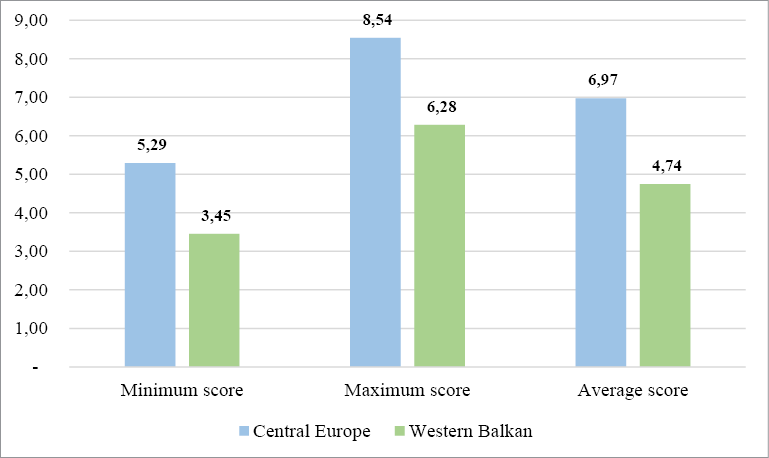
Based on the results presented in Table 5, it is important to highlight that a surprising result was produced for the variable of judicial independence (JI), which showed a positive influence on EF, although with a statistically insignificant effect. These discoveries contrast with the assertions made by Feruni et al. (2020), who found that economies with a strong legal system tend to have a higher level of economic freedom, which, in turn, relates to an increase in foreign investment levels. In a similar vein, Dove (2015) also emphasized that economies with a high degree of JI create conditions for a higher level of EF. At a first glance, this observation may seem surprising. However, upon explicitly analyzing the Judicial Independence (JI) index for the period under review in the Western Balkan economies, it becomes apparent that these countries have consistently faced challenges in improving this index. To further validate this conclusion, a comparison between Central Europe (Austria, Belgium, Czechia, Germany, Slovakia, and Slovenia) and the Western Balkans reveals significant differences. The comparability of the indexing clearly highlights the disparities in evaluation, which, in turn, influences the statistical insignificance of the outcomes when compared to the Central European economies. To make available a visual representation of this indexing, Figure 1 presents a comparative overview between these two panels.
Poverty Rights (PR) exhibited a statistically significant influence at a 0.05 confidence level, with a positive coefficient of 0.152. Additionally, this finding indicates a positive interplay between PR and the valuation of EF. Specifically, for every one-unit increase in PR, the EF index increases by 0.152 units, assuming all other variables remain constant. Recent and previous academic studies have reached similar conclusions. Liotti (2024), for example, on the grounds of studying 12 Eurozone countries, discovered a favorable interaction between these factors. Likewise, Touchton and Tyburski (2022) underline the need for the rule of law and poverty rights as two fundamental elements influencing economic freedom favorably. Along the same ideology, Van (2020) also advocates for a good interaction between economic freedom and poverty rights. Besides, GDI has demonstrated a statistically significant impression at a 0.01 significance level, indicating a positive interplay between GDI and EF. In other words, these results suggest that, for every one-unit increase in GDI, there is a corresponding positive increase of 1.533 units in EF. This issue has consistently been at the center of academic discussions and explorations, as efforts to bridge this gap and promote gender equality in employment remain ongoing. Even though our results indicate a notable improvement, there are still opportunities for further progress in reducing this disparity. Our findings align with the academic studies conducted by Tur-Sinai et al. (2022), who contend for a positive interplay between GDI and EF, emphasizing that, in the European background, there exists a demographic predominance of women over men, underscoring the importance of maintaining gender equality and ensuring equal rights for all individuals. Analogous conclusions were reached by Gallego-Sosa et al. (2021) and Restrepo et al. (2021), who highlight that, despite considerable progress toward achieving socio-economic objectives, no European Union country has attained full gender equality yet.
Source: Fraser Institute
The model suggests that 2Fcontr., based on the coefficient value ß = -0.132 and ρ = 0.048, has exhibited a statistically significant influence on economic freedom at a 0.05 significance level. The findings of this study indicate that, for every one-unit increase in this indicator, given its negative sign, economic freedom decreases by 0.132 units, assuming that the ceteris paribus condition holds. These results are expected, since these countries have continuously been criticized for the insufficient performance of their legal systems, specifically in contract enforcement. Academic research, such as Atiyah et al. (2024), considering these two components, has concluded that efficient enforcement of legal contracts considerably increases economic freedom by providing security and a suitable environment for business activity. Conversely, the inadequate enforcement of contracts has the opposite influence, increasing uncertainty for businesses. Similarly, Nam et al. (2023) have emphasized a significant interplay for economies with strong legal systems, which offer suitable mechanisms for contract enforcement and, at the same time, tend to attract international investments. As an overall conclusion, based on the reported results, Western Balkan countries must undertake considerable efforts to overcome weaknesses in contract enforcement by creating a pleasant business environment. The results of the model confirm a positive interplay between trade RTB and EF, which is an argument supported by ß = 0.075 with ρ = 0.008, thereby implying that the countries analyzed have successfully managed to eliminate trade barriers. This argument is further emphasized in Table 2, where it is noted that this component has a mean value of 7.305, despite the fact that the lowest recorded value is 5.72. These results indicate that every unit increase in this indicator is reflected positively in the increase of EF. Our study’s findings resonate with the works of authors such as Chala (2024), Jaksic et al. (2021), Fernandez (2021), and March et al. (2017), who, overall, emphasize a positive interaction between RTB and EF.
The current research explores several determinants recognized as institutional factors in balancing economic freedom for Western Balkan countries, covering the period from 2010 to 2023. The slight variation indicates uniformity in economic policies and their implementation, suggesting that these regions either share a common economic governance framework or have individually achieved similar levels of economic freedom. The econometric strategy applied in this study is the fixed-effects regression approach. The discoveries derived from descriptive statistics indicate that the countries included in the analysis exhibit an average index value of 7.2 out of a maximum score of 10. Additionally, the results of the econometric strategy reveal a statistically significant relationship between the gender diversity index, property rights, 2F contracts, regulatory trade barriers, and economic freedom. Conversely, the results concerning judicial independence indicate a positive but statistically insignificant effect on economic freedom. At first glance, this discovery may seem surprising; however, it is important to emphasize that the average assessment stands at 4.74 out of a total of 10 index points. Conclusions drawn from this observation provide clear indications that governmental structures interfere in the judicial system, which is a concern consistently highlighted in international reports.
Although this study enriches the understanding of the link between open access and the independence of courts, it is accompanied with some limitations. First, the data used end in 2023; including one additional year of information would hardly change the revealed pattern, although this would require a fundamental redesign of the dataset as well as the analytical framework. Second, the use of the fixed effects (FE) model depends on the assumption of variable stationarity within the context of the time length, as well as potential issues related to endogeneity and instrumental variables. Furthermore, to address these methodological challenges, such as the lack of instrumental variables and the possibility of endogeneity (in our specific case, the 2SLS approach was implemented), the limitation is somewhat mitigated in our case. These impediments add weight to the argument in favor of future research that would explore the observed relationships through diversified model specifications, wider time spans, and the use of additional socio-economic or institutional variables.
Based on the empirical findings, it is evident that strengthening property rights, promoting gender diversity, ensuring effective contract enforcement, and reducing trade barriers significantly contribute to the advancement of economic freedom in the Western Balkans. As a result of these conclusions, the governments of the observed countries should undertake concrete measures to further improve their economic freedom index. First, property legislation should be reinforced through digitalization processes, simplification, and acceleration of judicial procedures. Second, women’s participation in the labor market and entrepreneurship should be encouraged. Third, judicial processes for contract enforcement should be modernized and advanced. Lastly, it is necessary to modernize customs operations at the border points and limit the bureaucracy that is based on historical legacies to align the markets with the EU standards. These measures would create more pleasant conditions of sustainable economic growth and increase the economic freedom in the countries.
The authors gratefully acknowledge the support and contributions that made this research possible.
There is no target funding to report.
The authors declare no conflict of interest.
Abouharb, M. R., Moyer, L. P., & Schmidt, M. (2013). De Facto Judicial Independence and Physical Integrity Rights. Journal of Human Rights, 12(4), 367–396. https://doi.org/10.1080/14754835.2013.812461.
Acemoglu, D., & Johnson, S. (2005). Unbundling institutions. Journal of Political Economy, 113(5), 949-995. https://doi.org/10.1086/432166.
Aksoy C. G., Carpenter C. S., De Haas R., Tran K. D. (2020). Do laws shape attitudes? Evidence from same-sex relationship recognition policies in Europe. European Economic Review, 124, Article 103399. https://doi.org/10.1016/j.euroecorev.2020.103399.
Atan, M., Atan, S., & Gökmen, Ş. (2024). Ranking of countries according to the index of economic freedom with multicriteria decision-making methods. Athens journal of business & economics, 10(2), 109-120. https://doi.org/10.30958/ajbe.10-2-2.
Atiyah, G.A., Ibrahim, A.I., and Jasim, A.A. (2024), Enforcement of smart contracts in cross-jurisdictional transactions, International Journal of Law and Management, Vol. ahead-of-print No. ahead-of-print. https://doi.org/10.1108/IJLMA-06-2024-0220.
Bai, J., Choi, S.H. & Liao, Y. (2021). Feasible generalized least squares for panel data with cross-sectional and serial correlations. Empirical Economics. 60, 309–326. https://doi.org/10.1007/s00181-020-01977-2.
Baltagi, B. H. (2008). Econometric analysis of panel data (4th ed.). John Wiley & Sons.
Baltagi, H.B. (2021). Econometric Analysis of Panel Data. 21st Edition. Springer Nature. https://doi.org/10.1007/978-3-030-53953-5.
Berggren, N., & Nilsson, T. (2020). Economic freedom as a driver of trust and tolerance. Economic Freedom of the World: 2020 Annual Report, 187-211.
Bjørnskov, C., & Schröder, P. J. (2023). Press freedom, market information, and international trade. European Journal of Political Economy, 76, 102236. https://doi.org/10.1016/j.ejpoleco.2022.102236.
Bošković, M. (2021). The perception of justice in Western Balkan countries. Regional Law Review. 347.9(497.1), https://doi.org/10.18485/iup_rlrc.2021.2.ch2.
Breusch, T. S., & Pagan, A. R. (1979). Simple test for heteroscedasticity and random coefficient variation. Econometrica (The Econometric Society), 47(5), 1287–1294. https://doi.org/10.2307/1911963.
Chala, B. W. (2024). Effects of economic freedom and ease of doing business on trade in global value chains: Evidence from sub‐Saharan Africa. African Development Review, 36(1), 70-83. https://doi.org/10.1111/1467-8268.12735.
Cicen , Y. B. (2023). The Nexus Between Institutional Quality and Inflation in Emerging Markets: A Panel Causality Test with a Fourier Function. Ekonomika, 102(1), 140-152. https://doi.org/10.15388/Ekon.2023.102.1.8.
Čižo, E., Lavrinenko, O., & Ignatjeva, S. (2020). Analysis of the relationship between financial development and economic growth in the EU countries. Insights into Regional Development, 2(3), 645–660. https://doi.org/10.9770/ird.2020.2.3(3).
Cuberes, D., & Teignier, M. (2016). Aggregate effects of gender gaps in the labor market: A quantitative estimate. Journal of Human Capital, 10(1), 1–32. https://doi.org/10.1086/683847.
Daly, T. G. (2024). Constitutional resilience in South Asia: edited by Swati Jhaveri, Tarunabh Khaitan and Dinesha Samararatne, Oxford, Hart Publishing, Indian Law Review, 9(1), 97–107. https://doi.org/10.1080/24730580.2024.2444136.
Dialga, I. and Vallée, T. (2021), The index of economic freedom: methodological matters, Studies in Economics and Finance, 38(3), pp. 529-561. https://doi.org/10.1108/SEF-07-2015-0181.
Dove, J. A. (2015). Judicial independence and economic freedom in the US states. Applied Economics Letters, 23(1), 78–83. https://doi.org/10.1080/13504851.2015.1051649.
Fernandez, R.M. (2021). Effects of Trade Barriers on Development and Growth. In: Leal Filho, W., Azul, A.M., Brandli, L., Lange Salvia, A., Özuyar, P.G., Wall, T. (eds) Reduced Inequalities. Encyclopedia of the UN Sustainable Development Goals. Springer, Cham. https://doi.org/10.1007/978-3-319-71060-0_24-1.
Feruni, N., Hysa, E., Panait, M., Rădulescu, I., and Brezoi, A. (2020). The impact of corruption, economic freedom, and urbanization on economic development: Western Balkans versus EU-27. Sustainability, 12(22), 9743. https://doi.org/10.3390/su12229743.
Gallego-Sosa, Clara, Milagros Gutiérrez-Fernández, Yakira Fernández-Torres, and María Teresa Nevado-Gil. (2021). Corporate Social Responsibility in the European Banking Sector: Commitment to the 2030 Agenda and Its Relationship with Gender Diversity. Sustainability, 13: 1731, https://doi.org/10.3390/su13041731.
Gan, X., Jia, J., Le, Y., Liu, T., and Xue, Y. (2024). Mitigating the aftermath of relationship conflict between the owners and contractors: a contract enforcement approach, Engineering, Construction and Architectural Management, Vol. ahead-of-print No. ahead-of-print. https://doi.org/10.1108/ECAM-02-2024-0208.
Gavana, G, Gottardo, P, and Moisello, A. M. (2023). Board diversity and corporate social performance in family firms. The moderating effect of the institutional and business environment. Corporate Social Responsibility and Environmental Management. 30(5), 2194-2218. https://doi.org/10.1002/csr.2478.
Gujarati, D. N. (2004). Basic Econometrics, 4th Edition, McGraw-Hill Companies, New York, NY. The USA.
Gwartney, J., Lawson, R., and Murphy, R. (2023). Economic Freedom of the World: 2023 Annual Report. Fraser Institute. www.fraserinstitute.org/economic-freedom/dataset.
Gwartney, James, and Lawson, Robert, and Hall, Joshua, and Murphy, Ryan, and Djankov, Simeon, and McMahon, Fred. (2022). Economic Freedom of the World: 2022 Annual Report. Fraser Institute, http://dx.doi.org/10.2139/ssrn.4327127.
International Monetary Fund. (2018). Pursuing women’s economic empowerment. Retrieved from https://www.imf.org/-/media/Files/Publications/PP/2018/pp053118pursuing-womens-economic-empowerment.ashx.
Jakšić, S., Erjavec, N. & Cota, B. (2021). Impact of regulatory trade barriers and controls of the movement of capital and people on international trade of selected Central, Eastern and Southeastern European economies. Central European Journal of Operations Research. 29, 891–90. https://doi.org/10.1007/s10100-021-00743-8.
Lawson, R. A., Murphy, R., & Powell, B. (2020). The determinants of economic freedom: A survey. Contemporary Economic Policy, 38(4), 622-642. https://doi.org/10.2478/revecp-2020-0004.
Liotti, G. (2024). Economic freedom and people at risk of poverty in selected Eurozone countries. International Economics, 180, 100551, https://doi.org/10.1016/j.inteco.2024.100551.
March, R.J., Lyford, C. & Powell, B. (2017). Causes and barriers to increases in economic freedom. International Review of Economics, 64, 87–103. https://doi.org/10.1007/s12232-016-0263-2.
Misra, R., Kumar, V. (2023). Role of Education, Worker Population Ratio and Health in Reducing Gender Disparity: A Disaggregated Gender Analysis of India. The Indian Journal of Labour Economics. 66, 1061–1080. https://doi.org/10.1007/s41027-024-00471-y.
Nam, HJ., Bang, J., and Ryu, D. (2023). Do financial and governmental institutions play a mediating role in the spillover effects of FDI? Journal of Multinational Financial Management. 69, 100809, https://doi.org/10.1016/j.mulfin.2023.100809.
Ogilvie, S., & Carus, A. W. (2014). Institutions and economic growth in a historical perspective. Handbook of Economic Growth, 2, 403-513. https://doi.org/10.1016/B978-0-444-53538-2.00008-3.
Pirju, I. S., Panaitescu, M. C., Sorcaru, S. L., Marinescu, L. M., & Popa, D. A. T. (2024). Gender Disparity Index in European Former Communist States: Assessing the Influence of EU Membership. Administrative Sciences, 14(4), 73., https://doi.org/10.3390/admsci14040073.
Restrepo, Natalia, Alfonso Unceta, and Xabier Barandiaran. (2021). Gender Diversity in Research and Innovation Projects: The Proportion of Women in the Context of Higher Education. Sustainability, 13: 5111, https://doi.org/10.3390/su13095111.
Salifu, M., Peprah, J. A., & Cantah, W. G. (2024). Legal Systems, Property Rights, and Financial Development in Sub-Saharan Africa. SAGE Open, 14(2). https://doi.org/10.1177/21582440241257932.
Sayed, O. A., & Abedelrahim, S. S. (2024). Economic freedom as a catalyst for entrepreneurship: an empirical analysis of GCC countries. Cogent Business & Management, 11(1). https://doi.org/10.1080/23311975.2024.2304374.
Sharma, A. (2025). A bibliometric analysis of economic freedom: current status and future research directions. International Journal of Social Economics, 52(1), 33-46. https://doi.org/10.1108/IJSE-09-2023-0690.
Smith, T. K. (2020). 2021 Index of Economic Freedom: After three years of worsening trade freedom, countries should recommit to lowering barriers. Issue Brief No 6026, 12. http://report.heritage.org/ib6026.
Stryzhak, O. (2025). Features of the Relationship between Corruption, Human Capital Components, and Economic Growth (Case of EU Candidate Countries). Ekonomika, 104(1), 139-163. https://doi.org/10.15388/Ekon.2025.104.1.8.
Touchton, M., & Tyburski, M. (2022). Judging the Market: Judicial Independence, the Rule of Law, and Economic Development. International Journal of Innovation and Economic Development, 8(3), 12-26. https://doi.org/10.18775/ijied.1849-7551-7020.2015.83.2002.
Tsebelis, G. (2022). Constitutional rigidity matters: A veto players approach. British Journal of Political Science, 52(1), 280-299, https://doi.org/10.1017/S0007123420000411.
Tsouli, D. (2022). Financial Inclusion, Poverty, and Income Inequality: Evidence from European Countries. Ekonomika, 101(1), 37-61. https://doi.org/10.15388/Ekon.2022.101.1.3.
Tur-Sinai, Aviad, Amira Paz, and Israel Doron. (2022). Self-Rated Health and Socioeconomic Status in Old Age: The Role of Gender and the Moderating Effect of Time and Welfare Regime in Europe. Sustainability, 14: 4240, https://doi.org/10.3390/su14074240.
Van, G.G. (2020). Property Rights and Economic Freedom: An Econometric Analysis, Economics and Econometrics Research Institute, Research Paper Series No 10/2020. https://hdl.handle.net/10419/251102.
Voigt, S., Gutmann, J., & Feld, L. P. (2015). Economic growth and judicial independence, a dozen years on: Cross-country evidence using an updated set of indicators. European Journal of Political Economy, 38, 197-211. https://doi.org/10.1016/j.ejpoleco.2015.01.004.
Wooldridge, J. M. (2010). Econometric analysis of cross-section and panel data (2nd ed.). MIT Press.
Wooldridge, J. M. (2012). Introductory Econometrics: A modern approach (6th ed.). Cengage learning.