Knygotyra ISSN 0204–2061 eISSN 2345-0053
2026, vol. 86, pp. 37–66 DOI: https://doi.org/10.15388/Knygotyra.2026.86.3
Books on the Road: Experiences of Reading in Robert Lee’s Travel Journal, 1824–1826
Nataliia Voloshkova
Kazimierz Wielki University
Jana Karola Chodkiewicza St, 30, Bydhoszcz, 80-064, Poland
E-mail: nataliia @ukw.edu.pl
https://orcid.org/0000-0001-9261-607X
Summary. This article considers the reading life of the early-nineteenth-century British traveler and physician, Robert Lee (1793–1877). Drawing on evidence from Lee’s unknown manuscript travel journal penned during his travel to and residence in the Russian Empire in 1824–1826, where he worked as a family physician at Count M. S. Vorontsov’s household, it reconstructs his reading list and discusses the circumstances in which his reading acts took place. The article reveals that most of his reading was done in four places: Bila Tserkva, Odesa, Crimea, and Moshny, where Lee, most probably, borrowed books from Count M. S. Vorontsov’s private book collection. Lee was a punctilious and attentive reader, and his reading was active, selective, and purposive. The publications printed between 1800 and 1825 predominated in his reading list. The article uses an egodocumental approach to explore the ways in which Lee verified and internalised information which was obtained from history books and non-fiction travel accounts, predominating in his reading list. While on the move, these two genres helped Lee navigate successfully the new sociocultural environment and gain knowledge about the countries in which he resided and planned to travel or stay in the future. The article also discusses the impact of early-nineteenth-century British literature on the educated elite in the Russian Empire, revealing the popularity of Walter Scott’s novels and George Gordon Byron’s poetical works in Count M. S. Vorontsov’s environment and beyond.
Keywords: Robert Lee, early-nineteenth-century travel journal, reading experiences, private book collection, Odesa, Bila Tserkva, Crimea, Walter Scott, George Gordon Byron.
Knygos kelyje: skaitymo patirtys Roberto Lee kelionių dienoraštyje, 1824–1826 m.
Santrauka. Straipsnyje nagrinėjami XIX a. pradžios britų keliautojo ir gydytojo Roberto Lee (1793–1877) skaitymo įpročiai. Remiantis duomenimis iš nežinomo Lee rankraštinio kelionės dienoraščio, parašyto 1824–1826 m. kelionės į Rusijos imperiją ir gyvenimo joje metu, kai jis dirbo šeimos gydytoju grafo M. S. Voroncovo namuose, straipsnyje atkuriamas jo skaitinių sąrašas ir aptariamos aplinkybės, kuriomis vyko jo skaitymas. Straipsnyje atskleidžiama, kad didžiąją dalį knygų jis skaitė keturiose vietose: Bila Cerkvoje, Odesoje, Kryme ir Mošnyje, kur Lee, greičiausiai, skolindavosi knygas iš grafo M. S. Voroncovo asmeninės knygų kolekcijos. Lee buvo kruopštus ir atidus skaitytojas, o jo skaitymas buvo aktyvus, atrankinis ir tikslingas. Jo skaitytų knygų sąraše vyravo 1800–1825 m. išleisti leidiniai. Straipsnyje naudojamas egodokumentinis metodas, siekiant ištirti, kaip Lee tikrino ir įsisavino informaciją, gautą iš istorijos knygų ir dokumentinių kelionių aprašymų, kurie dominavo jo skaitytų leidinių sąraše. Keliaujant šie du žanrai padėjo Lee sėkmingai orientuotis naujoje sociokultūrinėje aplinkoje ir įgyti žinių apie šalis, kuriose jis gyveno ir kurias planavo aplankyti ar kuriose ketino apsistoti ateityje. Straipsnyje taip pat aptariamas XIX a. pradžios britų literatūros poveikis Rusijos imperijos išsilavinusiam elitui, atskleidžiant Walterio Scotto romanų ir George’o Gordono Byrono poezijos populiarumą grafo M. S. Voroncovo aplinkoje ir už jos ribų.
Reikšminiai žodžiai: Robertas Lee, XIX a. pradžios kelionių dienoraštis, skaitymo patirtis, asmeninė knygų kolekcija, Odesa, Bila Cerkva, Krymas, Walteris Scottas, George’as Gordonas Byronas.
Received: 2025 11 17. Accepted: 2026 04 19
Copyright © 2026 Nataliia Voloshkova. Published by Vilnius University Press. This is an Open Access journal distributed under the terms of the Creative Commons Attribution Licence, which permits unrestricted use, distribution, and reproduction in any medium, provided the original author and source are credited.
- - - - - - - - - - - - - - - - - - - - -
my early and invincible love of reading, which I would
not exchange for the treasures of India1.
- - - - - - - - - - - - - - - - - - - - -
Introduction
On arriving in Brünn (present-day Brno) on 28 November 1824, Robert Lee (1793–1877), a thirty-one-year-old British physician, found out that he had to spend four days in the town “without books friends or occupations”2. Lee noted in his travel journal that no one, except for his servant, spoke English or French in the hotel. He felt lonely and repeated to himself again and again Byron’s lines: “This is to be alone, this, this / Is solitude”3. Later, Lee’s mood significantly improved. He learned that there was a bookshop in the town with a good choice of books. He immediately went there, got Voltaire’s History of Charles XII, and spent the rest of the day reading it. In the travel journal, he noted:
When I learned that there was a bookseller in the town who not only spoke French but had a good collection of English & French books, I instantly went to him & got the History of Charles XII & spent the evening in a state of perfect happiness. How often have I felt with Gibbon that a taste for reading is more valuable than all the treasures of the Indies4.
What this record reveals is not only Robert Lee’s acquaintance with Edward Gibbon’s autobiography (see the Epigraph), but also the value and significance that he, like the famed historian, attached to books and reading.
Why of all the books at the bookseller’s did Lee choose Voltaire’s work? The choice may be explained by his journey’s purpose, as he was on the way to Odesa to join the household of Count Michail S. Vorontsov (1782–1856)5 in the capacity of a family physician. To be prepared better for the forthcoming interactions with the employer, who was one of the most influential aristocrats in the Russian Empire, his family, and the local people, Lee was eager to learn more about the country’s history and culture. For him, several conversations held en route, during which his fellow travelers had shared their experiences of Odesa6, were not enough. To better understand the country he was heading to (and in which he would spend two eventful years), Lee would read books.
To reconstruct historical reading, scholars have recently employed a variety of sources which include household records and will inventories, salesroom catalogues and subscription lists, library catalogues and publication histories. Egodocuments – such as letters, diaries, memoirs, autobiographies, and travel journals which contain their authors’ self-testimony – have been recognized as rich sources in the history of books and reading; they allow scholars “to restore the voice of the reader”7. As Sasha Roberts has rightly pointed out, individual case studies, which offer “a detailed picture – a qualitative account – of specific readers, reading acts, and texts”, permit the reconstruction of “histories of reading with intimacy and precision”8. As a result, historical readers “emerge from the realms of statistics and the over-simplified identification of genres with readerships”9. For example, in his essay on Anna Larpent’s reading, John Brewer has reconstructed the eighteenth-century woman’s reading interests, also showing how books, “enclosed and captured in her text [diary] <…> give meaning and order to Anna’s life”10. In his turn, Stephen Colclough used Joseph Hunter’s diary (1798) to demonstrate convincingly how the case study of the Sheffield apprentice can add “empirical depth to the theoretical speculation that currently dominates the history of reading”11. By exploring Sabine Winn’s reading experiences, Amy Solomon has shown that eighteenth-century aristocratic women were active readers, making “use of the books collected by generations of readers within the family”12.
Importantly, the traveler’s engagement with books has also attracted the attention of cultural historians and literary scholars. For example, Antoni Mączak has discussed several Early Modern travelers who were “truly devoted to books, and who gave up considerable time and energy to them even on the road”13. He has pointed out that, for British book-lovers, continental travel (particularly to such cities as Frankfurt, Basel, or Leiden) offered an opportunity to enlarge their private libraries through buying books and manuscripts14. For many well-educated travelers, intellectual entertainments abroad included not only visits to museums and cabinets of curiosities but also excursions to the famous libraries such as the Bibliothѐque Royale in Paris, the Vatican Library, the Laurentian Library in Florence, the Ambrosian Library in Milan, and the Imperial Library in Vienna, to name a few15. Moreover, numerous guidebooks and travelogues, which were used by people on the move, were either brought from home or bought on the spot. These books helped their readers to make their minds where to go and what to see. They assisted them in choosing suitable accommodation, food, and means of transport, as well as aiding their memories after they came back home16. For instance, through juxtaposing the catalogue of the Quinville library and John Singleton’s travel journal of his continental tour in 1815–1817, Richard Cole revealed how literary works by Milton, Rousseau, Byron, and other writers shaped Singleton’s travel experience. According to Cole, many books registered in the library’s catalogue were either referred to or accurately quoted in Singleton’s journal. This fact permitted the scholar to assert that “part of the Quinville library must have accompanied Singleton on the tour”17.
David Allan has rightly stated that “historical reading is an exceptionally elusive quarry”18. On the one hand, laconic references to books and reading are not rare in the early nineteenth-century egodocuments. For example, the diary penned by the German physician Joseph Frank (1771–1842), who served as Professor of Medicine at Vilnius Imperial University between 1804 and 1823, contained snippets of information about him lending books to his students and patients, and about his reading newspapers with his university colleagues19. On the other hand, detailed self-testimony of how, why, and what travelers would actually read during their travel and/or residence abroad is scarce. In this sense, Robert Lee’s travel journal is of particular importance for scholars in travel studies, the history of books and reading, literary studies, and cultural history.
The journal consists of three volumes which cover the periods from 29 October 1824 to 3 July 1825, from 8 July 1825 to 22 November 1825, and from 3 December 1825 to November 1827, correspondingly. It details his travel and residence on the Continent between October 1824 and December 1826. In the journal, Lee diligently recorded his travel experiences and impressions of the places visited and the local people he met. For Lee, writing a journal was not only a way to spend his leisure hours, but it also served as a means of self-discipline and self-improvement, which “accustomed me to observe with greater care & accuracy” and enlarged the “boundaries of my knowledge by inspiring me with a desire for information [about] all subjects connected [with] laws, institutions, manners & people”20. Importantly, Lee’s travel journal documented in detail his reading experiences, including the books he read and/or discussed with his acquaintances abroad. This rich self-testimony regarding reading permits the reconstruction of Lee’s reading life on the move, which is the aim of the present article. To achieve this, it uses both qualitative and quantitative methods (see the reading list of the identified items in the Appendix), while the use of the egodocumental approach permits to restore this reader’s voice.
My argument here is that Robert Lee, as an individual historical reader, had a set of unique experiences, and that his case enriches our understanding of early nineteenth-century European literary culture in general, and the culture of reading during travel in particular. By employing a reader-focused approach, I attempt to show how significant it was for Lee, along with personal observations and interaction with his informants, to have access to books on travels in the Russian Empire and on its history. These two genres (travels and history), which intertwined in the long eighteenth century, helped Lee not only to acquire knowledge about the country’s lands, peoples, and their cultures. They also helped him to navigate the new sociocultural environment, while, at the same time, shaping his experiences in it. I argue that Lee read not only for entertainment in the hours of leisure. His reading was active, selective, and purposive.
The article consists of three sections. Section 1 “Robert Lee: Physician and Traveler” offers an outline of Lee’s life trajectory: his education, network of acquaintances, medical career (before and after his travel to the Russian Empire), and his professional service abroad. Section 2 “Reconstructing Lee’s Reading List” attempts to trace the books and other reading matter which Lee read during his travel to and residence in the Russian Empire, providing context for his choice of books. Section 3 “Reading and Discussing Books in Lee’s Travel Journal” explores Lee’s reading experiences, as well as those in his environment. It shows how Lee absorbed information and verified it in the course of reading. The section also pays attention to how books and reading were the topics of polite conversation in the period, and how British literature impacted on the elite in the Russian Empire. In addition, it discusses Lee’s response to private book collections seen abroad.
Robert Lee: Physician and Traveler
Robert Lee was born in the family of the agriculturalist John Lee at Whitelaw in the parish of Melrose, Roxburghshire, in 1793. At the age of thirteen, he entered the University of Edinburgh to study religion, but later, having got interested in medicine, Lee changed the focus of his studies. After graduating from the university as Doctor of Medicine in 1814, Lee became a member of the Edinburgh College of Surgeons and started work at the Edinburgh Royal Infirmary. During the Edinburgh period, Lee got acquainted with William Wilberforce (1759–1833), a prominent abolitionist, politician, and philanthropist; Zachary Macaulay (1768–1838), an abolitionist and founder of London University; and Sir Gilbert Blane (1749–1834), a noted naval health reformer21.
In 1817, Lee moved to London and, in the capacity of a family physician, joined the household of the Honorable Henry William Lamb, later the 2nd Viscount Melbourne (1779–1848), a politician and Britain’s to-be Prime Minister (1834; 1835–1841). Notably, Lamb’s wife was Lady Caroline Lamb (1785–1828), an author of the famous Gothic novel Glenarvon (1816). Lee’s diary produced in this period shows that, in Henry Lamb’s house, Lee met with notable people such as, for example, Sir Joseph Banks (1743–1820), a botanist, explorer, and long-standing President of the Royal Society22. Conversation on literary topics was frequently held at Henry and Caroline Lamb’s dinner table, where the hosts and their guests discussed works by Sir Walter Scott (1771–1832), Maria Edgeworth (1768–1849), Sydney Morgan, Lady Morgan (1778–1859), Lord George Gordon Byron (1788–1824), and Jean Jacques Rousseau (1712–1778)23. Taken together, evidence about Lee’s network of acquaintances in the Edinburgh and London periods attests not only to his interests and activities, but also to the broadness of his social contacts, which included the noted members of contemporary British society.
After leaving his position at Lamb’s household, Lee spent the winter of 1821–1822 in Paris, improving his anatomical knowledge and skills, attending lectures of the noted French professors, and studying medical works on obstetrics. In addition, he traveled in the South of France and in Italy before returning to London in 1823 and obtaining a position of physician-accoucheur in one of London’s hospitals24. In 1824, Lee accepted an invitation to proceed to Odesa and stay there for nine months as a physician to the family of Count M. S. Vorontsov. At that time, Count M. S. Vorontsov was General-Governor of New Russia (1823–1856), a province in the Russian Empire covering the territory of the present-day southern and eastern Ukraine with its center in Odesa. Notably, Count M. S. Vorontsov, who had been brought up and educated in Britain, where his father Count Semyon R. Vorontsov (occasionally spelt as Woronzow; 1744–1832) served as the Russian ambassador for many years, was a man of liberal and cosmopolitan views25. Instead of nine months, Lee would stay abroad for two years, frequently accompanying his employer to Bila Tserkva (near Kyiv), Odesa, the Crimean Peninsula, and other places.
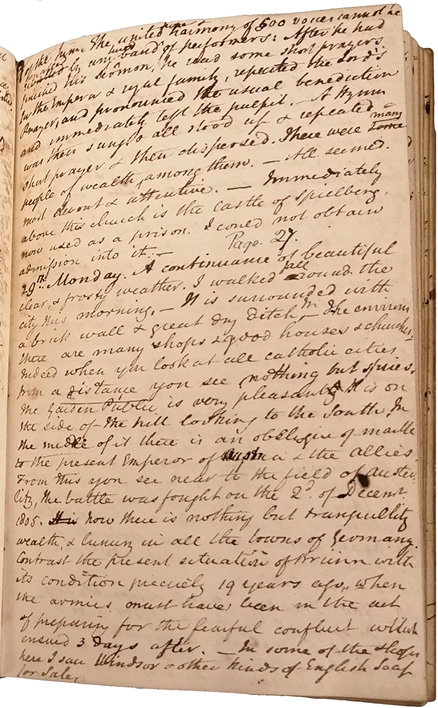
Fig. 1. Robert Lee’s Manuscript Journal, 1824–1825. ©Wellcome Collection
On returning home in early January 1827, Lee built up a medical career in London, becoming a clinical lecturer and a physician who was well-known in the metropolitan medical circles. He authored several publications on anatomy and obstetrics, including Clinical Midwifery26. For many years (from 1837 and until several years before his death), Lee kept a diary which contained numerous records discussing his professional life (achievements and disputes with colleagues and the Royal Society, hopes and disappointments). In it, Lee also made records relating to his reading. According to James Bradley, in the later period of his life, Lee preferred to read biographies, memoirs, and obituaries. Through contemplating on other people’s lives on the pages of his diary, he articulated “his feelings when faced with triumph or adversity”27.
In 1854, Lee published an account of his travel in the Russian Empire entitled The Last Days of Alexander, and the First Days of Nicholas. The travelogue was built up on his manuscript travel journal penned three decades earlier28. In the former, the author self-fashioned himself as a medical authority whose professional knowledge and skills were sought after by the members of the country’s ruling family and nobles. The travelogue seems to have been published primarily with the aim of enhancing Lee’s medical reputation and status at home. Notably, compared to the travel journal, the published travel account contained less personal information about the author and his acquaintances abroad. Among the topics which Lee chose not to mention in his travelogue was his extensive reading of books and other reading matter (journals, periodicals, and newspapers), which is the focus of the subsequent sections.
Reconstructing Lee’s Reading List
Robert Lee’s travel journal exposes his reading life during his travel to and residence in the Russian Empire, providing valuable evidence about the context of his reading. Its close analysis has revealed that, during the two years abroad, Lee read at least 29 items in English and French (see the Appendix) and directly or indirectly referred to 50 authors. His reading list shows that a significant number of the books were the latest publications. Out of 29 (we take this number as 100 per cent) items, 23 (79.3 per cent) were first published between 1800 and 1825, and, even more importantly, 12 items (41.4 per cent) were first published between 1821 and 1825. Most probably, Lee brought no books with him from Britain. Nor did he do any preparatory reading – by perusing travel accounts, history books, and memoirs relating to the Russian Empire – before setting out from London on 29 October 1824. His decision to go to Odesa must have been made hurriedly because, before obtaining an invitation to work abroad, Lee had been seriously ill for some time. It seems that the restorative power of warm climate and salubrious sea air in Odesa were significant factors affecting Lee’s decision to accept the position and start preparations for leaving London.
In fact, Lee’s exhausting land journey brought him from Calais to Bila Tserkva (near Kyiv) via Brussels, Cologne, Frankfurt, Vienna, Olomouc, and Lviv, which took nearly two months, and provided little opportunity for reading. Instead, in the carriages and hotels, Lee preferred to communicate with his fellow travelers and local people. Importantly, he was selective in choosing his interlocutors, preferring to converse with educated and well-informed people who spoke either English or French. For example, in a small hotel near Platten (a German town near the border of Luxembourg and Belgium), Lee had a conversation with “a person at breakfast who could speak French & who informed me that he had read all the Speeches of William Pitt, C[harles] Fox, & M. Sheridan. He had read [David] Hume & [William] Robertson, yet he could not speak one word of the English language”29. Lee recorded his conversations with several experienced fellow travelers, who had journeyed across the continent and visited the Russian Empire. Lee found these conversations both informative and entertaining. In a journal entry dated 8 November 1824, he noted, “I found the French gentleman who had accompanied me from Cologne to Coblenz and who had entertained me in a boat with accounts of all the different countries of Europe. He had resided for two years at Odessa. His account of Russia was most unfavourable”30.
Lee’s brief stays in different towns on the Continent (a day or two in most cases) were usually filled with seeing local sights (“[in Koblenz,] I spent the day in visiting the churches”)31 and, if available, going to the theatre in the evening (in Frankfurt, Regensburg, Vienna, and Olomouc)32. In Vienna, where he spent five days while waiting for his documents, Lee visited not only the Imperial Arsenal, the picture galleries, the Belvedere Palace, and other places of interest, but he also went to the Imperial Library on 23 November 1824 and on the following day – to “the Reading Room of the Library [at the University of Vienna]” which was full of students “engaged in making extracts”33. Notably, on his way back to Britain in December 1826, Lee visited the library once more. This time he left behind a description revealing how he admired rare manuscripts and the library’s interior. In the record, Lee used the pronoun ‘we’, which suggests that he was in the company of Count M. S. Vorontsov (and possibly the latter’s wife), who traveled to England to visit the Count’s father and sister residing there. Lee noted:
I visited this morning the Imperial Library, and admired its general appearance as much as before. There are 800 Vol[ume]s of Stamps – 13000 Volumes of Manuscripts. A part of this library belonged to Price Eugene, – The paintings on the ceiling were made by Daniel Gran, The sciences & arts are represented. – & Mount Olympus on the highest part. This is 92 feet in height, 246 in length. The plan of the Library was given by Fisher of Erlach. – In a room adjoining the Library are preserved the diff[erent] manuscripts. Upon a plate of Copper was an edict published at Rome 186 years before Christ by which the celebration of the rites of Bacchus were prohibited except in private families. Here also we saw the poem of [Torquato] Tasso’s Gerusalemme liberate in his own hand writing. – A manuscript about the beginning of the 5th Cent’s in the Lombard characters relating to a grant of land in the neighbourhood of [?] and which was first decyphered by [?]. It is a piece of papyrus, and is the only M.S.S. existing in this character.34
According to Lee’s journal, the only town on his way to the Russian Empire where he enjoyed reading books was Brno. Here, he read Voltaire’s History of Charles XII (see Introduction) and an unidentified book about Prince Grigory Potemkin, 1739–1791 (“Nobody to speak to, I proceeded with the life of Potemkin”)35. The rest of Lee’s reading took place during his residence in the Russian Empire in four locations: Bila Tserkva, Odesa, Crimea, and Moshny (near Cherkasy).
At the Ukrainian town of Bila Tserkva where the estate of Count M. S. Vorontsov’s mother-in-law Countess Oleksandra V. Branytska (1754–1838)36 was located, his wife, Countess Yelyzaveta K. Vorontsova (1792–1880),37 and their children spent a lot of time. During his several stays at Bila Tserkva, Lee did most of the reading matter – 14 items (see the Appendix; note that newspapers were not included in the list). Although the travel journal says nothing regarding how he obtained access to the books and journals, it is obvious that Lee borrowed them from the estate’s book collection; there was no bookshop in the town. Notably, a part of the rich private library owned by Vorontsov, who was a well-known bibliophile in his lifetime, was kept there38. As his professional duties required little time and effort, and the group of people with whom he communicated was small (he complained of “dull uniformity” reigning in the estate)39, Lee devoted long hours to reading. There, he read three fiction books: Morier’s Hajji Baba, Swift’s Gulliver’s Travels, and Rousseau’s Eloise (“Read for the first time La Nou[ve]lle Heloise”)40.
An analysis of the travel journal has shown that Lee’s reading of non-fiction was more substantial in comparison with fiction, covering history (3 titles), travels (3 titles), memoirs (2 titles), science (1 title), and two journals (Le Journal Asiatique41, The Medical and Physical Journal)42. It is importance that, in Bila Tserkva, Lee read not only for recreation but also for self-educational purposes. For instance, before his journey to Crimea in August-September 1825, Lee did some preparatory reading – the History of Tauride by Stanislav Bohush-Sestrentsevych (1731–1826) – in order to acquire more knowledge about the peninsula’s history of rises and falls throughout centuries. As he did not read and speak Russian, Lee most probably read this work in French43. In the summer of 1826, after the defeat of the Decembrist uprising (1825), numerous arrests, and the subsequent execution of their leaders as well as sending other prominent participants into exile, Lee, who witnessed the political turmoil in 1825–1826, read the History of the Russian Empire by the Russian historian Michail Karamzin (1766–1826). He must also have read this work in French; its multi-volume French translation was published between 1819 and 182644. Notably, Lee recorded not only his reading act but also his opinion about the subject matter: “Engaged in reading Karamsin’s History of Russia which presents a picture of superstition, treachery & murder, such as cannot be equalled (sic) in any other country.”45 It should be noted that, in Bila Tserkva, Lee also regularly read the English newspapers. They were being sent from Britain to Odesa, and then further to Bila Tserkva. For example, in September 1826, Lee was irritated because Count M. S. Vorontsov left Odesa for Crimea, forgetting to send him the newspapers: “The Count W. has gone to the Crimea for 15 [?] days thus neglected to send the English newspapers to me for the last two weeks.”46
The second significant location where Lee read 10 items (along with the English newspapers) was Odesa; he stayed there several times. Once again, the travel journal is silent about the way in which he obtained books for his reading. It is unlikely that Lee purchased them. Books were expensive and would have occupied a lot of space in the luggage of the physician who was constantly on the move during the two years. Most probably, Lee borrowed books from Vorontsov’s book collection in his Odesa house which was particularly rich in non-fiction travel accounts47. It is also possible that Lee borrowed books from the local bookshops48. However, in the travel journal, he noted that the bookshops were not well stocked with English books: “The books brought to Odessa cant (sic) amount to more than a few hundreds in the year. Few English are all that imported”49. Compared to Bila Tserkva, Lee’s days in Odesa were much busier. He attended crowded dinners, theatrical performances at the local theatre, public and private balls50. Consequently, Lee’s network of acquaintances was considerably broader. For example, he spent his social hours by communicating with the members of Count M. S. Vorontsov’s staff, military officers, local physicians, members of the noble families whom he gave medical consultations, his fellow countrymen, and people from other European countries who resided in or traveled via Odesa. Despite his active social engagement, Lee found time for reading (particularly when the weather was unfavorable). For example, on 7 March 1825, he noted: “I spent the whole day among my books”51.
Lee’s records in the Odesa period reveal that, first, his main reading interests – travels and history – did not change (see the Appendix). His reading list included travels (4 titles), history (3 titles), memoirs (1 title), politics (1 title; “Reading Dr Lyalls small tract [on] military colonies”)52, and 1 periodical (in The Westminster Review he read an essay on Greece and its poetry)53. Second, Lee’s reading in Odesa can be characterized as both focused and purposeful. He concentrated on the books referring to the history of the Russian Empire and on the travelogues about the country (7 titles). As his commentary and copied-out extracts show, the period which drew Lee’s particular attention in history books was the reigns of two tsarinas – Elizabeth (1741–1762) and Catherine II (1762–1796)54. Clearly, this interest was connected with the Vorontsov family, whose members had played a prominent role in the country’s political life, and with Countess Oleksandra Branytska, who was Prince Potemkin’s niece. For example, while reading Claude Carloman de Rulhiѐre’s Histoire, Lee contemplated about the principles of objective historical narrative:
Spent the forenoon in reading Rullueri’s anecdotes sur la Revolution &c Russie en l’année 1762, a work of great interest. In his recital he simply states the facts without bestowing any epithets good or bad upon the individuals whose conduct he depicts. Feeling leads to false judgements of men & their actions. A writer should compose his work as if actually in the presence of those who have become immortal by their work.55
Importantly, during his stay at Odesa, Lee also read about the history, politics, geography, and ethnography of the Asian countries (3 titles). Interest in this topic can be explained by Lee’s plans for the future. While in the Russian Empire, he wanted to quit his service and build up his professional career in India travelling there either from Odesa by land or from Britain by sea. On 16 February 1825, Lee recorded how he discussed the route with two French travelers who arrived in Odesa on their way to India:
Went to an evening party & met two French gentlemen on their way to Pondichery (sic) by Persia… They calculate that it will require a month to travel to Tiflis, 10 days will be consumed there in making preparations for the journey. From Tiflis to Bushire 3 ½ months or 4, & from thence to Bombay 15 days. 6 weeks across the Peninsula to Pondichery. In all not less than 7 months, so that there is no saving of time, & a great additional expense. My best plan is to return to England & go by sea.56
Another reason why Lee read history and travels on Asia was his interest in politics. He attentively followed how the political interests of the British Empire and the Russian Empire clashed on the Asian continent in the period. Extracts from the books discussing the topic which Lee copied into the journal serve as evidence for this57. These extracts also indicate that Lee’s reading was active, thus confirming David Allan’s argument about “the relationship between commonplacing and reading in Georgian England”58. Importantly, Lee’s reading list in the Odesa period signals that he borrowed books on Asia from Count M. S. Vorontsov’s library, which contained substantial reading matter on the topic59.
Together with several people from Count M. S. Vorontsov’s circle (among them was Jean Blaramberg’s daughter)60, Robert Lee accompanied Count M. S. Vorontsov and his wife in their Crimean tour in August–September 1825. While in Crimea, Lee read two travelogues about the peninsula – Pallas’s widely acclaimed Travels and Holderness’s New Russia (see the Appendix). The latter contained an earlier published proto-ethnographic essay on the Crimean Tatars61, resulting from Holderness’s residence in the Crimean village of Karagoz between 1816 and 181962. The English translation of Pallas’s work, originally written in German, was published for the first time in 1802–180363, while Holderness’s travelogue appeared in 1823. Lee recorded that he read Pallas’s travel account while on board Admiral Greig’s yacht,64 bringing the travel party from Odesa to Crimea by the Black Sea65. While there, Lee explored Crimea’s flora and fauna with Pallas’s book in his hands, noting that he “found here yesterday several fine specimens of the insect described in Pallas as species of Cantharides Vesicatus [Cantharis vesicatoria]”66.
As Wendy Bracewell has rightly argued, “consuming books is not the same as consuming food: we cannot assume that travelers’ perceptions were shared by those who read their accounts”.67 Indeed, Lee’s journal provides valuable evidence of how attentive and critical he was in the process of absorbing information from other people’s travel accounts. For instance, Lee doubted the accuracy of the front image in Holderness’s travel account portraying the Greek soldier, as he compared it with his own observations made on the spot: “The representation of the Arnaout Greek which forms the frontispiece to Mrs Holderness’s Work is a complete caricature. We have now a guard of these Greeks & their costume nears not the slightest resemblance to her delineation”68. Further, Lee made attempts to verify his opinion by conversing with the informed people: “Col. Ravillotti [?] & all the other persons at Yoursouff [Hurzuf] declared that no such costume existed in the Crimea – Balaclava is the head quarters (sic) of the Greek troops stationed along the coast”69.
The final location in the country where Lee read books was Moshny, a Ukrainian village near Cherkasy. He briefly stayed there on his way back to Britain in October 1826. Importantly, Count M. S. Vorontsov, who had become the owner of the village after his wedding with Yelyzaveta Branytska in 1819, kept a part of his private book collection there70. Lee’s diary recorded that the book which he read in Moshny was Mountstuart Elphinstone’s Account of the Kingdom of Caubul in French: “In the Library of the Count W. here I found a French translation of Elphinstone’s Caubul, which I resolved to spend the day in reading. – The day was cold & windy so that I did not venture out with the company on horseback.”71 What is important here is that Lee’s journal not only provided evidence about his reading of the book and the circumstances in which the reading act took place, but it also documented that Count Vorontsov’s library was working.
Reading and Discussing Books in Lee’s Travel Journal
Lee’s journal records suggest that, in most cases, his reading was a silent and solitary activity performed in the seclusion of his room (“Retired to my apartment to read Mrs Holderness’s Work”)72. However, two reading-out acts have been traced so far, which show that reading could have been a group experience in Lee’s environment. For example, in his published travelogue, Lee informed the reader that he read aloud to Count M. S. Vorontsov while they were travelling in the carriage from Odesa to Taganrog (this reference to reading aloud has not been traced in Lee’s manuscript journal so far). In it, Lee recorded that he read out from the latest periodicals, journals, and voyages and travels:
In our journey from Odessa to Taganrog, as we travelled along the steppe, I had read to the Count Woronzow, being alone in the carriage with him several hours in the day, portions of English reviews and journals, voyages of discovery, and travels into Africa which had been recently published.73
In its turn, the journal recorded how, in Bila Tserkva, the Colonel Mykola M. Raevskii (1801–1843), a relative of Countess Branytska, read to Lee a translation of two ancient songs, whose “simplicity and extreme delicacy” pleased the British physician74.
Importantly, Edward Daniel Clarke (1769–1822), whose widely known Travels about journeying in Europe, Asia, and Africa Lee read in Odesa (see the Appendix)75, was one the authors Lee most frequently referred to in the journal. Clarke’s travelogue not only informed Lee about the Russian Empire but also shaped his experiences in the country. For example, in July 1825, Lee noted: “The environs of Odessa are swarming with locusts even the streets of Odessa are sometimes covered with them … yesterday morning the garden at the theatre was full of them of a large size exactly such as they are represented in Dr. Clarkes Travels”76. Here, again, the journal records confirm that Lee was a sophisticated reader, showing how critical his reading of Clarke’s Travels was. Moreover, they reveal the ways in which Lee’s system of information processing and verification operated. To form his opinion, he, first, weighed the information obtained from two travel accounts: “Dr. L[yall]s account of the Russian women I am convinced is much nearer the truth than that of Dr Clarke who praises their personal appearance & mental accomplishments… Dr L.[yall] states that the wives of the merchants do little else than eat & sleep.”77 Second, Lee compared information from the travel account with his informant’s/informants’ opinion(s). Regarding the “number of ships [which] are built out of the wood of the Crimea”, for example, he noted that “Dr Clarke’s opinions correct & Capt. Zontag not well”78. Although this record offers no further explanation why Lee gave preference for Clarke’s statement and not for George Sonntag’s, it demonstrates that Lee’s thoughtful accumulation of information was made by juxtaposing at least two sources.
In addition, Lee’s journal provides glimpses of the reading interests of his acquaintances in Count M. S. Vorontsov’s environment. For example, it recorded the popularity of Walter Scott’s historical novels in the period. On 17 August 1825, as Lee recorded, the travel party on board the yacht was waiting for the wind to approach the Crimean coast, and several people engaged in reading their books. Two of them were reading Scott’s latest novels – Kenilworth (1821) and The Talisman (1825): “[I am] reading Pallas’ book on Crimea. Some reading Greek … Mr Bobrykin the brother of the Princess Gortchkoff reading Kenilworth; Count Palen – the Talisman”79. Moreover, in an entry dated 30 December 1824, Lee recorded his conversation with Oleksandr M. Raevskii (1795–1868), Mykola M. Raevskii’s brother, whom he had met at Bila Tserkva. While conversing about the Caucasus, Oleksandr Raevskii shared with Lee his impressions of the mountainous region, comparing its inhabitants with those of medieval England depicted in Walter Scott’s Ivanhoe (1819): “M. Raiski (sic) gave me a very interesting account at dinner last night of the various tribes who inhabit the Caucasus. He was there with a military expedition … Soon after his arrival at Kiev he read Ivanhoe. He was constantly struck with the resemblance between the state of Society there described and what he actually saw in the Caucasus”80.
Another Briton whose poetic lines Lee recalled in Brno (see Introduction) and whose popularity in the Russian Empire his journal recorded was George Gordon Byron. On arriving in St Petersburg in April 1826, Lee, who accompanied Count M. S. Vorontsov in his journey to the capital and who had been impressed by the arrest of his several acquaintances suspected of their participation in the Decembrist uprising (including the aforementioned Raevskii brothers), was struck by the city’s imposing view and a gloomy atmosphere reigning there. While observing the city, as Lee recorded, Byron’s lines about Venice came to his mind: “The lines of Lord Byron on Venice at the opening of the 4th Canto rushed upon my mind. ‘A Palace & a prison’ &c.”81 In addition, in September 1825, Lee recorded how Colonel Mykola Raevskii came to Crimea, bringing with him the lately published Byron’s correspondence: “This morning Col. Rajewski put into my hands the correspondence and conversation of Lord Byron”82. Notably, one of Lee’s records also documented that Byronophilia reached Odesa, as “even in the bathing room at Odessa portraits of his lordship [Byron] were spread on the walls”83.
Importantly, Byron was not the only British poet whose poems Lee and his acquaintances abroad read and cherished. During the Crimean tour, Lee became intimate with one of the members of the travel party – the Polish aristocrat, Count Hustav Olizar (1798–1865)84, who along with his estate near Bila Tserkva owned a house in Crimea. During their conversation, Count Olizar told Lee about his patriotic feelings and how difficult it was to be a Pole in the Russian Empire. He showed Lee a page (probably from the book) with two poetic lines on it. They were from Thomas Campbell’s poem The Pleasures of Hope85, which permitted Lee to conclude that Olizar was “a man of conscience”:
At dinner I [Lee] sat next the Count Olizar he was sad how miserable it is to be a Pole … taking out a small pocket-book [he] shewed me a scrap of paper on wh[ich] were written 2 lines from the Pleasures of Hope
Hope for a Season bade the world farewell
And freedom shrieked when Kosciusko fell.86
So he is a man of conscience.87
Taken together, this evidence attests to the significant impact of the British writers and poets on the literary tastes of the educated elite in the Russian Empire.
Overall, Lee’s journal records show that both literary and non-literary works, as well as their authors, frequently became the subject of polite conversation. As Lear Price has pointed out, “reading correlates with social involvement”, as “readers need others to set an example, to provide a sounding board for reactions to texts, to recommend and criticize and exchange books”88. Indeed, Lee engaged in all these practices, actively participating in the discussions of books, making and/or accepting recommendations concerning the books read either by him or by other people. The journal reveals that books were the topic of conversation held at the dinner table, during walks, and while sightseeing (during their visit to the Khan’s palace in Bakhchysarai in Crimea, Lee and Count Olizar discussed Alexander Pushkin’s famous poem)89.
Notably, Lee particularly appreciated his interlocutors’ acquaintance with English publications and did not forget to mention these facts in the journal (see this as well as the previous sections). While in Odesa, Lee dined at least two times with Count Viktor P. Kochubei (1768–1834), a Ukrainian aristocrat and politician who spoke English90, and his wife Mariia V. Kochubei, née Vasylchykova (1779–1844). Between 1788–1790, Kochubei was a member of the Russian mission in London headed by Count M. S. Vorontsov’s father91. Lee enjoyed his communication with Count V. P. Kochubei and his wife, noting that “There was nothing like pride or hauteur in his manner, & his Countess was in all respects like a lady of the higher ranks in England”92. As Lee’s journal record dated 27 February 1825 shows, Kochubei, who had visited London in 1799, was well acquainted with the political debate in Britain in the period: “In the evening I [Lee] visited the Count Koutchbei with Mr. Longenoff. The Count said he was in London in 1799 and that the Thames was then frozen for a number of weeks. Woodfall’s Debates was a famous book in those days. He asked if it was still continued”93.
Importantly, during his stay in Crimea, Lee got acquainted and met several times with Christian von Steven (1781–1863), the Swedish botanist and the first director of the botanical garden in Nikita (the latter’s work was supported by Count M. S. Vorontsov). The two men – Lee and Steven – had much in common as both had received medical education and shared a strong interest in botany. Several records describing their conversations reveal how information channels operated through oral communication in the period. For instance, Steven recommended Lee recent botanical publications which, as he thought, deserved Lee’s attention, informing him, for instance, that in “Biberstein’s work published not more than 5 new plants have been discovered throughout the whole Crimea – For an (sic) complete & accurate account of the plants of the Crimea & Caucasus this work will be the best authority. Flora & Fauna Caucasia – by the Baron Biberstein 3 Vols. Publ[ishe]d at Charkow”94. Notably, the first volume of Bieberstein’s work was in Count M. S. Vorontsov’s book collection in Alupka95. Lee also recorded that, along with book recommendations, Steven told him about his connections in the European scientific circles: “Mr Steven said the three most remarkable men he had ever met were Baron Humboldt Dr Sprengel and a Professor Link of Berlin … He [Sprengel] has written not only an admirable history of Medicine but on Botany he has published a work of great and superior merit”96.
Robert Lee’s two stays in Crimea (in August–September 1825 and in late October–early November 1825) and his extensive reading of books on Crimea put him in the position of authority. As his travel journal shows, Lee shared his knowledge on the topic and recommended certain books on Crimea to other people. For example, the travel journal contains a copy of Lee’s letter to his compatriot Somers Cocks dated 1 August 182697. Written in Bila Tserkva, it told the recipient, who had been interested in gaining information about the Crimean Karaites, that Lee was well informed about a recent publication on the subject:
A work I understand has been published on this sect in Russian, a copy of which a friend promised to send to me from Odessa but it has not yet arrived. I shall endevour (sic) to procure it when I go there two weeks hence & if there is any interesting information in it I shall not fail to take notes of it and transmit them to you if you should desire it.98
Lee also recommended his addressee to read Clarke’s Travels, informing him that “In Dr. Clarks (sic) 1st Vol.[ume] there is some observation worthy of attention respecting the Karaites. He found some very antient M.S.S. of the Bible at Kchufut Kali which had been brought from the East.”99
An experienced book consumer and attentive observer of inquisitive mind, Lee paid attention to other people’s book collections, which could have told him a lot about their owners’ education, intellectual pursuits, and reading interests. For example, while visiting Colonel Mykola Raevskii in Stavyshche, a Ukrainian village near Bila Tserkva where his regiment camped, Lee was impressed by the former’s rich book collection, of which he left a brief description in his journal:
Col. R. [Colonel Raevskii] is lodged in the house of a Jew. The apartments very humble, yet I was astonish’d to find an immense collection of all the best modern works, translations of the best English works into French &c In this wretched place & in the midst of rude unlettered soldiers this young officer (for he is only 23) retains all his nature ardour for study, & has lost none of his natural good humour.100
While in Crimea, Lee made acquaintance with and gave a medical consultation to General A. M. Borozdin (1765–1838), who resided in the peninsula for many years and who, according to Lee, “cultivated on his estate at Alushta the vine & olive with success”. Although Lee stated that “all the wine of the Crimea that I have tasted are poor, & badly flavoured”, he acknowledged that “Efforts are now making (sic) to introduce the vine & olive extensively along the coast”101. A journal record dated 28 August 1825 described the day when Lee together with Count Pahlen and Count Olizar had dinner at General Borosdin’s house at Kuchuk-Lambat. There, they were impressed by the host’s private library containing a lot of books on chemistry and other sciences necessary for his agricultural enterprise: “We found his library was well stocked [with] books Chemical he has the best writers in Chemistry study & practice of the Sciences”102.
Conclusion
This article has looked over the shoulders of an early-nineteenth-century educated reader – the British physician Robert Lee who produced a voluminous travel journal during his travel to and residence in the Russian Empire in 1824–1827. Containing valuable evidence about his reading life on the road, it has permitted the reconstruction of Lee’s reading list which attests to his predilection for two genres – travels and history. In the early nineteenth century, these genres intertwined, providing travelers with diverse information they needed – from the practical recommendations regarding routes, transport, and accommodation to more serious topics such as historical development of a country/region of destination, its political system, cultural norms, and conventions.
An analysis of Lee’s journal has permitted me to make five important conclusions. First, items published between 1800 and 1825 predominated in his reading list. Second, Lee’s reading abroad was selective and purposeful. He focused on history and non-fiction travel accounts about the Russian Empire and the Asian countries. While the former helped him to navigate successfully the new sociocultural environment, the perusing of the latter can be considered as preparatory reading necessary for the realization of his plan to make professional career in India. Third, Lee’s reading of travels was active and critical. In the course of reading, he verified information obtained from the travel accounts by comparing it with his own observations made on the spot, with information found in other travelogues, and/or with his informants’ opinions. Fourth, taking notes and making extracts from the texts he read helped Lee internalize the acquired knowledge. Fifth, Lee’s records indicate that he eagerly accepted from and gave recommendations to other people concerning the publications on the genres such as science, travels, and history.
Moreover, direct and indirect evidence uncovered in Lee’s travel journal signals that he had access to and borrowed books from Count M. S. Vorontsov’s private library in three locations: Bila Tserkva, Odesa, and Moshny. Although, in most cases, Lee’s reading seems to have been solitary and silent, numerous journal records documented his participation in lively conversations on literary topics held at the dinner table, during walks, and sightseeing. The travel journal also provides evidence that British literature had a significant impact on the educated elite in the Russian Empire, revealing the popularity of Walter Scott’s and George Gordon Byron’s works in Count M. S. Vorontsov’s environment. Thus, Lee’s detailed self-testimony regarding reading uncovered in his travel journal has permitted the reconstruction of the ‘portrait’ of the sophisticated and punctilious British reader who sought intellectual improvement while on the move.
Acknowledgements. This research has been supported by the Polish Minister of Science under the Programme “Regional Initiative of Excellence/Regionalna Inicjatywa Doskonałości (RID)”.
Appendix
List of the identified books, periodicals, and journals read by Robert Lee between November 1824–December 1826
Brno
Voltaire, François-Marie Arouet. History of Charles XII, 1734
Bila Tserkva
Hodgson, Adam. Remarks during a Journey through North America in the Years 1819, 1820, and 1821, in a Series of Letters, 1823
Hunter, John Dunn. Memoirs of a Captivity Among the Indians of North America, from Childhood to the Age of Nineteen, 1823
Karamsin, M. Histoire de l’Empire de Russie, 1819–1826
Le Journal Asiatique, 1822-
Malcolm, Sir John. Memoir of Central India: Including Malwa, and Adjoining Provinces, 1823
Memoirs of the Public and Private Life of Napoleon Bonaparte, Vol 2 (dictated by General Gourgaud), 1823
Morier, James Justinian. The Adventures of Hajji Baba of Ispahan, 1824
Prichard, James Cowles. Researches into the Physical History of Man, 1813
Rousseau, Jean-Jacques. La Nouvelle Héloïse, 1761
Sestrencewicz de Bohusz, Stanislas. Histoire de la Tauride, 1800
Staël, Madame de. Lettres sur l’Angleterre, 1825
Stewart, John. An Account of Jamaica, and its Inhabitants, 1808
Swift, Jonathan. Gulliver’s Travels, 1726
The Medical and Physical Journal, 1799–1833
Odesa
Clarke, Edward Daniel. Travels in Various Countries of Europe, Asia, and Africa, 1810
Fraser, James. The History of Nadir Shah, Formerly called Thamas Kuli Khan, 1742
James, John Thomas. Journal of a Tour in Germany, Sweden, Russia, Poland, during the Years 1813 and 1814, 1816
Kinneir, Sir John Macdonald. Journey through Asia Minor, Armenia, and Koordistan in the Years 1813 and 1814, 1818
Lyall, Robert. The Character of the Russians, and a Detailed History of Moscow, 1823
Lyall, Robert. An Account of the Organization, Administration, and the Present State of the Military Colonies in Russia, 1824
Masson, Charles. Mémoires Secrets sur la Russie, 1800–1802
Rulhiѐre, Claude Carloman de. Histoire, ou Anecdotes sur la révolution de Russie en l’année 1762, 1762
Ségur, Count Phillippe-Paul de. History of the Expedition to Russia, Undertaken by the Emperor Napoleon, in the Year 1812, 1825
The Westminster Review, July 1824
Waxel, Léon de. Recueil de quelques antiquités trouvées sur les bords de la mer noire appartenans à l’empire de Russie, 1803
Crimea
Pallas, Peter Simon. Travels Through the Southern Provinces of the Russian Empire, in the Years 1793 and 1794, tr. from German, 1802–1803
Holderness, Mary. New Russia. Journey from Riga to the Crimea, by Way of Kiev, 1821
Moshny
Elphinstone, Mountstuart. An Account of the Kingdom of Caubul, 1815
References
Manuscripts Cited
1. London, Wellcome Collection, Robert Lee (1793–1877): diaries and other papers, 1821–1873. MSS. 3215-3217.
2. Alupkynskii palatsovo-parkovyi muzei-zapovidnyk, Katalog knyg z biblioteky M.S. Vorontsova [Catalogue of Books from M. S. Volontsov’s Library], f. 7.
Printed Primary Sources
3. [ANON.]. Biographical Sketch of Robert Lee, M.D., F.R.S., Lecturer on Midwifery at St. George’s Hospital, and Physician to the British Lying-In Hospital. The Lancet, 1851, vol. 57, no. 1438, p. 332–337.
4. [BOWRING, John]. Greece and its Popular Poetry. Westminster Review, 1824, July, p. 149–169. [accessed 25 July 2025]. Access through Internet: <https://19.bbk.ac.uk/article/id/11077/ >.
5. CAMPBELL, Thomas. The Pleasures of Hope: in Two Parts. With Other Poems. Edinburgh: Printed for Mundell & Son, 1799. [8],135, [1] p., plates
6. DALLAS, A.R.C. Correspondence of Lord Byron, with a Friend. Paris: A. and W. Galignani, 1825. 3 vols.
7. [FRANK, Joseph]. Pamiętniki Dra Józefa Franka Profesora Uniwersytetu Wileńskiego. Wilno: Druk Jozefa Zawadzkiego, 1913. 3 vols.
8. GIBBON, Edward. Memoirs of My Life & Writings. [accessed 24 September 2025]. Access through Internet: <https://www.gutenberg.org/files/6031/6031-h/6031-h.htm>
9. GREY, William; DOCHARD, Surgeon. Travels in Western Africa, in the Years 1818, 19, 20, and 21, from the River Gambia… to the River Niger. London: John Murray, 1825. XV, 413 p.
10. HOLDERNESS, Mary. Notes Relating to the Manners and Customs of the Crim Tatars: Written During a Four Years’ Residence Among That People. London: John Warren, 1821. [8], 168 pages, [3] leaves of plates
11. KARAMSIN, M. Histoire de l’Empire de Russie. Paris: A. Berlin, 1819–1826. 10 vols.
12. Lee, Robert. Extracts from the Diary of the Late Dr. Robert Lee, F.R.S. (1821–22), while Resident with Hon. William Lamb (Afterwards Viscount Melbourne). Ed. K. L. London: Privately printed by Hatchard, 1897. 43 p.
13. LEE, Robert. The Last Days of Alexander, and the First Days of Nicholas, (emporors of Russia). London: Richard Bentley, 1854. 210 p.
14. MEDWIN, Thomas. Journal of the Conversations of Lord Byron: Noted During a Residence with his Lordship at Pisa, in the Years 1821 and 1822. London: Henry Colburn, 1824. VIII, 345 p.
15. PALLAS, Peter S. Travels Through the Southern Provinces of the Russian Empire, in the Years 1793 and 1794. Tr. from German. London: Printed by A. Strahan, 1802–1803. 2 vols.
16. SESTRENCEWICZ, Stanislas de Bohusz. Histoire de la Tauride. Bruswick: Chez Pierre-François Fauche, 1800. 2 vols.
Secondary Works
17. ALLAN, David. Commonplace Books and Reading in Georgian England. Cambridge; New York: Cambridge University Press, 2014. 306 p. ISBN 978-1-107-42183-7.
18. BATTEN, Charles L. Pleasurable Instruction: Form and Convention in Eighteenth-Century Travel Literature. Berkeley; Los Angeles; London: University of California Press, 1978. 170 p. ISBN 0-520-03260-8.
19. BRACEWELL, Wendy. The Travellee’s Eye: Reading European Travel Writing, 1750–1850. In: KUEHN, Julia; and SMETHURST, Paul, eds. New Directions in Travel Writing Studies. Basingstoke; New York: Palgrave Macmillan, 2015, p. 215–227. ISBN 978-1-349-56767-6.
20. BRADLEY, James. Robert Lee and his Undisciplined Medical Self: Life Writing, Character and ‘Technologies of Self’ in the Victorian Medical Profession. Social History of Medicine, 2025, vol. 20, no. 20, p. 1–23. DOI: https://doi.org/10.1093/shm/hkae096
21. BREWER, John. Reconstructing the Reader: Prescriptions, Texts and Strategies in Anna Larpent’s Reading. In: RAVEN, James; SMALL, Helen; and TADMOR, Naomi, eds. The Practice and Representation of Reading in England. Cambridge (UK): Cambridge University Press, 1996, p. 226–245. ISBN 0-521-48093-0.
22. CHECHULIN, N. D. Kniaz’ Viktor Pavlovich Kochubei 1768–1834: ocherk zhizni i deiatel’nosti. Sankt-Peterburg, 1900. 59 p.
23. COLCLOUGH, Stephen M. Procuring Books and Consuming Texts: The Reading Experience of a Sheffield Apprentice, 1798. Book History, 2000, vol. 3, p. 21–44.
24. COLE, Richard C. An Irish Library and a European Tour, 1815–1817. The Library Quarterly: Information, Community, Policy, 1985, vol. 55, no. 1, p. 34–51.
25. JACKSON, Jan. Approaches to the History of Readers and Reading in Eighteenth-Century Britain. The Historical Journal, 2004, vol. 47, no. 4, p. 1041–1054.
26. MARLAND, Hilary. Robert Lee, 1793–1877. Oxford Dictionary of National Biography, [accessed 8 September 2025]. Access through Internet: <https://doi.org/10.1093/ref:odnb/16306>.
27. MĄCZAK, Antoni. Travel in Early Modern Europe. Translated by Ursula Phillips. Cambridge (UK): Polity Press, 1995. X, 357 p. ISBN 0 7456 0840 X.
28. O’MEARA, Patrick. The Russian Nobility in the Age of Alexander I. London: Bloomsbury Academic, 2021. XVI, 367 p. ISBN 978-1-3501-9656-8.
29. POLEVSHCHYKOVA, Elena V. Frantsuzy v knizhnoi torgovle Odessy v pervoi polovine XIX v. (po materialam knigotorgovych katalogov). Visnyk ONU. Seriia: Bibliotekoznavstvo, bibliografoznavstvo, knigoznavstvo. 2011, vol. 16, no. 1–2, p. 94–109.
30. POLEVSHCHYKOVA, Elena V. ‘Little Library’: English Children’s Book in the Vorontsov Book Collection. Visnyk ONU. Seriia: Bibliotekoznavstvo, bibliografoznavstvo, knigoznavstvo, 2016, vol. 21, no.1, p. 96–113.
31. POLEVSHCHYKOVA, Elena V. O bibliofil’stve M.S. Vorontsova (po materialam Archiva kniazia Vorontsova). In: FILATOVA, Galina, ed. Vorontsovy i russkoe dvorianstwo: Х Krymskie Mezhdunarodnye Vorontsovskie nauchnye chteniia: sbornik dokladov. Simferopol’: N. Orianda, 2008, p. 237–250. ISBN 9666481111
32. POLEVSHCHYKOVA, Elena V. Polonika v bibliotekach Vorontsovych. In: SIESS-KRZYSZKOWSKI, Stanisław; and WALECKI, Wacław, eds. Libri Recogniti: nowe inspiracje do badan nad starodrukami polskimi w bibliotekach Rosji, Białorusi, Ukrainy, Litwy i Finlandii. Kraków: Collegium Columbinum, 2013, p. 101–114. ISBN 978-83-7624-019-0
33. POLEVSHCHYKOVA, Elena V. Puteshestviia v biblioteke Vorontsovych. Pro knigi: zhurnal bibliofila 2007, vol. 2, p. 81–95.
34. PRICE, Leah. Reading: The State of the Discipline. Book History, 2004, vol. 7, p. 303–320.
35. ROBERTS, Sasha. Reading in Early Modern England: Contexts and Problems. Critical Survey, 2000, vol. 12, no. 2, p. 1–16.
36. SOLOMON, Amy. Fragments and Traces: Uncovering Sabine Winn’s Reading Experiences, 1734–1798. Women’s History Review, 2024, vol. 33, no. 6, p. 857–873. DOI: https://doi.org/10.1080/09612025.2024.2382632
37. TOSI, Arturo. Language and the Grand Tour: Linguistic Experiences of Travelling in Early Modern Europe. Padstow: Cambridge University Press, 2020. Xiv, 306 p. ISBN 978-1-108-48727-6.
38. VAINSHTEIN, Osyp L. Vorontsovskaia kollektsiia ORIENTALIA v Odesskoi tsentral’noi nauchnoi biblioteke. Novyi Vostok. 1929, vol. 25, p. 373–375.
39. VOLOSHKOVA, Nataliia. Bluestockings and Travel Accounts: Reading, Writing and Collecting. Cambridge (UK): Cambridge University Press, 2021. 98 p. ISBN 978-1-108-72072-4.
40. VOLOSHKOVA, Nataliia. Odesa in the 1820s: Representations of Urban Sociability in British Travel Accounts. Motifs, 2025, vol. 11. DOI: https://doi.org/10.56078/motifs.1760
41. VOLOSHKOVA, Nataliia. On Terrains of the Other Empire: Mary Holderness’s Account of Her Residence in Early 19th–Century Crimea. In: DUTTA, Sutapa, ed. British Women Travellers: Empire and Beyond, 1770–1870. New York; London: Routledge, 2020, p. 70–85. ISBN 978-0-367-34334-7.
42. VOLOSHKOVA, Nataliia. Writing Travelogues in the Early Nineteenth Century: The Story behind Mary Holderness’s Travel Account of Journeying from Riga to Crimea via Kyiv. Ukrainian Historical Review, 2024, vol. 3, p. 117–141. DOI: https://doi.org/10.47632/2786-717X-2024-3-117-141
1 GIBBON, Edward. Memoirs of My Life & Writings. [accessed 24 September 2025]. Access online: <https://www.gutenberg.org/files/6031/6031-h/6031-h.htm>.
2 London, Wellcome Collection, Robert Lee (1793–1877): diaries and other papers, 1821–1873. MSS. 3215, f. 26, 28 November 1824, cited subsequently as MSS.
3 “This is to be alone; this, this is solitude” in George Gordon Byron’s poem Childe Harold, Canto ii. Stanza 26.
4 MSS. 3215, f. 28, 29 November 1824. Robert Lee read an English translation of Voltaire’s widely acclaimed historical work, L’Histoire de Charles XII, first published in 1731 and translated into English in 1734. Here, he referred to Edward Gibbon’s Memoirs (see Epigraph).
5 Robert Lee’s spelling of the surname was “Woronzow/Woronsow”.
6 MSS. 3215, f. 8, 7 November 1824; f. 24-25, 26 November 1824; f. 25, 27 November 1824.
7 BREWER, John. Reconstructing the Reader: Prescriptions, Texts and Strategies in Anna Larpent’s Reading. In: The Practice and Representation of Reading in England. Ed. James Raven, Helen Small and Naomi Tadmor. Cambridge, 1996, p. 227.
8 ROBERTS, Sasha. Reading in Early Modern England: Contexts and Problems. Critical Survey, 2000, vol. 12, no. 2, p. 11.
9 JACKSON, Jan. Approaches to the History of Readers and Reading in Eighteenth-Century Britain. The Historical Journal, 2004, vol. 47, no. 4, p. 1043.
10 BREWER. Reconstructing the Reader, p. 243.
11 COLCLOUGH, Stephen M. Procuring Books and Consuming Texts: The Reading Experience of a Sheffield Apprentice, 1798. Book History, 2000, vol. 3, p. 21–44.
12 SOLOMON, Amy. Fragments and Traces: Uncovering Sabine Winn’s Reading Experiences, 1734–1798. Women’s History Review, 2024, vol. 33, no. 6, p.869. DOI: https://doi.org/10.1080/09612025.2024.2382632
13 MĄCZAK, Antoni. Travel in Early Modern Europe. Translated by Ursula Phillips. Cambridge, 1995, p. 183.
14 MĄCZAK. Travel in Early Modern Europe, p. 184–185.
15 TOSI, Arturo. Language and the Grand Tour: Linguistic Experiences of Travelling in Early Modern Europe. Padstow, 2020, p. 34; MĄCZAK, Travel in Early Modern Europe, p. 185–186; VOLOSHKOVA, Nataliia. Bluestockings and Travel Accounts: Reading, Writing and Collecting. Cambridge, 2021, p. 71.
16 BATTEN, Charles L. Pleasurable Instruction: Form and Convention in Eighteenth-Century Travel Literature. Berkeley; Los Angeles; London, 1978, p. 3.
17 COLE, Richard C. An Irish Library and a European Tour, 1815–1817. The Library Quarterly, 1985, vol. 55, no. 1, p. 36.
18 ALLAN, David. Commonplace Books and Reading in Georgian England. Cambridge; New York, 2014, p. 17.
19 [FRANK, Joseph]. Pamiętniki Dra Józefa Franka Profesora Uniwersytetu Wileńskiego. Wilno, 1913, vol. 1, p. 130–131, 211.
20 MSS. 3217, f. 3, undated.
21 MARLAND, Hilary. Robert Lee, 1793–1877. Oxford Dictionary of National Biography. Access online: <https://doi.org/10.1093/ref:odnb/16306>.
22 Lee, Robert. Extracts from the Diary of the Late Dr. Robert Lee, F.R.S. (1821–22), while Resident with Hon. William Lamb (Afterwards Viscount Melbourne). Ed. K. L. London, 1897, p. 19.
23 Ibid., p. 26, 35–36, 38.
24 [ANON.]. Biographical Sketch of Robert Lee, M.D., F.R.S., Lecturer on Midwifery at St. George’s Hospital, and Physician to the British Lying-In Hospital. The Lancet, 1851, vol. 57, no. 1438, p. 332–333.
25 O’MEARA, Patrick. The Russian Nobility in the Age of Alexander I. London, 2021, p. 138–140.
26 [ANON.]. Biographical Sketch of Robert Lee, p. 336–337.
27 BRADLEY, James. Robert Lee and his Undisciplined Medical Self: Life Writing, Character and ‘Technologies of Self’ in the Victorian Medical Profession. Social History of Medicine, 2025, vol. 20, no. 20, p. 10.
28 LEE, Robert. The Last Days of Alexander, and the First Days of Nicholas, (emperors of Russia). London, 1854. 210 p.
29 MSS. 3215, f. 8, 8 November 1824.
30 Ibid.
31 MSS. 3215, p. 7, 7 Nov 1824.
32 For more on Lee’s visits to the theatres on his way to Odesa and in Odesa, see VOLOSHKOVA, Nataliia. Odesa in the 1820s: Representations of Urban Sociability in British Travel Accounts. Motifs, 2025, vol. 11. DOI: https://doi.org/10.56078/motifs.1760.
33 MSS. 3215, p. 22, 24 Nov 1824.
34 MSS. 3217, p. 87, 5 December 1826.
35 MSS. 3215, p. 28, 30 November 1824.
36 Countess Oleksandra V. Branytska (Aleksandra Branicka), née Enhelhardt, was a wife of Count Franciszek Ksawery Branicki (c. 1730–1819), a Polish noble.
37 Countess Yelyzaveta K. Branytska (Elżbeta Branicka), later Vorontsova.
38 POLEVSHCHYKOVA, Elena V. ‘Little Library’: English Children’s Book in the Vorontsov Book Collection. Visnyk ONU. Seriia: Bibliotekoznavstvo, bibliografoznavstvo, knigoznavstvo, 2016, vol. 21, no. 1, p. 97. For more on Vorontsov’s bibliophilia, see: POLEVSHCHYKOVA, Elena V. O bibliofil’stve M. S. Vorontsova (po materialam Archiva kniazia Vorontsova). In: FILATOVA, Galina ed. Vorontsovy i russkoe dvorianstwo: Х Krymskie Mezhdunarodnye Vorontsovskie nauchnye chteniia: sbornik dokladov. Simferopol’, 2008, p. 237–250.
39 MSS. 3215, f. 49, 28 December 1824.
40 MSS. 3215, f. 111, 10 May 1825.
41 The first issue of Journal Asiatique, ou Recueil de Mémoires, d’Extraits et de Notices relatifs à l’Histoire, à la Philosophie aux Sciences, à la Litterature et aux Langues des Peuples Orientaux appeared in 1822. Aimed at promoting Eastern Studies, it was published in Paris by the Asiatic Society (Société Asiatique).
42 The Medical and Physical Journal was the first monthly medical journal published by Richard Phillips between 1799 and 1833.
43 The first French edition was SESTRENCEWICZ, Stanislas de Bohusz. Histoire de la Tauride. Bruswick, 1800. 2 vols.
44 KARAMSIN, M. Histoire de l’Empire de Russie. Paris, 1819–1826. 10 vols.
45 MSS. 3217, f. 56, 9 August 1826.
46 MSS. 3217, f. 69, 12 September 1826.
47 POLEVSHCHYKOVA, Elena V. Puteshestviia v biblioteke Vorontsovych. Pro knigi: zhurnal bibliofila 2007, vol. 2, p. 81–95.
48 For more on book trade in early-nineteenth-century Odesa, see: POLEVSHCHYKOVA, Elena V. Frantsuzy v knizhnoi torgovle Odessy v pervoi polovine XIX v. (po materialam knigotorgovych katalogov). Visnyk ONU. Seriia: Bibliotekoznavstvo, bibliografoznavstvo, knigoznavstvo, 2011, vol. 16, nos. 1–2, p. 94–109.
49 MSS. 3216, f. 46, 6 October 1825.
50 VOLOSHKOVA, Nataliia. Odesa in the 1820s: Representations of Urban Sociability in British Travel Accounts. Motifs, 2025, vol. 11.
51 MSS. 3215, f. 94, 7 March 1825.
52 MSS. 3216, f. 38, 25 September 1825.
53 [BOWRING, John]. Greece and its Popular Poetry. Westminster Review, 1824, July, p. 149–169. Access online: <https://19.bbk.ac.uk/article/id/11077/ >.
54 See, for example, MSS. 3215, f. 81, 6 February 1825; f. 153, 3 July 1825.
55 MSS. 3215, f. 80-81, 6 February 1825.
56 MSS. 3215, f. 86, 16 February 1825.
57 See, for example, MSS. 3215, f. 76, 22 January 1825; f. 98–99, 7 March 1825.
58 ALLAN, Davi. Commonplace Books and Reading, p. 5.
59 VAINSHTEIN, Osyp L. Vorontsovskaia kollektsiia ORIENTALIA v Odesskoi tsentral’noi nauchnoi biblioteke. Novyi Vostok. 1929, vol. 25, p. 373–375.
60 Jean Moret de Blaramberg (1772–1831), a Holland-born antiquarian who became the first director/curator of the Odesa City Museum of Antiquities; Vorontsov gave his support to its foundation in 1825. Blaramberg published his work entitled Choix de Médaille’s Antiques d’Olbiopolis ou Olbia in Paris in 1822. In his journal, Lee noted that Blaramberg “had made a collection of the medals and ruins of Olbia, and published a small work on the subject”.
61 HOLDERNESS, Mary. Notes Relating to the Manners and Customs of the Crim Tatars; Written During a Four Years’ Residence Among That People. London, 1821.
62 VOLOSHKOVA, Nataliia. On Terrains of the Other Empire: Mary Holderness’s Account of Her Residence in Early 19th-Century Crimea. In: DUTTA, Sutapa, ed. British Women Travellers: Empire and Beyond, 1770–1870. New York; London, 2020, p. 70–85. For more on the Holderness’s New Russia, see VOLOSHKOVA, Nataliia. Writing Travelogues in the Early Nineteenth Century: The Story behind Mary Holderness’s Travel Account of Journeying from Riga to Crimea via Kyiv. Ukrainian Historical Review, 2024, vol. 3, p. 117–141.
63 PALLAS, Peter S. Travels Through the Southern Provinces of the Russian Empire, in the Years 1793 and 1794. Tr. from German. London, 1802–1803. 2 vols.
64 Oleksii/Aleksey Greig (1775–1845) was a son of Admiral Samuel Greig (1735–1788) and a friend of Count M. S. Vorontsov. He served as an admiral in the Imperial Russian Navy and was a military governor of Mykolaiv in the 1820s.
65 MSS. 3216, f. 15, 17 August 1825.
66 MSS. 3216, f. 26, 26 August 1825.
67 BRACEWELL, Wendy. The Travellee’s Eye: Reading European Travel Writing, 1750–1850. In: KUEHN, Julia; and SMETHURST, Paul eds. New Directions in Travel Writing Studies. Basingstoke; New York: Palgrave Macmillan, 2015, p. 215.
68 MSS. 3216, f. 21–22, 24 August 1825.
69 MSS. 3216, f. 32, August 1825.
70 POLEVSHCHYKOVA, Elena V. Polonika v bibliotekach Vorontsovych. In: SIESS-KRZYSZKOWSKI, Stanisław; and WALECKI, Wacław eds. Libri Recogniti: nowe inspiracje do badań nad starodrukami polskimi w bibliotekach Rosji, Białorusi, Ukrainy, Litwy i Finlandii. Kraków, 2013, p. 101.
71 MSS. 3217, f. 77, 21 October 1826.
72 MSS. 3216, f. 27, 27 August 1825.
73 LEE, The Last Days of Alexander, p. 82. Most probably, Lee read out to Vorontsov GREY, William; DOCHARD, Surgeon. Travels in Western Africa, in the Years 1818, 19, 20, and 21, from the River Gambia… to the River Niger. London: John Murray, 1825.
74 MSS. 3217, f. 56, 10 August 1826.
75 Clarke’s Travels in Various Countries of Europe, Asia, and Africa was first published in 1810.
76 MSS. 3216, f. 11, July 1825.
77 MSS. 3215, f. 89-90, 26 February 1825. Here, Lee compared with Robert Lyall’s The Character of the Russians first published in 1823.
78 George Sykes Sonntag/Georg von Sonntag (1786–1841) was an officer of German origin. Born in Philadelphia, he served in the Russin army for a long period, eventually becoming a commander of the Odesa quarantine port. In his journal, Lee noted that Sonntag was “a native of the United States but who has served many years in the Russian Army and Navy, now Captn of the Port of Odessa”.
79 MSS. 3216, f. 16, 17 August 1825. Here, Lee refers to Mykhail F. Boborykin (before 1780– after 1809), brother of the Princess Nataliia F. Gorchakova, née Boborykina (c. 1760–1833), who was reading Kenilworth, and Friedrich Alexander von der Pahlen (1780–1863), who was reading The Talisman.
80 MSS. 3215, f. 51, 30 December 1824.
81 MSS. 3217, f. 23, 11 April 1826. Here, Lee referred to Byron’s lines from Childe Harold: “I stood in Venice, on the Bridge of Sighs, / A palace and a prison on each hand”.
82 MSS. 3216, f. 35, 6 September 1825. Here, Lee referred to either DALLAS, A.R.C. Correspondence of Lord Byron, with a Friend. Paris, 1825. 3 vols.; or to MEDWIN, Thomas. Journal of the Conversations of Lord Byron: Noted During a Residence with his Lordship at Pisa, in the Years 1821 and 1822. London, 1824.
83 Ibid.
84 Count Hustav Olizar (Gustaw Olizar) was a Polish memoirist, poet, and marshal of the nobility in the Kyiv province.
85 See lines 381–382 in CAMPBELL, Thomas. The Pleasures of Hope: in Two Parts. With Other Poems. Edinburgh, 1799, p. 30.
86 The lines referred to Andrzej Tadeusz Kościuszko (1746–1817), the Polish national hero who, for many years, fought for Poland’s independence.
87 MSS. 3216, f. 22, 25 August 1825.
88 PRICE, Leah. Reading: The State of the Discipline. Book History, 2004, vol. 7, p. 306.
89 MSS. 3216, f. 38, 16 September 182. Here, Lee referred to Pushkin’s poem The Fountain of Bakhchysarai.
90 Count Viktor P. Kochubei served as the Minister of Foreign Affairs from 1801 to 1807. For more on him, see O’MEARA. The Russian Nobility, p. 137–138.
91 CHECHULIN, N.D. Kniaz’ Viktor Pavlovich Kochubei 1768–1834: ocherk zhizni i deiatel’nosti. Sankt-Peterburg, 1900, p. 12–14.
92 MSS. 3215, f. 87, 17 February 1825.
93 MSS. 3215, f. 91, 27 February 1825. In his visit to Viktor Kochubei, Lee was accompanied by Mykola M. Lonhinov/Nikolai Longinov (1780–1853), a member of Vorontsov’s staff. Here, Kochubei referred to William Woodfall’s The Debate at the General Quarterly Court Held at the East India House, June 19, 1799. In 1799, the winter was so cold that the Thames froze.
94 Ibid. Friedrich August Marschall von Bieberstein (1768–1826), German scientist and explorer who published in Kharkiv in 1810 the first volume of his botanical work in Latin on the Crimeo-Caucasian region, entitled Centuria plantarum rariorum Rossiae Meridionales praesertim Tauriae et Caucasi iconibus descriptionbusque illustrata [Rare Plants from Southern Russia, Especially from Tauride and the Caucasus, with Illustrations and Descriptions]. The subsequent volumes 2 and 3 appeared in 1832 and 1843, respectively.
95 Alupkynskii palatsovo-parkovyi muzei-zapovidnyk, Katalog knyg z biblioteky M. S. Vorontsova [Catalogue of Books from M. S. Vorontsov’s Library], f. 7.
96 MSS. 3216, f. 19, 23 August 1825. Here, Lee recorded Steven’s acquaintance with three German scientists: Friedrich Wilhelm Heinrich Alexander von Humboldt (1769–1859), German polymath, naturalist, explorer, author of many works, including Personal Narrative of Travels to the Equinoctial Regions of the New Continent during the Years 1799–1804; Heinrich Friedrick Link (1767–1851), German naturalist and botanist, director of the botanical garden in Berlin; Kurt Polycarp Joachim Sprengel (1766–1833), German botanist, professor of medicine, and author of influential multivolume history of medicine Versuch einer pragmatischen Geschichte der Arzneikunde [An Attempt at a Pragmatic History of Medicine] and of works on botany such as Neue Entdeckungen im ganzen Umfang der Pflanzenkunde [New Discoveries across the Entire Spectrum of Botany], 1820–1823. 3 vols. and Historia rei herbariae [History of Herbalism]. 1807–1808. 2 vols.
97 Most probably, Lee’s letter was addressed to John Somers Somers-Cocks, 2nd Earl Somers (1788–1852), British politician. It was an answer to Somers’s letter sent from Vienna on 11 June 1826.
98 MSS. 3217, f. 59, 1 August 1826.
99 Ibid. Here, Lee referred to Chufut-Kale, a town-fortress in the Crimean Peninsula.
100 MSS. 3215, f. 136, 11 June 1825.
101 MSS. 3216, f. 21, 24 August 1825.
102 MSS. 3216, f. 27–28, 28 August 1825.