Politologija ISSN 1392-1681 eISSN 2424-6034
2026/1, vol. 121, pp. 37–78 DOI: https://doi.org/10.15388/Polit.2026.121.2
Matas Sosnovskis
Vilnius University, Institute of International Relations and Political Science
E-mail: matas.sosna@gmail.com
Dr. Lina Strupinskienė
Vilnius University, Institute of International Relations and Political Science
E-mail: lina.strupinskiene@tspmi.vu.lt
Abstract. This study critically assesses the 2018 Western Balkans Enlargement Strategy, arguing that its failure to accelerate democratic reforms in Serbia and Montenegro was structural. Using a comparative case analysis grounded in the External Incentives Model (EIM), Complex Interdependence theory, and stabilitocracy frameworks, we analyze why EU conditionality proved insufficient against entrenched local elites. The analysis supports three key propositions that explain this stagnation: 1) Reform outcomes negatively correlated with the presence of rival external actors (Russia/China) in key sectors; 2) The strategy’s exclusive engagement with incumbent politicians reinforced the logic of the stabilitocracy model and enabled democratic backsliding; and 3) The failure to link the EU’s high structural leverage to credible enforcement mechanisms left insufficient pressure for costly rule-of-law reforms. The paper concludes that the strategy was fundamentally flawed. It requires urgent recalibration: inclusive, better-resourced, and attuned to geopolitical realities.
Keywords: Western Balkans, EU enlargement policy, Europeanization, democratic backsliding, EU conditionality.
Santrauka. Šis tyrimas imasi kritiškai vertinti 2018 m. Vakarų Balkanų plėtros strategiją ir teigia, kad jos nesėkmė spartinant demokratines reformas Serbijoje ir Juodkalnijoje buvo struktūrinė. Remiantis kokybine lyginamąja atvejo analize, pagrįsta išorinių paskatų modeliu (EIM), tarpusavio priklausomybės ir stabilokratijos teorijomis, nagrinėjama, kodėl šiai strategijai nepavyko inicijuoti demokratizacijos ir gerosios valdysenos reformų. Analizė patvirtina tris pagrindinius priežastinius teiginius: 1) reformų rezultatai neigiamai koreliavo su konkuruojančių išorės veikėjų (Rusijos / Kinijos) įtaka atitinkamuose sektoriuose; 2) ES komunikacija išskirtinai su valdančiuoju elitu ir pilietinės visuomenės neįtraukimas patvirtino stabilokratijos modelio logiką ir prisidėjo prie demokratijos nuosmukio; 3) strategijos nesugebėjimas tinkamai instrumentalizuoti stiprių struktūrinių svertų lėmė nepakankamą spaudimą įveikti politikų pasipriešinimą reformoms. Atlikto tyrimo išvada suponuoja, kad taikoma strategija yra iš esmės ydinga ir būtina peržiūrėti ES požiūrį į plėtros procesą, kuris turi būti labiau įtraukus pilietinės visuomenės atžvilgiu, geriau finansuojamas ir suformuotas atsižvelgiant į geopolitines realijas.
Reikšminiai žodžiai: Vakarų Balkanai, Europos Sąjungos plėtros politika, europeizacija, demokratijos naikinimas, Europos Sąjungos sąlygiškumas.
________
Received: 06/08/2025. Accepted: 10/02/2026
Copyright © 2026 Matas Sosnovskis, Lina Strupinskienė. Published by Vilnius University Press. This is an Open Access article distributed under the terms of the Creative Commons Attribution License, which permits unrestricted use, distribution, and reproduction in any medium, provided the original author and source are credited.
The Western Balkans – by which we mean Albania, Bosnia and Herzegovina, Kosovo, Montenegro, North Macedonia and Serbia – sit at a geopolitical crossroads where Europe’s integration promise clashes with the growing influence of Russia, China and Turkey.1 Two decades after the Yugoslav wars, EU membership remains the region’s most transformative project, yet the European dream has faded: surveys show declining public belief in accession and a growing integration fatigue.2 As the EU’s normative pull weakens, rival powers have entrenched themselves by offering the Western Balkans unique partnerships, from Russia’s historical, religious, and cultural ties to China’s blend of geopolitics with geo-economics through investments in infrastructure projects under the Belt and Road Initiative and Turkey’s cultural diplomacy rooted in Ottoman heritage.3 Without a credible enlargement policy, the EU risks losing leverage, deepening instability, and giving in influence to external actors whose interests often diverge from European norms.
Against this backdrop, the European Commission launched its Western Balkans strategy in February 2018. Framed as a geostrategic investment in a stable, strong and united Europe, the strategy envisioned 2025 as a possible accession horizon for the frontrunners Serbia and Montenegro.4 It set out six flagship initiatives, pledging support for the rule of law, security and migration, socio-economic development, the digital agenda, reconciliation and good neighborly relations. Initial reactions in Brussels and the region were positive,5 but, five years later, progress towards accession had stalled and, in some domains, even regressed. This paper asks why a strategy, initially applauded, failed to accelerate integration and coincided with democratic backsliding in the Western Balkans, regressing to early 2000s levels of democratization.6 Consequently, an attempt is made to determine what lessons can be drawn for a renewed enlargement policy.
Before advancing the argument, it is important to situate this puzzle in the context of existing research on the Western Balkans’ stalled accession. Scholars have extensively examined internal governance challenges in the Western Balkans. For instance, Igor Bandanović and Nikola Dimitrov7 and Jelena Subotić8 highlight the roles of nationalism and state capture in undermining reforms, while Florian Bieber and Marko Kmezić9 emphasize the weak state capacity and failures of the rule of law.10 Other scholars, such as Zenun Halili11 and Milovan Subotić and Igor Pejić,12 focus on persistent issues, including corruption and unresolved past conflicts. In addition, some authors, such as Tanja A. Börzel and Vera van Hüllen,13 Antoaneta Dimitrova and Frank Schimmelfennig,14 and Magali Gravier,15 turn the lens on the EU itself, by discussing EU-centric challenges, including EU institutional fatigue or inconsistent EU conditionality. This research seeks to contribute specifically to the critical tradition of EU enlargement studies, which scrutinizes the unintended consequences of the Union’s external governance policies. This tradition posits that the EU’s pursuit of short-term stability inadvertently enables stabilitocracies – semi-authoritarian regimes that exchange procedural compliance for legitimacy, thereby undermining deep democratic transformation.16 By framing the failure of the 2018 Strategy through the lens of stabilitocracy and the limits of the Transformative Power of Europe, this study explicitly grounds its critique that the strategy was structurally flawed because it prioritized the maintenance of the status quo and elite engagement over genuine democratic change.17
While existing accounts spotlight internal challenges, few studies critically examine the EU’s policy design as a source of stagnation. This research addresses this gap by using three interconnected theoretical explanations for the stalled integration process: the External Incentives Model (EIM), the complex interdependence theory, and stabilitocracy frameworks. These frameworks are combined to analyze why EU conditionality, operating via structural leverage, proved insufficient against entrenched local elites, whose power is reinforced by the Union’s priority for stability over deep democratic transformation. The study employs the analytical framework developed by Jakniūnaitė et al. to systematically evaluate the design of the 2018 Western Balkan integration strategy and to determine whether its structure adequately addressed the theoretical preconditions necessary for successful EU integration.
Given the overlooked role of the EU strategy in enlargement failures, reassessing the EU’s approach is essential at a time when the EU is facing mounting challenges from non-democratic actors in Ukraine, Georgia, and Moldova. This paper critically evaluates the 2018 Western Balkans enlargement strategy, while aiming to identify lessons that can inform more effective policies for future EU enlargement. By understanding the past failures, the EU can better navigate its complex relationships with aspiring member states and maintain its influence in a region that is critical to its strategic stability.
Following Schimmelfennig and Sedelmeier’s External Incentives Model, the European Union’s transformative power depends on its ability to influence the cost–benefit calculations of political elites through credible rewards and sanctions.18 Compliance with the EU norms and policies happens when (1) the benefits of adoption outweigh domestic adoption costs; (2) the conditions are clearly defined and monitored; and (3) the EU’s promise to reward compliance and punish non-compliance is clear and credible.19 During the year 2004 Eastern enlargement, the accession process driven by conditionality was successful because the Union offered a clear path to membership, provided technical and financial support, and set detailed benchmarks. In addition, domestic elites faced lower political costs than the currently entrenched elites in the Western Balkans.20 Recent research emphasizes that conditionality is primarily effective in unstable democracies where liberal and illiberal forces compete.21 When the EU’s offer of membership becomes uncertain or inconsistently applied, such as in the Western Balkans, conditionality loses its influence, leading to shallow Europeanization – that is, to widespread rule adoption on paper without real implementation.22
Keohane and Nye’s theory of complex interdependence emphasizes that power derives from asymmetries in dependence. Interdependence should not be seen as evenly balanced mutual dependence; rather, it is the leverage an actor has when the opposing party is more dependent on the relationship and faces higher exit costs.23 This insight is applied by examining sector-specific asymmetries (such as trade, migration, energy, security). Where Serbia and Montenegro depend heavily on the EU and the EU’s dependence is low, the Union possesses leverage to enforce conditionality. Conversely, in sectors where dependence is balanced or reversed, often due to alternative partners such as Russia or China, the EU leverage is weak, and conditionality is easily evaded.
Anne Wetzel’s adaptation of North, Wallis, and Weingast’s Limited Access Orders (LAOs) conceptualizes regimes where political and economic opportunities are limited to elite networks.24 In LAOs, external influence operates through domestic intermediaries who act as carriers of foreign agendas.25 Florian Bieber and colleagues describe Western Balkan regimes as stabilitocracies – that is, semi-authoritarian systems with democratic shortcomings that gain external legitimacy by promising stability. These regimes exchange limited reforms and regional cooperation for leniency from the EU, by forming domestic veto players who oppose costly reforms.26 The combination of clientelist networks, state capture, and the goal of stability weakens the credibility and effectiveness of EU conditionality, especially when the Union favors stability over democratic transformation.
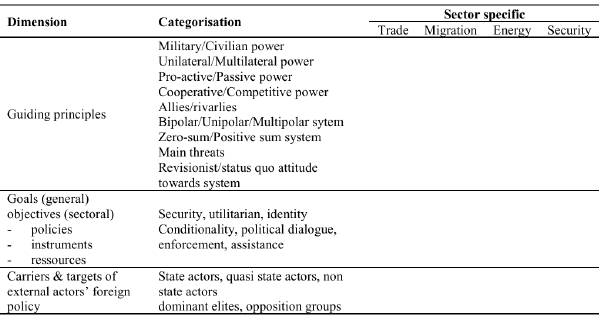
The overall design of this research is a qualitative comparative case study of Serbia and Montenegro. The qualitative analytical framework developed by D. Jakniūnaitė, L. Jonavičius, D. Lehmkuhl, M. Šešelgytė, and R. Vilpišauskas is used for structured content analysis of the 2018 Integration strategy document.27 The framework disaggregates a strategy into four layers: guiding principles (the grand strategic vision),28 the actor’s self-conception, goals and objectives, and instruments and allocated resources. It then assesses the scope of engagement, whether broad or sector-specific, and maps the carriers and domestic targets of the strategy. This structured approach clarifies whether a strategy’s ambition aligns with its tools, and whether the actor has sufficient leverage to achieve its aims. Table 1 summarizes the elements of the analytical framework. The content analysis of the strategy document is complemented by examining the causal mechanisms that linked the weaknesses or strengths of the strategy design to the disappointing outcomes it produced in the region, by using theories of the External Incentives Model, leverage through asymmetric interdependence, and LAOs and stabilitocracies.
Source: Jakniunaite, D., Jonavicius, L., Lehmkuhl, D., Seselgyte, M., & Vilpisauskas, R. (2017). Working Paper Introducing the Analytical Framework for Comparing Approaches and Strategies of the Selected External Actors'. EU-STRAT Deliverable, 4.
The proposed theoretical approach connects conditionality, leverage, and domestic constraints to explain the causal relationship between the design of the 2018 Western Balkans integration strategy and its disappointing outcomes. In applying this framework, the independent variable is the 2018 Western Balkan enlargement strategy itself; the dependent variables are reform outcomes in Serbia and Montenegro. The EIM and conditionality mechanisms function when the benefits of reforms outweigh the domestic costs and when the mechanisms themselves are clear, credible, and enforceable. The strength of these policy tools depends on the leverage gained from asymmetric interdependence, which acts as a variable modifying conditionality: when the EU holds strong leverage, conditionality is strong, and when the EU has low leverage, conditionality mechanisms are weaker. The Stabilitocracy approach acts as a domestic mediating mechanism; even when conditionality is well-prepared, and the EU holds significant leverage, domestic elites, acting within clientelist systems, may resist and simulate reforms if the current status quo is beneficial to them. External influences from Russia, China, and Türkiye are treated as intervening factors that weaken the EU leverage by offering alternative economic or security partnerships, which domestic elites then exploit to oppose costly reforms. Reform progress is operationalized through indicators drawn from European Commission country reports (e.g., advances in judicial independence, media freedom, anticorruption, and alignment with the acquis), macroeconomic data (e.g., trade flows, foreign direct investment (FDI), GDP per capita), migration patterns, and security metrics (e.g., participation in NATO, alignment with the EU’s Common Foreign and Security Policy). The analysis focuses on data covering the period of 2018–2024 so that to capture conditions at the strategy’s launch and the subsequent trajectory, while relying mainly on openly accessible data and official EU documents, such as individual country reports, reports from IEA, or the World Bank. Based on the analytical structure and theoretical framework of this paper, three hypotheses are developed to guide the analysis:
Hypothesis No. 1: The outcomes of the 2018 Strategy negatively correlate with the presence of rivaling external actors in the respective sector.
Hypothesis No. 2: Communication with incumbent politicians and the omission of civil society from the negotiation process result in democratic backsliding.
Hypothesis No. 3: The 2018 Strategy’s failure to tie the EU’s significant structural leverage to enforcement mechanisms resulted in insufficient pressure to overcome entrenched elite resistance to high-cost reforms.
Role theory posits that actors’ behavior is shaped by how they see themselves (these are the achieved roles), and how others see them (i.e., their ascribed roles).29 Since its inception, the EU has cultivated the identity of a civilian and normative power, relying on economic and legal instruments rather than coercion.30 In its enlargement discourse, the Union describes itself by using phrases such as the EU promotes, the EU is committed to, and the EU’s role, signaling its mission to export peace and stability. The integration strategy emphasizes the EU’s influence via economic pull factors and normative persuasion. Military coercion is notably absent, thereby reflecting the voluntary nature of EU accession. The specificity of the EU accession policy, combined with the Union’s normative and economic strength, enables the Union to position itself as a normative, rule-based, and civil power, prioritizing economic and legal influence over military force.
Regional stability, mentioned multiple times, is presented through the prism of contrast. The EU frames itself as a stable normative power in contrast to the Western Balkans, which is portrayed as politically volatile and in need of reform prior to accession.31 Stability, according to the EU, is best achieved through adherence to its rule-based normative framework. The EU actively participates in the stabilization process by mediating the Belgrade-Pristina dialogue and highlighting it as a key aspect of regional instability, while also contributing to efforts to tackle terrorism threats in the region. The EU’s active engagement in promoting peace, security, and stability in neighboring regions indicates that its ascribed role as a regional stabilizer is not yet fully achieved. A comparative lens reveals parallels with China’s emerging stabilizer role in East Asia post-2008, particularly through its Belt and Road Initiative (BRI).32 Unlike China’s infrastructure-led stabilization approach, the EU pursues regional stability primarily through legal and institutional alignment.33 While China’s model relies on state-driven investments, the EU’s stabilization efforts focus on democratic governance, the rule of law, and economic cooperation.
The EU’s achieved, ascribed, and aspirational roles – as a normative, civilian, and regional stabilizer – are presented as mutually reinforcing rather than contradictory. The EU conceptualizes itself as a civilian and normative power, leveraging economic integration and legal conditionality to shape regional governance without relying on military coercion. Democracy, respect for fundamental human rights, and the rule of law are the key areas targeted by the EU. These conclusions can be drawn from the Western Balkans integration strategy and the EU enlargement policy, both of which clearly state that EU accession is impossible without substantial improvements in these areas. The EU’s normative and civilian influence heavily depends on its interactions with international actors. Its main strategies include multilateral cooperation and conditionality-based approaches. As for the Western Balkan region, the EU encourages countries to cooperate with the relevant EU agencies, member states, and international organizations to improve their economic competitiveness, regional stability, and democratization. The normative changes the EU aims to influence in the region are driven by cooperation and merit-based integration into the EU process, rather than by military pressure and coercion. In the sense of what role the EU aims to ascribe, aspirations to become a regional stabilizer can be observed in the integration strategy and enlargement policy.34 The EU projects itself as a stabilizing force, positioning further cooperation as a pathway to enhanced regional security and institutional resilience in the Western Balkans. The EU actively promotes regional stability by mediating the Belgrade-Pristina dialogue and resolving bilateral territorial disputes, primarily between Serbia and Kosovo, which are essential prerequisites for the EU membership. As a normative and civilian power, the EU engages with international actors through multilateralism and conditionality-based instruments, aspiring to consolidate its role as a regional stabilizer.
The adopted framework identifies key dimensions that must be operationalized to analyze the EU’s strategic objectives in the Western Balkans:
The strategy’s overarching security goal is to prevent conflict spillover from the Western Balkans and enhance domestic stability. This emphasis reinforces the EU’s ascribed role as a regional stabilizer, which is consistent with Thies’s role theory, and is framed as an investment in the EU’s security, economic growth, and influence.35 The strategy calls for intensified cooperation between the EU and the Western Balkans through agencies such as Interpol, Europol, Eurojust, EBCGA, and Cepol to fight organized crime, terrorism and illegal migration. Engagement on security and migration was ranked just behind the rule of law in terms of priority. The Commission commits to concrete actions under its flagship initiative to deepen security and migration engagement in the Western Balkans. Despite its clear articulation of security and stability as core pillars of EU engagement, supported by actionable steps, the strategy remains narrowly EU-centric. It neglects to address the geopolitical competition posed by external actors, which is increasingly shaping the Western Balkans and threatening to derail both regional cooperation, EU security, and the integration process. This omission marks a significant shortcoming in an otherwise coherent security framework, and its consequences are tested by Hypothesis No. 1, which states that the presence of rival external actors negatively correlates with the Strategy’s outcomes.
Utilitarian goals are focused on economic convergence and integration into the EU’s internal market. The strategy framed enlargement as an investment in the Union’s own prosperity and urged Western Balkan governments to strengthen their competitiveness by implementing the Regional Economic Area, harmonizing regulations and investing in innovation and skills. It identified the economy as the second-highest priority after the rule of law. Yet, a key distinction between security and utilitarian goals lies in the level of expected engagement: while security goals demand direct EU involvement, utilitarian objectives are framed as the responsibility of the Western Balkan countries themselves. From a grand strategy perspective, this delegation of responsibility highlights a tension between the EU’s civilian power identity and its hesitation to fully commit strategic resources, potentially undermining its ability to achieve its long-term goals. Without significant EU financial support, infrastructure investment or trade facilitation, the burden of convergence fell on countries denoted by limited capacity. This asymmetry risks deepening dependency while failing to spur transformative reforms. Moreover, the strategy overlooks institutional and political barriers that constrain reform capacity. Without meaningful EU engagement to reinforce these structural foundations, even well-designed reforms may ultimately fail.
At the heart of EU enlargement lie liberal democratic values: respect for the rule of law, human rights, minority protection, media freedom and transparent governance.36 The strategy rightly recognized that strengthening the rule of law is the Western Balkans’ most pressing issue, and made it a top priority.37 It called for enhancing judicial independence, fighting corruption, reforming public procurement, tackling organized crime, protecting fundamental rights (including LGBTI rights), strengthening democratic institutions, and promoting media pluralism. These ambitious goals reaffirmed the EU’s identity as a normative power. However, some key potential issues remain unaddressed in the strategy. The EU positions itself as a normative power – as an exporter and promoter of liberal values – while simultaneously facing serious democratic backsliding within its borders. This contradiction creates a legitimacy gap, whereby the EU demands compliance with values it struggles to enforce internally, weakening the credibility and effectiveness of its identity-based goals. Moreover, the strategy does not clarify whether value promotion in the Western Balkans is the result of mutual agreement or is driven primarily by top-down conditionality. An overreliance on conditionality, without meaningful inclusion of the Western Balkan countries as co-authors of their political futures, risks reinforcing a dynamic of passive norm adoption rather than genuine democratic transformation.
Although the strategy criticized democratic backsliding, its implicit objective was to preserve political stability by working with incumbent regimes rather than empowering civil society or opposition actors. Phrases such as governments should ensure stakeholders can actively participate in the reform and policy-making process transferred responsibility to ruling elites to broaden participation. This strategic choice aligns with the logic of stabilitocracy, where the EU’s priority for short-term political stability unintentionally reinforces the power of entrenched elites whose influence depends on weak rule-of-law structures. The Commission commits to involving Western Balkan governments in technical committees and ministerial councils but offers no mechanisms to strengthen civil society’s voice. Consequently, the lack of EU mechanisms to empower civil society transforms the strategy’s emphasis on stability into a key factor enabling democratic backsliding. The exclusion of civil society, often more supportive of EU integration and reform-oriented than elected leaders, is widely regarded as a strategic misstep by the EU.38 Scholars argue that civil society organizations can provide grassroots insights into the region’s problems and offer more honest cooperation than politicians, who often lack the political will to spark large-scale reforms and are comfortable with the status quo.39 This strategic choice aligns with the logic of stabilitocracy and, as proposed by Hypothesis No. 2, the primary communication with incumbent politicians enables democratic backsliding by reinforcing the power of entrenched elites. The 2018 Western Balkan integration strategy suggests that the EU has no intention of initiating regime change in the region, and that the EU is committed to enhancing existing cooperation with local governments and to preserving their legitimacy.
The multiplicity of objectives indicates that the EU adopted a holistic approach. The wide range of goals can be attributed to several factors. First and foremost is the long-term goal of the EU–Western Balkan accession to the Union. Achieving this goal requires reforms across nearly every sector, making a narrow, sector-specific approach inadequate. Secondly, the Western Balkans region is a sphere of influence for various international actors. Comprehensive engagement also serves to constrain the influence of competing powers such as China, Russia, and Türkiye. Such breadth has advantages, reflects a broad scope, and addresses the interlinked nature of reforms. However, it also dilutes focus and resources. With limited political will and financial assistance, the EU struggled to prioritize projects, often resulting in numerous projects and initiatives that were started but left unfinished. A more targeted strategy that concentrates on sectors where the EU leverage is greatest – such as trade and migration – could yield clearer results and free resources to address areas of weak influence like energy and security.
Despite its clear structure and identification of regional challenges, the strategy lacks the political will and transformative ambition required to drive substantial change, thereby allowing elected officials to cling to their positions and further polish the façade of stabilitocracy. It fails to address the role of great power competition in shaping the region’s geopolitical dynamics, while the EU’s democratic backsliding undermines its credibility as a normative power. Furthermore, the expectation that Western Balkan countries should independently resolve their structural economic problems reflects a limited and arguably unrealistic level of EU commitment. These shortcomings suggest that, while rhetorically coherent, the strategy remains insufficiently equipped to meet the scale and complexity of the region’s integration challenges. Building on this comprehensive agenda, the subsequent sectoral analysis assesses the core claim of Hypothesis No. 3: whether the EU successfully utilized its structural leverage to overcome resistance to high-cost reforms.
This section analyzes mutual trade relevance across three dimensions: (1) Serbia’s and Montenegro’s share of the total EU external trade; (2) Foreign Direct Investment (FDI) in Serbia and Montenegro from the EU as a percentage of its total FDI; (3) Presence/absence of trade concentration in one specific sector.40 Trade ties illustrate a stark asymmetry. In 2018, the EU accounted for roughly 64–65% of Serbia’s and Montenegro’s total trade,41 whereas the two countries made up only 0.6% and 0.03% of the EU external trade, respectively.42 EU–Serbia trade totaled about €25 billion (with a €4 billion surplus for the EU); whereas, EU–Montenegro trade was around €1.3 billion. Trade between the EU and both Balkan states is dominated by industrial goods.43 Over 90% of the exchange involves machinery, transportation equipment, base metals, chemicals, and other manufactured products.44 In comparison, the Balkan countries mainly export lower-value goods and raw materials, thereby emphasizing the imbalance: the region relies on the EU for advanced products, but the EU does not depend on them for strategic imports.
The EU’s dominance is even clearer in foreign direct investment (FDI): in 2018, EU investors contributed about 71% of Serbia’s incoming FDI – i.e., roughly €1.8 billion, or over 5% of Serbia’s GDP.45 In Montenegro, EU-sourced FDI was around 34% of total inflows, adding up to roughly €170 million, or about 2.4% of GDP.46 This imbalance gives Brussels significant leverage, as Serbia and Montenegro would incur high costs if the ties were disrupted, while the EU could absorb the loss. The strategy sought to lock in this leverage by promoting regulatory harmonization, yet it offered limited financial assistance and ignored structural impediments such as state-owned enterprise reform and weak competition policy. Without deeper engagement and enforcement mechanisms, trade asymmetry alone is insufficient to drive systemic reform, as stated in Hypothesis No. 3.
Migration flows reveal strong interdependence. Serbia and Montenegro47 face significant brain drain: surveys indicate that around 70% of young people wish to emigrate,48 citing unemployment, corruption and stalled EU prospects, as the primary push factors from the region.49 In Serbia and Montenegro, the EU is cited as the preferred destination for skilled workers seeking better opportunities. In 2018, about 51,000 Serbians50 and 3,000 Montenegrins51 received first residence permits in the EU member states, representing only 1.8% and 0.1% of all permits issued by the EU, but constituting a substantial loss of talent for the two countries. Legal migration to the EU – driven by labor demand and family reunification – undercuts domestic reform capacity. Irregular migration is mainly a transit issue: during the 2015 crisis, hundreds of thousands of migrants traversed the Western Balkan route;52 by 2018, enhanced border controls and EU assistance had reduced illegal crossings to fewer than 6,000 per year.53 Both countries already collaborate with the EU agencies (such as Frontex) and regional partners to combat migrant smuggling and improve border security. Serbia’s participation in joint operations and intelligence-sharing on human trafficking exemplifies how the EU already works with candidate countries to bolster regional security.54 The EU wields moderate leverage through visa regimes,55 pre-accession mobility schemes and border cooperation, but its strategy did not address the socio-economic root causes driving emigration. However, the EU currently underutilizes this potential influence. For the region, greater alignment with EU asylum and labor standards could slow down the brain drain and improve human capital retention.
Energy security underscores the limits of EU leverage. Both Serbia and Montenegro depend rely on fossil fuels, especially coal and oil, to meet their energy needs. Coal is a cornerstone of electricity generation in both countries, each possessing domestic coal mining capacity.56 Beyond coal, their fortunes diverge. Montenegro has diversified its energy mix with hydropower and emerging renewables sector,57 leaving it less exposed to external suppliers.58 Serbia, by contrast, is highly dependent on imported hydrocarbons. In 2018 roughly 75% of its crude oil and nearly all of its natural gas were imported.59 Russia supplied about half of its oil and virtually all of its gas via the JANAF pipeline,60 and Russia’s Gazprom serves as Serbia’s sole supplier of natural gas under a long-term contract.61 Gazprom’s majority stake in the Serbian oil and gas company NIS (Naftna Industrija Srbije)62 further entrenches this dependence. Such reliance gives Moscow significant leverage and blunts the EU influence, thereby supporting Hypothesis No. 1, which states that the strong presence of external actors constrains the EU’s capacity to drive change.63 Energy interdependence reveals a significant divide between Serbia and Montenegro. While both countries rely on coal and imported oil, Serbia’s pronounced dependence on Russian gas, compounded by opaque ownership structures dominated by Russian firms, makes the country strategically vulnerable. This, in turn, constrains the European Union’s capacity to exert leverage. Montenegro’s avoidance of gas dependence, flexible petroleum imports, and commitment to the EU energy rules mean that it is far less vulnerable to Russian pressure and more open to cooperation with the EU. The strategy acknowledged the need for energy diversification but offered few concrete measures to loosen Russia’s grip. Aligning with the Energy Community acquis, investing in regional interconnectors and scaling up renewables could gradually reduce dependence. Montenegro’s example demonstrates that diversification and reform foster alignment with the EU energy policy and diminish external vulnerability.
Security and defense considerations further differentiate the two cases. Montenegro, which joined NATO in 2017, coordinates its foreign and defense policies with Euro-Atlantic institutions and has aligned 100% with the EU’s Common Foreign and Security Policy.64 It participates in NATO missions and supports EU foreign policy declarations. Serbia, meanwhile, declares military neutrality, balancing relations with East and West.65 Its 2019 National Security Strategy names terrorism, organized crime and cyber threats as primary targets but does not identify Russia or China as challenges. The unresolved status of Kosovo remains Serbia’s central security concern, shaping its threat perceptions and justifying close ties with Moscow, Beijing and non-Western arms suppliers.66 The portrayal of Kosovo as a source of instability is politicized:67 governance indicators suggest Kosovo’s rule-of-law and corruption levels are roughly similar to Serbia’s own, thereby indicating that Serbia’s threat perception is driven more by national narrative than by stark differences on the ground.68 Serbia’s limited alignment was measured at around 47% in 2018, whereas the EU foreign policy hampers deep security cooperation.69 Additionally, Serbia holds an observer status in the Russia-led Collective Security Treaty Organization (CSTO) and regularly joins military drills with Russia and Belarus, such as the “Slavic Brotherhood” exercises.70
The security sector reveals a fundamental divergence in alignment. Montenegro is a committed Western ally, a fully-fledged NATO member, and a country which is supportive of the EU security policies. Accordingly, the EU, alongside NATO, holds substantial leverage in Montenegro’s security affairs: the country consistently follows the EU foreign policy directives and benefits from Western security assistance. Serbia, conversely, remains a strategic free agent. By balancing between power centers and refusing to join Western sanctions on Russia, Serbia limits the EU’s influence in its security policy. Both countries avoid antagonizing major powers in official rhetoric, but their actions speak clearly: Montenegro has chosen the Euro-Atlantic path, whereas Serbia continues to hedge. This fundamental divergence in security alignment confirms the mechanism proposed in Hypothesis No. 1: outcomes are weak in sectors like Serbia’s security policy, where the EU must manage parallel relationships with actors such as Russia.
The sectoral analysis shows that the EU remains the Western Balkans’ dominant economic partner, as over 80% of the region’s exports go to the Union and nearly 60% of its imports come from it, thereby giving Brussels significant leverage.71 That influence is weaker in migration: the EU is the preferred destination for educated youth, and cooperates on policing illegal flows, but Serbia and Montenegro’s visa regimes remain partly out of step with the Schengen system because they still exempt countries, such as Russia and Belarus, that the EU rules do not. In the field of energy, the picture diverges: Serbia is highly dependent on Russia for oil and gas and has allowed Moscow to gain majority stakes in its energy infrastructure while keeping the gas sector vertically integrated, contrary to the EU’s Third Energy Package; Montenegro, by contrast, lacks pipelines, produces most of its power from renewables and domestic coal, and has unbundled its energy sector, leaving Moscow little foothold and enabling greater EU influence. Security policies also differ: Serbia proclaims military neutrality and splits its cooperation between the Russian-led CSTO and joint exercises with NATO, whereas Montenegro’s NATO membership signals a clear Western alignment. External actors amplify these differences: NATO and the World Bank generally support the EU goals,72 but Russia seeks to preserve the status quo through corrupt patronage, religious and historical ties, and media propaganda,73 as well as control over Serbia’s energy sector, while China’s large, unconditional loans lure governments into debt traps and sometimes seize ownership of strategic infrastructure – as debts above 100% of GDP, as in Montenegro, jeopardize EU accession. Overall, the EU leverage is substantial but uneven across sectors; energy dependence, competing security alignments, unresolved territorial disputes and the active engagement of Russia and China all constrain reform momentum, and the current strategy largely ignores these rival influences, undermining its geopolitical coherence.
|
Sector |
Serbia |
Montenegro |
|
Trade |
High (strong asymmetry) |
High (strong asymmetry) |
|
Migration |
Medium (underutilized) |
Medium (underutilized) |
|
Energy |
Low (Russia dominates) |
Medium–High (aligned) |
|
Security |
Low (hedging) |
High (NATO/CFSP aligned) |
Source: compiled by the author
The final component evaluates how rival powers reacted to the strategy. Assessing whether external actors support or oppose the EU’s 2018 integration strategy requires clarifying the Union’s stated goals in the region. The overarching and long-term goal of the Union in the region is the integration of the Western Balkan countries into the European Union.74 To achieve integration, the EU outlined several concrete objectives: strengthening the rule of law and democracy; combating corruption and state capture; resolving bilateral disputes; improving economic competitiveness; and enhancing security cooperation against illegal migration, drug smuggling, and human trafficking. Russia and China, as the two most influential external actors in the Western Balkans, pursue divergent objectives but employ similar, opaque methods, such as bilateral loans, infrastructure investments, and media campaigns, to bypass EU scrutiny and exploit institutional weaknesses. Russia aims to hinder Euro-Atlantic integration and maintain strategic leverage by cultivating energy dependencies, supporting nationalist politicians, and deploying disinformation. China seeks to secure infrastructure contracts and geopolitical footholds through the Belt and Road Initiative; it avoids open opposition to EU accession yet erodes democratic institutions by offering unconditional funding that undermines transparency and fuels corruption. Despite clearly defined accession-related goals, the EU’s strategy fails to address the substantial influence of other external powers on the region’s political and economic orientation. This gap undermines the EU’s position and highlights a broader conflict between its normative and geopolitical identities. Given the intensity of external actor involvement, the EU must move beyond its current technocratic and normative framing. This would entail explicitly identifying rival actors, adopting counter-disinformation measures, linking accession funding to energy diversification away from Russian dependency, and strengthening civil society as a counterbalance to a rise of populist movements.
|
External Actor |
EU Goal Undermined |
Tactics and strategies |
|
Russia |
Rule of law, foreign policy alignment |
Support for anti-EU elites; uses Orthodox church and media |
|
China |
Fiscal governance, transparency, environment |
Provides funding with no conditions, creates debt traps |
Source: compiled by the author
Building on the analysis of the strategy’s goals, EU leverage, and external actor responses, this section examines the instruments and mechanisms employed to achieve the stated goals. Drawing on both Prof. Dr. Tanja A. Börzel’s analyses75 and the framework adopted in this study,76 EU instruments are categorized into three types: (1) conditionality – use of incentives to shape cost–benefit calculations; (2) enforcement – legally obliging compliance; and (3) assistance – facilitating change through financial and technical expertise.
However, Tanja A. Börzel’s framework overlooks the potential of the EU to effect political change from below, by employing various bottom-up mechanisms to engage with civil society. In the Western Balkans, civil society tends to support EU accession and is more willing to endure short-term sacrifices in pursuit of long-term economic stability. Including such instruments in the framework can reveal whether the EU considers civil society a catalyst for change in the region. Furthermore, the EU’s approach to civil society is not always adequate. During North Macedonia’s 2015 political crisis, civil society organizations played a crucial role in demanding democratic reforms after a significant wiretapping scandal. The EU played an instrumental role in resolving the crisis and brokered the Pržino Agreement through diplomatic pressure. However, its engagement with civil society remained limited, thereby reflecting a persistent focus on political elites even during moments of political crisis.77 In 2024, protests against the Rio Tinto lithium mine in Serbia demonstrated the ability of civil society to rally around issues of the rule of law, environmental justice, and democratic accountability. The EU’s silence on these protests was widely criticized as a strategic oversight, underscoring its persistent bias toward engagement with political elites.78 This strategic inaction confirms the core mechanism of stabilitocracy: when faced with a choice between supporting genuine bottom-up democratic mobilization (civil society) and maintaining smooth state-to-state relations with the incumbent elite (preservation of stability), the EU favors the latter. This avoidance of confrontation allows ruling elites to suppress accountability and continue the façade of reform while preserving their status quo power, thereby directly confirming Hypothesis No. 2’s linkage to democratic backsliding.
An important distinction is whether these instruments are applied generically or tailored to specific cases. It is concluded that generally applied instruments are less effective than clearly specified and targeted applications of external engagement.79 A clear example of targeted EU policies achieving the desired results more quickly and effectively can be seen by comparing Serbia’s EU accession process with its visa liberalization process. In 2009, the Council of the European Union granted visa-free travel to and within the Schengen area to Serbian citizens, as well as to citizens of North Macedonia and Montenegro. From the Serbian perspective, the visa liberalization process was exemplary in demonstrating how positive EU conditionality could work – there was a roadmap, the obligations were clear, and, above all, the reward looked credible and within reach.80 Serbia’s path to EU accession is characterized as being too broad, focusing on too many reforms simultaneously, and not dedicating enough attention to any single area.81
This analysis also considers the types and volumes of resources the EU has devoted to achieving its goals in the Western Balkans. These resources fall into two broad categories: material resources (e.g., financial aid) and institutional resources focused on capacity building. The latter includes diplomatic presence, such as embassies and local EU staff.82
As this study primarily focuses on the 2018 Western Balkan integration strategy and its analysis, the strategy document will serve as the main source of information. Additional official EU documents, such as the 2019 EU Enlargement Policy Communication, IPA II and III information, and EU budgetary documents, may be utilized to provide context and gain a broader perspective on the EU’s engagement in the region, but will not significantly impact the analysis.
The EU’s enlargement toolkit comprises three broad categories: conditionality, enforcement, and assistance. Since the Big Bang enlargement of 2004, Brussels has introduced more detailed benchmarks and support, yet positive conditionality and voluntary compliance with benchmarks remain the main tools in the EU’s accession toolbox and the backbone of the EU integration strategy. Positive conditionality works only when political costs are low and political will to reform is high – these are conditions that are largely absent in the Western Balkans – and so overreliance on it has only yielded limited results. In practice, technical and financial assistance remain the core of EU engagement. These mechanisms are well-established, adequately funded, and have already begun to foster change in the region. Expanded technical assistance measures and a lesser reliance on positive conditionality could help countries reach the desired outcomes more quickly. Coercive instruments remain the least utilized component of the EU’s enlargement strategy. Although this restraint aligns with the EU’s identity as a normative power, it paradoxically weakens that very image by limiting its ability to enforce liberal norms. This gap in the strategic toolkit – the absence of coercive means – is precisely what Martel would highlight as a weakness in grand strategy execution. Additionally, the EU’s inability to prevent democratic backsliding in certain member countries sends a mixed message to aspiring members: if the current EU members undermine liberal-democratic principles, candidates may question why they should strictly adhere to those norms. Developing selective coercive tools could deter democratic backsliding and signal to aspiring members that liberal-democratic norms are enforceable across the Union. Thus, the strategy remains specific and in line with Ademmer’s theory by setting detailed action plans and flagship initiatives for each country. However, the strategy fails to connect these initiatives to concrete funding mechanisms or conditionality, thereby weakening their overall effectiveness. This overreliance on conditionality without coercive measures validates Hypothesis No. 3 by confirming that the absence of a proper reward-punishment system meant that the EU’s structural leverage lacked sufficient pressure to overcome entrenched elite resistance to high-cost reforms.
This section examines how three major external actors – notably, the EU, Russia, and China – shape regional politics by analyzing their targeted domestic actors, scope of engagement, and instruments. The United States is excluded from this analysis due to its overlapping strategic objectives with the EU, while seeking to maintain a focused research scope.
Despite pursuing different objectives, China and Russia employ similarly opaque state-to-state mechanisms, such as loans and bilateral agreements, so that to bypass oversight and exploit the institutional weaknesses typical of LAOs. While not directly opposing EU accession, China’s approach undermines democratic institutions and impedes integration with both NATO and the EU. Additionally, China expects to eventually have more friends of China at the global negotiation tables.83 Russia’s primary objective is to hinder Euro-Atlantic integration and maintain its strategic leverage in the region.84 Conversely, the EU pursues a broad engagement strategy aimed at transforming LAOs into open-access systems by promoting judicial reform, strengthening institutional capacity, empowering civil society, and encouraging political pluralism – primarily through official channels. The following table synthesizes the key differences in each actor’s approach, scope of engagement, and domestic targets in the Western Balkans.
|
External Actor |
Targeted Domestic |
Engagement |
|---|---|---|
|
European Union |
• Government elites (elected leaders); • State institutions (public administration, judiciary); • Encourage inclusion of opposition & civil society (via governments). |
Broad and holistic – covers governance, security, economy, social policy, and connectivity. Aims for systemic transformation across sectors to meet EU accession criteria. |
|
China |
• Political elites (executives); • Related economic agencies (e.g., transport ministries); • Minimal engagement with civil society; • Business and political decision-makers. |
Sector-specific – concentrates on infrastructure, energy and industry. Little interest in political or social reform; engagement is geoeconomic (building Balkan links in China’s Belt & Road chain). |
|
Russia |
• Political elites (especially nationalist or Eurosceptic leaders); • Orthodox Church; • Nationalist groups; • Sympathetic media outlets; • Limited formal engagement with bureaucratic institutions except in security (Serbian military); • Civil society utilized via proxy NGOs and media rather than independent NGOs. |
Selective – focuses on leverage points: security (NATO alignment), energy sector, and ethnic/religious cleavages. Does not offer broad development; instead, it targets specific issues (e.g., Kosovo dispute, NATO accession, energy deals) to maintain influence. |
Source: compiled by the author
This research has examined why the EU’s 2018 Western Balkans Enlargement Strategy, despite its initial positive reception from policymakers, experts, and regional leaders, ultimately failed to deliver tangible progress toward EU accession for Serbia and Montenegro. The analysis attributes this stagnation not solely to domestic issues within the Western Balkans but argues that the strategy’s design and implementation suffered from fundamental structural flaws. The strategy’s failure, evident in stalled reforms and regression in some of the six flagship initiatives, was structural rather than incidental. It prioritized short-term stability and procedural checklists over genuine democratic transformation, leaving it ill-equipped to address the region’s entrenched challenges.
The comprehensive analytical framework revealed key shortcomings, starting with the EU’s guiding principles, which, while emphasizing peace and stability, were not matched by a corresponding political ambition to catalyze meaningful transformation, resulting in a risk-averse approach that prioritized the status quo. The strategy’s objectives, though wide-ranging, remained largely rhetorical and lacked clear operationalization. Furthermore, the EU’s heavy reliance on conditionality and assistance mechanisms, without additional incentives or coercive measures, proved insufficient. A significant flaw was the strategy’s lack of inclusivity, as it primarily communicated with incumbent political leaders, thereby sidelining local civil society. While the EU emphasizes the significance of an active and empowered civil society in liberal democracies, the empowerment of civil society is left to the governments of the Western Balkan countries. This oversight, constituting the core claim of Hypothesis No. 2, is problematic because pro-European civil society groups are more willing to drive reforms than ruling elites, since the elites tend to face greater political costs and hedge their commitments. This oversight undermines the EU’s ability to leverage civil society as a driver of democratization. Secondly, communication solely through official channels may further entrench the political elites whose power rests on patronage networks and corruption, enabling them to gain support and secure increased financial and technical assistance while delivering scarce change or no tangible reforms at all.
The strategy neglects the intensifying geopolitical competition in the region, and particularly the rising influence of China and Russia. China pursues a bilateral, infrastructure-driven strategy that often bypasses multilateral governance mechanisms, creating debt dependence that increases Beijing’s leverage and undercuts the EU’s influence. Russia, on the other hand, engages with populist and Eurosceptic politicians and actively seeks to halt the region’s EU and NATO accession. The EU fails to recognize the leverage that these two global powers have in the region and how they are hindering the EU accession process.
The 2018 Enlargement Strategy also highlights the EU’s persistent overreliance on conditionality, a mechanism increasingly insufficient in today’s regional context. Given the high domestic political costs, conditionality alone lacks the leverage to drive reforms. Conditionality, centered on the ultimate golden carrot of EU accession, lacks the transformative power it once held in 2004 and cannot compete with the immediate incentives offered by rival powers.85 The 2018 Enlargement Strategy also overlooks coercive instruments – which is a critical shortfall in effective grand strategy, as Martel would identify. The External Incentives Model points out that high domestic political costs might be reduced if the conditions, such as the accession process, are clearly defined and well-monitored, and a reward-punishment system is properly established. The 2018 Western Balkan enlargement strategy emphasizes that neither a reward-punishment system was put in place nor did the accession process guarantee a clear pathway. While the tools of punishment may conflict with the EU’s normative nature, their absence also carries significant consequences. The lack of internal EU credibility, as illustrated by the erosion of democracy in Poland and Hungary, undermines the EU’s normative authority in demanding democratic reforms from accession candidates. This legitimacy gap undermines the perceived value of EU conditionality, encouraging local elites to resist or simulate compliance. For a normative power, this helps explain the weakening of the EU’s transformative influence. Together, these shortcomings highlight a broader issue: the EU’s enlargement strategy is misaligned with the evolving geopolitical realities of the region, where both local governance failures and assertive external actors reinforced reform stagnation.
The 2018 Western Balkan integration strategy illustrates how the EU’s post-2004 enlargement toolbox – centered on conditionality and assistance – has become ill-suited to the region’s political economy. Without a credible membership perspective, conditionality alters elite cost–benefit calculations only when adoption costs are low; in Serbia and Montenegro, however, high political costs and entrenched stabilitocracies enabled elites to stall reforms while reaping EU benefits. Although the EU enjoys high or medium leverage in trade, migration, and security, it failed to convert this asymmetrical interdependence into effective enforcement. External powers exploited this gap by offering opaque, state-to-state deals that bypass oversight and reinforce LAOs. Our analysis supports three propositions: first, reform outcomes deteriorated in sectors where rival actors such as Russia and China were present; second, the EU’s reliance on incumbent politicians and neglect of civil society contributed to democratic backsliding by reinforcing the logic of the stabilitocracy model; and third, the strategy’s inability to link its leverage to coercive measures or tangible rewards left insufficient pressure to overcome elite resistance.
The failures outlined above underscore the urgent need for the EU to reform its enlargement approach if it seeks to revive the European integration process in the Western Balkans. The traditional enlargement strategy, based on conditionality mechanisms, strong EU pull factors, and willing domestic elites, has proven outdated and ineffective in a context where the political costs for elites to fully commit to the European path are high, political will is low on both sides, and engagement from competing external actors is high. To address the core problem identified by this thesis, the EU must recalibrate its strategy to make it more credible, inclusive, and adjusted to regional realities. This means adjusting the balance between conditionality and partnership, while emphasizing that the EU accession process is not a one-sided checklist imposed by Brussels but a shared project with mutual commitments. The EU should broaden its engagement beyond governments to include opposition and civil society, thereby fostering greater local ownership of the process. It should also consider offering intermediate benefits or stages of integration to maintain reform momentum, while not hesitating to enforce consequences for backsliding when necessary. At the same time, the EU must address its internal issues, such as democratic backsliding among its members and decision-making paralysis, so it can credibly uphold the standards it expects candidates to meet. Reestablishing consistency between the EU’s internal values and its external expectations will reinforce its normative authority and make local compliance more reasonable. Indecisiveness not only weakens the EU’s credibility but also allows rival powers, such as China and Russia, to deepen their foothold in the region. A credible and sustained EU presence is essential – not only to counter rival influences but to preserve the realistic hope of a European future for the region.
The systemic weaknesses of EU’s approach to the WB highlighted by this analysis, together with growing presence of rivaling powers in the region, raises a broader policy dilemma: how the EU should continue to balance between its conditionality and merit-based framework while at the same time responding more effectively to the competing external actors, such as Russia and China. To bridge the existing gap the EU needs to recalibrate its conditionality mechanism to operate more effectively within a contested geopolitical landscape without abandoning it as a core principle of integration. This recalibration requires prioritization of reforms that hold the most strategic value, offering tangible rewards for progress in geopolitically sensitive areas, and strengthening oversight in sectors where rival powers hold the greatest leverage. Ultimately, the enlargement process must remain structurally rigorous yet flexible enough to counter immediate, transactional gains offered by competitors. By improving the conditionality mechanism, the EU will still be able to position itself as a transparent alternative to the opaque and illiberal approach of China and Russia, while at the same time mitigating their strategic gains in the region.
The 2018 Enlargement Strategy was flawed in both design and execution, and arguably never stood a real chance of fulfilling its ambitious promises. The central lesson from this failure is that success in EU enlargement requires more than well-intentioned strategy documents: it demands strong political will, inclusivity, and adaptability from the EU itself, as well as genuine commitment and reform efforts from aspiring member states. Only by addressing both sides of this equation – the EU’s strategic shortcomings and the region’s internal challenges – can the promise of a European future for the Western Balkans be fulfilled.
Matas Sosnovskis: Conceptualization, formal analysis, investigation, writing – original draft.
Lina Strupinskienė: Methodology, supervision, validation, writing – review and editing.
Literature
Ademmer, Esther. Russia’s Impact on EU Policy Transfer to the Post-Soviet Space: The Contested Neighborhood. 1st ed. London: Routledge, 2016. https://doi.org/10.4324/9781315672007.
Balkan Barometer. Balkan Barometer 2024: Public Opinion Survey. Sarajevo: Regional Cooperation Council, 2024. https://www.rcc.int/balkanbarometer/key_findings_2024/2/.
Bandović, Igor, and Nikola Dimitrov. “Balkan Strongmen and Fragile Institutions.” In Resilience in the Western Balkans, edited by Sabina Lange, Zoran Nechev, and Florian Trauner. Paris: European Union Institute for Security Studies (EUISS), 2017. http://www.jstor.org/stable/resrep07086.16.
Bieber, Florian. “Patterns of Competitive Authoritarianism in the Western Balkans.” In Rethinking ‘Democratic Backsliding’ in Central and Eastern Europe, 95–112. London: Routledge, 2020.
Bieber, Florian, and Marko Kmezić. EU Enlargement in the Western Balkans in a Time of Uncertainty. Policy Brief. Graz: BiEPAG, 2016.
Börzel, Tanja A., “The Transformative Power of Europe Reloaded: The Limits of External Europeanization.” KFG Working Paper Series, no. 11 (Berlin: Freie Universität Berlin, 2010), 3.
Börzel, Tanja A., and Vera van Hüllen. Good Governance and Bad Neighbors? The Limits of the Transformative Power of Europe. Working Paper no. 21. Berlin: Kolleg-Forschergruppe “The Transformative Power of Europe,” Freie Universität Berlin, 2011. https://nbn-resolving.org/urn:nbn:de:0168-ssoar-371310.
Börzel, Tanja A., Antoaneta Dimitrova, and Frank Schimmelfennig. “European Union Enlargement and Integration Capacity: Concepts, Findings, and Policy Implications.” In European Union Enlargement and Integration Capacity, 1–20. London: Routledge, 2017.
Börzel, Tanja A. Building Sand Castles? How the EU Seeks to Support the Political Integration of Its New Members, Accession Candidates and Eastern Neighbours. MAXCAP Working Paper Series, no. 9. Berlin: Freie Universität Berlin, 2015. https://userpage.fu-berlin.de/kfgeu/maxcap/system/files/maxcap_wp_09_4.pdf.
Coibion, Thibault. How Effective Is the EU as a Mediator? The Case of the Former Yugoslav Republic of Macedonia. Master’s thesis, College of Europe, 2017.
Petrović, Aleksandra, and Miloš Laković. “The International Comparative Legal Guide to: Oil & Gas Regulation 2018 – Serbia.” In The International Comparative Legal Guide to: Oil & Gas Regulation 2018, 226–235. London: Global Legal Group, 2018. Moravčević, Vojnović & Partners in cooperation with Schoenherr.
Crude Petroleum in Serbia. The Observatory of Economic Complexity. 2023. https://oec.world/en/profile/bilateral-product/crude-petroleum/reporter/srb?yearExportSelector=exportYear6.
Dragic, Aleksander. “Serbia’s Lucrative Global Arms Trade.” EuroProspects, June 21, 2023. Accessed March 13, 2025. https://europrospects.eu/serbias-lucrative-global-arms-trade/.
Energy Community Secretariat. Annual Implementation Report 2018/2019. Vienna: Energy Community Secretariat, 2019.
Euronews. “Serbia Inks €2.7 Billion Deal with France for 12 Rafale Fighter Jets in Move Away from Russia.” Euronews, August 30, 2024. Accessed March 13, 2025. https://www.euronews.com/my-europe/2024/08/30/serbia-inks-27bln-deal-with-france-for-12-rafale-fighter-jets-in-move-away-from-russia.
European Commission. A Credible Enlargement Perspective for and Enhanced EU Engagement with the Western Balkans. COM (2018) 65 final. Brussels: European Commission, 2018.
European Commission. Communication on Further Steps Towards Completing Europe’s Economic and Monetary Union: A Roadmap. COM (2018) 65 final. Brussels: European Commission, 2018. https://eur-lex.europa.eu/legal-content/EN/TXT/?uri=CELEX%3A52018DC0065.
European Commission. European Union Trade in Goods with Montenegro. Brussels: Directorate-General for Trade, 2024.
European Commission. European Union Trade in Goods with Serbia. Brussels: Directorate-General for Trade, 2024.
European Commission. Montenegro 2019 Report. COM (2019) 260 final. Brussels: European Commission, 2019.
European Commission. Serbia 2019 Report. COM (2019) 260 final. Brussels: European Commission, 2019.
European Commission and Eurostat. EU Direct Investment Positions by Country, Ultimate and Immediate Counterpart and Economic Activity (BPM6). Luxembourg: Publications Office of the European Union, 2025. https://doi.org/10.2908/BOP_FDI6_POS.
European Commission and Eurostat. First Permits by Reason, Length of Validity and Citizenship. Luxembourg: Publications Office of the European Union, 2025. https://doi.org/10.2908/MIGR_RESFIRST.
European Commission. 2019 Communication on EU Enlargement Policy: Montenegro 2019 Report. COM (2019) 260 final. Brussels: European Commission, 2019.
European Commission. 2019 Communication on EU Enlargement Policy: Serbia 2019 Report. COM (2019) 260 final. Brussels: European Commission, 2019.
European Commission: Directorate-General for Communication. EU Accession Process – Step by Step. Luxembourg: Publications Office of the European Union, 2022. https://data.europa.eu/doi/10.2775/164664.
European External Action Service. A Strategic Compass for Security and Defence. Brussels: European Union, 2022. https://www.eeas.europa.eu/sites/default/files/documents/strategic_compass_en3_web.pdf.
European Western Balkans. “EU Criticized for Staying Silent on Momentous Protests in Serbia.” European Western Balkans, January 29, 2025. https://europeanwesternbalkans.com/2025/01/29/eu-criticized-for-staying-silent-on-momentous-protests-in-serbia/.
Feyerabend, Florian C. The Influence of External Actors in the Western Balkans: A Map of Geopolitical Players. Berlin: Konrad-Adenauer-Stiftung, 2018. ISBN 978-3-95721-471-3.
Gallup International. Global Leaders 2018: Gallup International’s 42nd Annual Global Opinion Poll in 57 Countries Across the Globe. 2018. https://gallup-international.com/fileadmin/user_upload/surveys_and_news/2018/2018_End-of-Year_Global-Leaders.pdf.
Government of Montenegro. “Air Force of Armed Forces of Montenegro Is Stronger for Another Helicopter.” Government of Montenegro, March 2, 2021. https://www.gov.me/en/article/232955--air-force-of-armed-forces-of-montenegro-is-stronger-for-another-helicopter.
Gravier, Mathilde. “The 2004 Enlargement Staff Policy of the European Commission: The Case for Representative Bureaucracy.” JCMS: Journal of Common Market Studies 46, no. 5 (2008): 1025–1047.
Grieveson, Richard, Mario Holzner, and Goran Vukšić. “Regional Economic Cooperation in the Western Balkans: The Role of Stabilization and Association Agreements, Bilateral Investment Treaties and Free Trade Agreements in Regional Investment and Trade Flows.” Eastern European Economics 59, no. 1 (2020): 3–24. https://doi.org/10.1080/00128775.2020.1846130.
Hajdini, Arta, Lumnije Collaku, and Shqipe Merovci. “Effect of Corruption on Foreign Direct Investment Inflows in Countries of the Western Balkans.” Journal of Liberty and International Affairs 9, no. 1 (2023): 130–143. https://www.ssoar.info/ssoar/bitstream/handle/document/85987/ssoar-jlibertyintaff-2023-1-hajdini_et_al-Effect_of_corruption_on_foreign.pdf?sequence=1.
Halili, Zaim. “Western Balkans Integration into European Union: Challenges and Consequences.” Traektoriâ Nauki 5, no. 8 (2019): 4001–4012.
Harnisch, Sebastian, Cornelia Frank, and Hanns W. Maull, eds. Role Theory in International Relations. 1st ed. London: Routledge, 2011. https://doi.org/10.4324/9780203818756.
International Energy Agency. Evolution of Oil Products Final Consumption by Sector in Montenegro since 2000. Paris: IEA, 2025. https://www.iea.org/countries/montenegro/oil.
International Energy Agency. Evolution of Oil Products Final Consumption by Sector in Serbia since 2000. Paris: IEA, 2025. https://www.iea.org/countries/serbia/oil.
International Energy Agency. Montenegro – Countries and Regions. Paris: IEA. https://www.iea.org/countries/montenegro.
International Energy Agency. Serbia – Countries and Regions. Paris: IEA. https://www.iea.org/countries/serbia.
International Trade Administration. Montenegro Country Commercial Guide. https://www.trade.gov/country-commercial-guides/montenegro-energy-0.
Jakniūnaitė, Dovilė, Laurynas Jonavičius, Dirk Lehmkuhl, Margarita Šešelgytė, and Ramūnas Vilpišauskas. Working Paper Introducing the Analytical Framework for Comparing Approaches and Strategies of the Selected External Actors. EU-STRAT Deliverable no. 10. Berlin: Freie Universität Berlin, 2017.
Keohane, Robert O., and Joseph S. Nye Jr. “Power and Interdependence Revisited.” International Organization 41, no. 4 (1987): 725–753.
Kmezić, Marko, and Florian Bieber, eds. The Crisis of Democracy in the Western Balkans: An Anatomy of Stabilitocracy and the Limits of EU Democracy Promotion. Graz: BiEPAG, 2017.
Kmezić, Marko. “EU Rule of Law Conditionality: Democracy or ‘Stabilitocracy’ Promotion in the Western Balkans?” In The Europeanisation of the Western Balkans, edited by Jelena Džankić, Soeren Keil, and Marko Kmezić, 87–106. New Perspectives on South-East Europe. Cham: Palgrave Macmillan, 2019. https://doi.org/10.1007/978-3-319-91412-1_5.
Kostovicova, Denisa. “When Enlargement Meets Common Foreign and Security Policy: Serbia’s Europeanisation, Visa Liberalisation and the Kosovo Policy.” Europe-Asia Studies 66, no. 1 (2013): 67–87. https://doi.org/10.1080/09668136.2013.855018.
Krasner, Stephen D. “An Orienting Principle for Foreign Policy.” Policy Review, no. 163 (2010).
Manners, Ian. “European Union ‘Normative Power’ and the Security Challenge.” European Security 15, no. 4 (2006): 405–421. https://doi.org/10.1080/09662830701305880.
Martel, William C. Grand Strategy in Theory and Practice: The Need for an Effective American Foreign Policy. Cambridge: Cambridge University Press, 2015.
Međak, Vladimir. “Why Did the Enlargement Process Lose Its Transformative Power and Credibility?” European Western Balkans, February 11, 2025. https://europeanwesternbalkans.com/2025/02/11/why-did-the-enlargement-process-lose-its-transformative-power-and-credibility/.
Nagy, Tibor, and Jakub Cingel. “NATO-Serbia Relations: Still Defining the Modus Vivendi.” GLOBSEC Policy Institute, 2017.
National Security Strategy of the Republic of Serbia. Official Gazette of the Republic of Serbia, no. 94 (2019).
North, Douglass C., John Joseph Wallis, and Barry R. Weingast. Violence and Social Orders: A Conceptual Framework for Interpreting Recorded Human History. Cambridge: Cambridge University Press, 2009.
Novaković, Igor, and Tijana Plavšić. An Analysis of Serbia’s Alignment with the European Union’s Foreign Policy Declarations and Measures: Semi-Annual Review for 2024. Belgrade: ISAC Fund, 2024. https://www.isac-fund.org/wp-content/uploads/2022/09/ISAC-CFSP-Analysis-2022.pdf.
Rakočević, Miljana. Youth Brain Drain in Montenegro. Pristina: Germin, 2022. Project: Enhancing Regional Cooperation of Young Researchers on Migration & Development.
Reuters Staff. “Gazprom Neft Buys 5.15 Pct of Serbia’s NIS.” Reuters, March 18, 2011. https://www.reuters.com/article/markets/stocks/gazprom-neft-buys-515-pct-of-serbias-nis-idUSLDE72H0UB/.
RFE/RL. “Will New Pipelines Get Russian Oil to Serbia? – Analysis.” Eurasia Review, October 26, 2022. https://www.eurasiareview.com/26102022-will-new-pipelines-get-russian-oil-to-serbia-analysis/.
Sabbati, Giulio, Liliyana Velina, and Carla F. Guidi. Serbia: Economic Indicators and Trade with EU. Brussels: European Parliamentary Research Service, 2018.
Schimmelfennig, Frank, and Ulrich Sedelmeier. “Governance by Conditionality: EU Rule Transfer to the Candidate Countries of Central and Eastern Europe.” Journal of European Public Policy 11, no. 4 (2004): 661–679. https://doi.org/10.1080/1350176042000248089.
Schimmelfennig, Frank, and Ulrich Sedelmeier. 2019. “The Europeanization of Eastern Europe: The External Incentives Model Revisited.” Journal of European Public Policy 27 (6): 814–33. https://doi.org/10.1080/13501763.2019.1617333.
Sebők, Miklós, Rebeka Kiss, and Ádám Kovács. “The Concept and Measurement of Legislative Backsliding.” Parliamentary Affairs 76, no. 4 (October 2023): 741–772. https://doi.org/10.1093/pa/gsad014.
Sekulić, Gordana. “JANAF – A Strategic Oil Pipeline for the Security of Supply of Southeastern and Central Europe.” Nafta 65, no. 2 (2014): 155–157. https://hrcak.srce.hr/132897.
Serbia – Migrants and Refugees Section. Country Profile: Serbia. Migrants & Refugees Section, 2022. https://migrants-refugees.va/country-profile/serbia/.
Service, Marcin R. “Western Balkans: Enlargement Strategy 2018.” European Parliamentary Research Service Blog, March 14, 2018. https://epthinktank.eu/2018/03/14/western-balkans-enlargement-strategy-2018/.
Stanicek, Branislav, and Sofie Tarpova. China’s Strategic Interests in the Western Balkans. Brussels: European Parliament, 2022.
Statista Search Department. “Number of Illegal Border-Crossings between Border-Crossing Points to the European Union in 2023, by Route.” Statista, September 13, 2021. https://www.statista.com/statistics/454910/illegal-border-crossing-between-bcps-to-the-eu/.
Subotić, Jelena. “Out of Eastern Europe: Legacies of Violence and the Challenge of Multiple Transitions.” East European Politics and Societies 29, no. 2 (2015): 409–419. https://doi.org/10.1177/0888325415569763.
Subotić, Milan, and Ivana Pejić. “The Reach of State Power in a Globalized World – Some Lessons for the EU and the Western Balkans.” Bulletin of ‘Carol I’ National Defence University 13, no. 3 (2024): 193–210.
TASS. “Serbia to Receive Tanks, MiG-29 Planes and Armored Vehicles from Russia as Gifts — Media.” TASS, December 22, 2016. https://tass.com/defense/921555.