Respectus Philologicus eISSN 2335-2388
2026, no. 49 (54), pp. 93–104 DOI: http://dx.doi.org/10.15388/RESPECTUS.2026.49.7
An Inquiry on the Principles of Optional-Narrator Theory
Arta Hallaçi
University of Prishtina, Department of English Language and Literature
George Bush St. 31, 10000 Prishtinë, Republic of Kosovo
E-mail: arta.hallaci@uni-pr.edu
ORCID iD: https://orcid.org/0009-0002-0491-8401
Research interests: English literature, narratology, narrative strategies, translation, theory of literature
Abstract. This article presents the findings of a survey examining the principles proposed by Optional-Narrator Theory: Principles, Perspectives, Proposals (2021) in relation to literary instruction. The data from the questionnaire delivered to BA and MA students in the role of readers confirms some proposals of the optional-narrator theory. As the number of literature courses increases, students (in the function of readers) seem obligated to assign a fictional voice that speaks in a poem, even in poems that do not use one, thus confirming the optional-narrator theory’s claim that academia often insists on an abundant literary terminology. Another proposal of the optional-narrator theory, confirmed by this paper, is that the obligatory focus on fictional voices shifts the reader’s attention away from the poet’s aesthetic achievements (students found it difficult to attribute rhyme and meter to the poet). Although the study reconfirms that literary instruction positively affects the development of skills in identifying narrative concepts, the results also suggest that the claims of optional-narrator theory are valid and useful to the future of literary instruction and academia, as we once again turn our attention back to the pivotal role of the author.
Keywords: optional-narrator theory; literary instruction; pan-narrator theory.
Submitted 28 August 2025 / Accepted 12 January 2026
Įteikta 2025 08 28 / Priimta 2026 01 12
Copyright © 2026 Arta Hallaçi. Published by Vilnius University Press. This is an Open Access article distributed under the terms of the Creative Commons Attribution License CC BY-NC-ND 4.0, which permits unrestricted use, distribution, and reproduction in any medium provided the original author and source are credited.
Introduction
This article explores the principles of the optional-narrator theory as presented in the publication, Optional-Narrator Theory: Principles, Perspectives, Proposals (2021a), edited by S. Patron, and tests them with real readers (respondents to a questionnaire). This theory of narrative, as presented in Patron’s publication, adds theoretical elaboration to previous narrative research, which has often disputed the presumption of a mandatory narrator related to the construction of the fictional work. Opposing the pan-narrator theory, the optional-narrator theory proposes that the narrator is strictly a choice of the author and not a prerequisite for the fictional world.
This narrative theory encourages consideration of the nature of narrators: must narratologists look back a couple of decades to previous narrative theories, or is there a need to entirely reconstruct the concept of the narrator? The latter also requires an inquiry into the time or process by which the narrator became significant enough to take ownership of the narrative text, demanding more theoretical questions about the outcomes of this ownership. In Optional-Narrator Theory, J. Culler outlines that in the 19th century, it was first proposed that “the narrating character is different from the author” in first-person narratives (2021, p. 37), and that critics and theoreticians of the 20th century began to state that “all narratives have a narrator separate from the author” (Culler, 2021, p. 38). This suggested that the narratologist was obligated to identify an imaginary narrator even in third-person narratives that show no textual indicators of the presence of a narrator. In her pivotal publication, Narratology: Introduction to the Theory of Narrative, M. Bal speaks of the relevance of the author/narrator difference:
- - -
The distinction between the author and narrator, once a structuralist reification of textual subjectivity, continues to carry strategic weight in this sense. It helps to disentangle the different voices that speak in a text so as to make room for the reader’s input in judging the relative persuasiveness of those voices. (Bal, 2009, p. 17)
- - -
Since the publication of the Optional-Narrator Theory, few articles have been published with relevance to this theory. An interesting study has been conducted by B. Gittel and Th. Haider (2025, pp. 509–528) explores the differences between the author and the narrator in relation to readers’ practical use of the terms. Further, in a linguistics-based approach, S. Bücking (2022, pp. 35–64) supports Hamburger’s view (consequently, all optional-narrator theorists’ view) of the lack of the obligatory need for the existence of narrators in fiction.
Hence, this article firstly presents a brief summary of the arguments of the optional-narrator theory as presented in Optional-Narrator Theory, followed by research conducted by means of a questionnaire distributed to bachelor’s and master’s students of the English Department, serving here as as actual readers, with the purpose of testing the relation between literary training and some of the principles of optional-narrator theory.
1. A brief recapitulation of the arguments of Optional-Narrator Theory
Optional-Narrator Theory voices the thoughts of many critics who argue that the idea of pan-narrator theory has simply been an agreement of modern literary theory and criticism towards an attempt at sophistication. According to Patron, the proposal behind pan-narrator theory is “irrational and produces monsters” (2021b, p. 4). Such critics propose that pan-narrator theory works against the reader’s intuition, as the reader is naturally inclined to notice the creative powers of an author, not of an imaginary narrator with magical powers and unlimited knowledge. It is this author who arranges the elements of the narrative. As Brenkman (2021, p. 91) explains: “The writing-of-the-telling is the act and process whose nature, procedures, and techniques ought to be the theoretical focus. For there is only one actual subject in prose fiction, namely, the writer.”
An analogy is often made between fictional narratives and feature films. Proponents of the optional-narrator theory argue that, just as there are some films with no narrator, there are also fictional narratives that contain no narrator. Some years before the publication of Optional-Narrator Theory, F. Zipfel also proposed this argument in his article Narratorless Narration? Some Reflections on the Arguments for and against the Ubiquity of Narrators in Fictional Narration (2015, pp. 45–46), although Zipfel is a representative of the pan-narrator theory.
Furthermore, imaginary voices are often created to elude identification with the voice narrating. In the chapter Real Authors, Real Narrators, and the Rhetoric of Fiction, V. Pieper (2021, pp. 73–74) lists three principles that must be recognised: 1. Authors “pretend that the events are taking place”, 2. “Sometimes poets introduce themselves as another person”, and 3. “Often poets unambiguously introduce a narrator who is a separate character”. Additionally, the esteemed critic Culler emphasises a concern of optional-narrator theorists when dealing with these fictional voices. He claims that
- - -
by turning attention away from the author, it deflects attention from the work of literature as something made, the product of artistic decisions, and it focuses attention on a supposed person, who except in special cases is not a writer and whose choices need therefore be explained in other than artistic terms. (Culler, 2021, p. 39)
- - -
Culler concludes that the focus on the imaginary voice cannot provide arguments for the aesthetic qualities of the poem, including the type of meter, the use of alliteration, or the structural aspects of the poem (Culler, 2021, p. 46).
Optional-narrator theorists also oppose the concept of omniscience. The idea of “knowledge” that a narrator might have is not a matter of the narrator’s choices in sharing or not sharing information with the readers or the possible reasons behind his/her actions, but that this is an artistic choice of the implied author. In an earlier article titled “Omniscience”, Culler harshly condemns the very idea of omniscience and its theological implications, suggesting that it leads to wrongful readings of authorial intentions (2004, pp. 22–34). In the chapter titled Implied Authors and Imposed Narrators – or Actual Authors, B. Boyd is even more assertive in the opposition to pan-narrator theory. He proposes that “all we need to understand the central dynamics of storytelling are the terms author, story, audience” (2021, p. 53). Drawing a similar parallel, Boyd (2021, p. 53–71) harshly criticises the distinction between story and discourse, arguing that narratologists erect barriers between the story that is part of the fiction and the language used to narrate that fiction. He states:
- - -
It’s as if we should envisage Elizabeth Bennet in the storyworld having thoughts a thought transcriber can then record in the discourse, rather than understand Austen telling Elizabeth’s story by inventing her and her thoughts and the words in which she as the author presents them to her audience. (Boyd, 2021, p. 59)
- - -
In the Introduction to Joyce’s Ulysses, J. Johnson (1993, p. xxxiii) explains that David Hayman has labelled the voice that speaks in the novel “not a narrator but an editor, an Arranger”, but optional-narrator theory may propose that now is not the time to add terminology, but to simply be able to say “Joyce is the one who arranges the sections of the novel we are reading”.
2. A survey testing some principles of Optional-Narrator Theory
To test the principles proposed by Optional Narrator Theory (2021), this section presents research conducted as part of my doctoral research on narrative strategies. In order to reach an accurate outcome of the results, a questionnaire was distributed anonymously within a week to a total of 90 bachelor and master students of the English Department at the University of Prishtina (20 bachelor students were randomly chosen out of each academic year of the four-year BA program, i.e. total 80 respondents of the bachelor program, and 10 master students of the MA program, which enrols a maximum of 20 students per year). The purpose was to include a range of respondents, from first-year bachelor’s students with very little literary and critical instruction to master’s students of English literature.
The main inquiries of this research focus on whether readers automatically identify the speaker in poetry and the narrator in prose with the author and what factors influence this plausible identification. Additionally, the questionnaire explores whether literature courses enhance aesthetic appreciation of the author’s use of speaking/narrating agents. The research also tests whether the obligation to include a narrator is merely a mark of sophistication and whether this practice creates confusion among actual readers. The aim of this questionnaire was to examine these narrative principles among real readers with diverse experiences and exposure to literature courses. The article proposes that while literary instruction positively affects the readers’ skills in detecting fictional speakers and narrators, it also influences or imposes the use of excessive narrative terminology, which may lead to readerly confusion of the terms. Additionally, the article aims to confirm the optional-narrator theory’s proposal that the obligative focus on fictional narrators shifts attention away from the author’s aesthetic skills.
A mixed-methods approach to data collection was suitable for this research. Some data required numerical measurement with the purpose of achieving the illustrative statistics of students’ responses to the questions, whereas qualitative data had to be gathered (mostly by the answers to the “please give reasons why” questions) in order to reach conclusions about the respondents’ answers to the multiple-choice questions. Other data were analysed using content analysis, which enabled the study of the principles and reasons underlying the reader’s recognition of the concepts of the speaker and the narrator.
3. Results of the research
The questionnaire aimed at exploring the readers’ skills in detecting first-person narrators in prose and speakers in poems, and to question whether there is a tendency to identify these two with the author of the literary work. Figure 1 illustrates the percentages of respondents’ responses regarding the relationship between the author and the first-person narrator. The results showed that 70% of respondents believed the narrator was “somewhat identifiable with the author”. Out of the group of students who chose “somewhat identifiable with the author”, it is noticeable that most of them did not offer an answer in the response category, and those who provided an answer either confused fiction with poetry or identified the author with the first-person voice, which denotes a connection that these students make between the author and the narrating voice. Among second-year respondents who had already read and discussed works by Jane Austen, Mary Shelley, Dickens, and the Brontë sisters, there was greater diversity in their answers. Their answers in the response category help explain this diversity. A student presented an argument: “The possible reason being the use of the first-person pronoun”. Another student admits to the unclarity of the two concepts. As with first-year students, six second-year students could not distinguish between the author-narrator dichotomy, although the percentage was slightly higher. The response category can help us understand the patterns that lead to readers’ convictions. When respondents have chosen the “somewhat identifiable option” in the questionnaire, they have often emphasised that the narrator can be considered somewhat identifiable to the author when dealing with autobiographical elements in fiction, offering examples such as Brontë’s Jane Eyre. Those who have chosen “never identifiable with the author” present answers such as “the author creates fictional narrators to narrate the story within the book”. Noticeably, in their use of phrases such as “fictional narrator” or “autobiography”, second-year students show a greater theoretical understanding in comparison to first-year students who have taken fewer literature courses.
![[70% of students believe the narrator to be “somewhat identifiable with the author”. These findings indicate that third-year and fourth-year students show greater unanimity in refusing to identify the author with the narrator.]](https://www.journals.vu.lt/respectus-philologicus/en/article/download/43201/version/39345/42120/134939/first5.png)
Fig. 1. Percentages of all student responses on the identification of the author and the first-person narrator
Third-year respondents (95%) answered with “somewhat identifiable with the author”. Generally, third-year students used phrases such as “views or opinions of the author vs. views of the speaker”, emphasised the narrator’s fictional character, and used examples of child narrators. Further, 95% of fourth-year respondents concluded that the author is not the narrator. Conclusively, there is a greater unanimity in refusing the identification of the author with the narrator by third-year and fourth-year students, and the arguments these readers offer suggest a more successful theoretical understanding of reading literary texts. As expected, the results show that 90% of master students have knowledge of the difference between the narrator and the author, as the inferential data shows the influence from courses such as “Contemporary Literary Criticism” and “Literary Theories”, which involve extensive readings of New Criticism, Russian Formalism, and Structuralism.
The survey has conducted the same inquiry on speakers in poems. Figure 2 presents BA and MA responses. Most respondents chose the speaker as the answer, excluding first-year respondents, suggesting a lack of theoretical understanding of poetry and of influence from literature courses. This finding offers evidence to Culler’s claim of academia’s insistence on finding speakers in poetry as a classroom practice (2021, p. 37).
![[Number of student responses on who speaks in a specific poem: the majority has responded that the speaker speaks in a poem. First-year students continue to identify this speaker as the poet, but other students with greater exposure to literature classes are inclined to detect a speaker in the poem.]](https://www.journals.vu.lt/respectus-philologicus/en/article/download/43201/version/39345/42120/134944/speak6.png)
Fig. 2. Number of student responses on the speaking voice in poems
Aspects of this topic have been further explored when reading an actual poem, Byron’s “So We’ll Go No More a Roving”. Moreover, in order to test their reading skills in comparison to their theoretical knowledge, the surveyor has intentionally added some additional information on the poem retrieved from the Norton Anthology of English Literature (Greenblatt, 2012, p. 620), in which there is a correlation between the poem used in the questionnaire and the poet’s biography (questions 7 and 9 in the questionnaire). As Figure 3 demonstrates, first-year students who regarded the poet as responsible for the words of the poem continue to believe that Byron is the person speaking the words of this actual poem, not a fictional speaker. Contrastingly, second-year students who, on a theoretical basis, have answered that the speaker speaks in a poem, continue to insist that there is a speaker in Byron’s poem, regardless of the lack of a textual indicator of an imaginary speaker. Thus, it is evident that the more literature courses students have had, the more they are inclined to detect a fictional speaker in poems.
![[Number of student responses on who speaks in a specific poem: the majority has responded that the speaker speaks in a poem. First-year students continue to identify this speaker as the poet, but other students with greater exposure to literature classes are inclined to detect a speaker in the poem.]](https://www.journals.vu.lt/respectus-philologicus/en/article/download/43201/version/39345/42120/134943/says7.png)
Fig. 3. Number of student responses on who speaks in a specific poem
![[93 % of students respond that the poet is the creator of rhyme. The result suggest that literary instruction positively helps students in the aesthetic appreciation of the poet’s role.]](https://www.journals.vu.lt/respectus-philologicus/en/article/download/43201/version/39345/42120/134942/respon8.png)
Fig. 4. Percentage out of theoretical answers on the attribution of rhyme in poetry
Another section of the questionnaire aimed to discern the respondents’ differentiating skills between the author and fictional voices in the attribution of aesthetic elements of the text, by inquiring about the creator of rhyme or the creator of meter in poetry (see Figure 4). The results reveal that 93% of respondents understand that the poet is the creator of rhyme. The majority of second-year, third-year, fourth-year respondents and M.A. respondents considered the poet to be responsible for the creation of rhymes. As expected, the teaching of literature helps readers develop a clearer theoretical understanding of the poet’s role.
To test the applicability of the theoretical knowledge discussed above, the research also asked respondents to identify the person responsible for creating the iambic and anapaestic meters in Byron’s poem. If we are to compare the theoretical knowledge of the creation of poetic components to the critical and applicative knowledge related to creation of poetic components, from 93% of respondents who answer that rhyme is created by the poet (as seen in Figure 4), the percentage decreases to 74% of respondents who declare meter to have been created by the poet when they read a specific poem (see Figure 5). These results can propose that a) it is easier for readers to distinguish terms on a theoretical basis than on a practical one, and possibly that b) readers find it harder to understand meter than to understand rhyme. Alternatively, a combination of options A and B may also be proposed.
The other section of the questionnaire focused on whether knowledge of various authorial functions, alongside the reading experience under the guidance of academic staff in literature courses, has enhanced readers’ appreciation of the theoretical aspects of literature. It explored the level of understanding of the autonomy and functions of speaking voices in poems, followed by an inquiry into the potential enhancement of the aesthetic experience of reading poetry when the functions of speakers are known to the reader. Again, as shown in Figure 6, third-year, fourth-year, and MA students show greater unanimity in their choice of speaking voices as artistic choices of the author, offering highly elaborated arguments in the response category. Fourth-year respondents often offer theoretical comments, such as “While the voices themselves are fictional, the author deliberately chooses to create these voices in order to create a particular artistic effect”, or that “the author adds to a work’s aesthetic by including these speakers”.
![[74 % of students believe the meter to have been created by the poet when they read an actual poem. The percentage decreases compared to the results when they were asked who creates the rhyme in a theoretical question. The results can propose that either term can be easier to differentiate theoretically, or that meter is a more difficult concept for students than rhyme.]](https://www.journals.vu.lt/respectus-philologicus/en/article/download/43201/version/39345/42120/134940/for9.png)
Fig. 5. The creation of meter, according to students, upon the reading of an actual poem
Afterwards, the students were also asked to read a specific poem to test their theoretical understanding and its application. When reading a specific poem, results denote that 20% consider the speaker of the poem a separate fictional existence, 52.2% see the speaker as identifiable with the poet, and 27.7% preferred the “I don’t have an answer” option. The data reveal that when reading a lyric poem, confusion about the poem’s speaker increases, suggesting that the reader’s intuitive skills do not create a speaker when he/she does not clearly notice one in the text. This intuitive feeling, alongside the learning they receive at this academic level, may create this sense of confusion, as was the case with the reading of Byron’s “So, We’ll Go No More a Roving”.
Another section explored whether respondents see the concepts of “speaker” and “poet” as contradictory or complementary, as presented in Figure 7. Although this figure presents sufficient evidence of students who regard the two concepts as complementary, due to the mixed analysis of this research, the findings also suggest that readers faced difficulties in identifying aesthetic aspects of the use of speakers in poetry (specifically when the numbers and the type of answers are compared to the findings on their views on first-person narrators in prose).
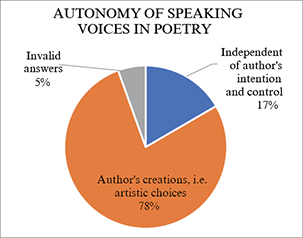
Fig. 6. An illustration of readers’ perceptions of the autonomy of speaking voices in poetry – theoretical answers
Although 80% of first-year respondents previously answered that speakers are the author’s artistic creations, the results suggest that most respondents find the distinction between speaker and author difficult to understand. The findings indicate that third- and fourth-year students find it easier to differentiate the narrator from the novelist in fiction than to differentiate the speaking voice from the poet in poetry, regardless of the number of literature courses they have taken. Specifically, fourth-year students readily discuss the view that narrators should not be automatically identified with the novelist, but state that, when reading poetry, knowing the author may help them find a poem more pleasing. The findings also indicate that 90% of MA respondents believe the poet and the speaker are complementary, but most responses in this category do not focus on the readers’ experience or the aesthetic aspects of the literary text. Generally, the results show a lack of clarity in the application of the theories that the MA students have been exposed to and have clearly used in other sections of the questionnaire.
![[A figure that presents students’ views on the poet-speaker relationship: the majority of third-year students, fourth-year students, and MA students find the concepts complementary.]](https://www.journals.vu.lt/respectus-philologicus/en/article/download/43201/version/39345/42120/134941/poet11.png)
Fig. 7. A presentation of students’ views on the poet-speaker
Additionally, the questionnaire focused on the reader’s self-evaluation of aesthetic components in literary texts after receiving literary instruction (excluding first-year students with only one literature course). As optional-narrator theorists claim that an excessive focus on speakers and narrators may divert attention from the author’s achievements, this research aimed to investigate readers’ views on the plausible impact of literature courses on how readers regard speakers and narrators in literary works. As Figure 8 shows, the majority (93%) of respondents believe that literature classes have influenced their views of speakers and narrators in literary works.
Although most respondents considered the narrator to be a “very necessary” concept, it must be emphasised that the findings suggested a greater unanimity in third-year and fourth-year students, who have taken more literature courses that covered considerable amounts of prose fiction. An important finding is that only 3.3% of the total respondents (90 students) rated the narrator as “not that necessary” in prose fiction, suggesting that the narrator is part of their aesthetic enjoyment of fiction.
Lastly, the survey focused on students’ perceptions of narrative concepts, such as narrators and types of narrative structure, after instruction in literature courses. The findings suggest that 91.4% believe that literature classes have enhanced their appreciation of narrator types (1st person, 3rd person, omniscient, and limited). Additionally, 74.2% report that literature classes have enhanced their appreciation of narrative structures, such as linear or chronological narratives or framed narratives.
![[A presentation of students’ views on the impact of literature classes on their understanding of speakers and narrators. The majority of students, 93%, believe literature classes have impacted their view of speakers and narrators.]](https://www.journals.vu.lt/respectus-philologicus/en/article/download/43201/version/39345/42120/134938/believ12.png)
Fig. 8. Students’ views on the impact of literature classes on their understanding of speakers and narrators
Conclusion
The research presented in this paper aimed at testing some proposals of the optional-narrator theory through the responses of actual readers. The findings show a rising trajectory in the number of students who can distinguish between the author and the narrator each academic year. A parallel examination of the narrator-author dichotomy was also carried out on the differences between the speaker and the poet. It revealed a significant discrepancy between first-year respondents and respondents from other generations. 95% of first-year respondents did not identify the speaker as the voice in a poem, whereas the majority of second-year students and MA students selected the speaker as the answer to the “Who speaks in a poem?” question. However, when asked whether poems contain fictional speakers in poems, 78% of the total 90 respondents revealed that they believe the speaker to be the author’s creation, thus showing that this is a key piece of theoretical knowledge held by actual readers about the use of speakers in poetry. Significantly, when identifying speakers in poetry and narrators in prose, the results indicate that readers have greater difficulty detecting speakers than detecting narrators.
As optional-narrator theorists also pay close attention to the influence of academia in the teaching of literature and often present it as imposing certain values such as identifying narrators in fiction, resulting in the reduction of the author’s role, this research explored whether an education in literature impacts the reader’s knowledge of the existence and the types of speakers and narrators and whether that influence becomes helpful or obtrusive in the reading process. The findings suggested that exposure to literature courses at this academic level influences the reader’s experience with reading poetry. The findings also showed that readers who have received little literary instruction at an academic level tend to attribute the words used in a poem to the poet. Yet students who have been more extensively exposed to literary instruction insisted on detecting fictional speakers even when the text did not provide sufficient evidence of a speaker. This confirms the obtrusive influence resulting from literature courses on the creation of fictional voices as a prerequisite for the existence of the fictional text.
This paper proposes that, as the number of literature courses rises, readers’ theoretical knowledge and reading skills improve. Conclusively, although literature courses evidently help with the advancement of reading and critical skills, this may also be the right time to reconsider the methods of our literary instruction, and assess whether we are mistakenly providing a greater dose than necessary of fictional beings, an influence of pan-narrator theory, wrongfully leaving out the artistry of meter, rhyme, and other great inventive powers of real beings, the authors.
References
Bal, M., 2009. Narratology: Introduction to the Theory of Narrative. 3rd ed. Toronto: University of Toronto Press.
Brenkman, J., 2021. Voice and Time. In: Optional-Narrator Theory: Principles, Perspectives, Proposals. Ed. S. Patron. Lincoln: University of Nebraska Press, pp. 89–106. http://doi.org/10.2307/j.ctv1bjc3pq.
Boyd, B., 2021. Implied Authors and Imposed Narrators – or Actual Authors? In: Optional-Narrator Theory: Principles, Perspectives, Proposals. Ed. S. Patron. Lincoln: University of Nebraska Press, pp. 53–71. http://doi.org/10.2307/j.ctv1bjc3pq.
Bücking, S., 2022. Narration without Narrating: The Role of Imagination and the Grammar of the Epic Preterit. Zeitschrift für Literaturwissenschaft und Linguistik, 52, pp. 35–64. https://doi.org/10.1007/s41244-022-00246-2. Available at: <https://link.springer.com/article/10.1007/s41244-022-00246-2>. [Accessed 20 October 2025].
Culler, J. D., 2004. Omniscience. Narrative, 12 (1), pp. 22–34. http://doi.org/10.1353/nar.2003.0020.
Culler, J. D., 2021. Some Problems Concerning Narrators of Novels and Speakers of Poems. In: Optional-Narrator Theory: Principles, Perspectives, Proposals. Ed. S. Patron. Lincoln: University of Nebraska Press, pp. 37–52. http://doi.org/10.2307/j.ctv1bjc3pq.
Gittel, B., Haider, T., 2025. The Ongoing Birth of the Narrator: empirical evidence for the emergence of the author-narrator distinction in literary criticism. Digital Scholarship in Humanities, 40 (2), pp. 509–528. Available at: <https://doi.org/10.1093/llc/fqaf013.
Greenblatt, S. ed., 2012. The Norton Anthology of English Literature. 9th ed. New York: W. W. Norton & Company.
Johnson, J., 1993. Introduction. In: Joyce, J. Ulysses: The 1922 Text. Oxford: Oxford University Press, pp. ix–xxxvii.
Patron, S. ed., 2021a. Optional-Narrator Theory: Principles, Perspectives, Proposals. Lincoln: University of Nebraska Press. http://doi.org/10.2307/j.ctv1bjc3pq.
Patron, S., 2021b. Introduction. In: Optional-Narrator Theory: Principles, Perspectives, Proposals. Patron, S. ed. Lincoln: University of Nebraska Press, pp. 1–34. http://doi.org/10.2307/j.ctv1bjc3pq.
Pieper, V., 2021. Real Authors, Real Narrators, and the Rhetoric of Fiction. In: Optional-Narrator Theory: Principles, Perspectives, Proposals. Ed. S. Patron. Lincoln: University of Nebraska Press, pp. 72–88. http://doi.org/10.2307/j.ctv1bjc3pq.
Zipfel, F., 2015. Narratorless Narration? Some Reflections on the Arguments For and Against the Ubiquity of Narrators in Fictional Narration. In: Author and Narrator: Transdisciplinary Contributions to a Narratological Debate. Ed. D. Birke, T. Köppe. Berlin: Walter de Gruyter, pp. 45–81. http://doi.org/10.1515/9783110348552.45.