Tautosakos darbai 71, 2026, p. 277–297
ISSN 1392-2831 | eISSN 2783-6827
DOI: https://doi.org/10.51554/TD.26.71.16
Evija Liparte
independent researcher, Latvia
evija111@gmail.com
https://orcid.org/0000-0003-4472-373X
Daiva Zavistanavičienė
Kaunas University of Technology
https://ror.org/01me6gb93
daizavi3@gmail.com
https://orcid.org/0009-0005-7764-9742
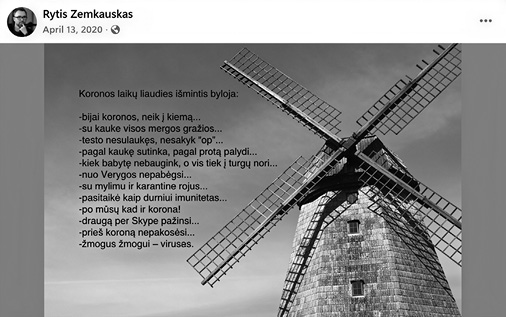
ABSTRACT. The article explores anti-paremias in Lithuanian and Latvian that reflect Covid-19 pandemic realities and people’s attitudes towards them. The term anti-paremia is perceived here as purposeful transformation of traditional paremias, i.e. proverbial phrases, proverbs, aphorisms, sententious utterances, phraseologisms, and quotations of literary origin. The study’s empirical material was collected from online written texts and images including official social advertising campaigns and anti-paremias created by individuals.
Anti-paremias here are examined based on two aspects: in accordance with types of paremia transformation (substitution of one/several words or parts of a sentence, supplementation, reduction, cross-contamination of several paremias following the classification of the Polish scientist Anna Gabryel, applied to the analysis of German anti-proverbs of the Covid-19 pandemic period); and according to semantic grouping of anti-paremias in Covid-19 pandemic narratives. Many researchers follow similar classifications, whereas this study is based specifically on Gabryel’s model.
The most common anti-paremia transformation method in both languages was substitution (35 % of the Lithuanian sample and 73 % of the Latvian sample).
Semantic group analysis revealed that human behaviour-related anti-paremias dominate in Lithuanian (47 %) whereas in Latvian vaccination-themed paremias were most frequent (57 %). This reflects the time when these anti-paremias were created. The lowest number of witty transformations were immunity-related, with only one example in Lithuanian, and none in Latvian.
KEYWORDS: anti-paremia, paremia transformations, semantic groups of anti-paremias, Covid-19 pandemic.
SANTRAUKA. Straipsnyje nagrinėjamos lietuvių ir latvių antiparemijos, liudijančios Covid-19 pandemijos realijas ir žmonių požiūrį į jas. Antiparemijos sąvoka apima tikslingas tradicinių paremijų, t. y. patarlių bei priežodžių, aforizmų, sentencijų, frazeologizmų, literatūrinių citatų, transformacijas. Tyrimo empirinė medžiaga rinkta iš internete skelbtų rašytinių tekstų ir vaizdų, įtraukiant ir oficialiose socialinės reklamos kampanijose naudotas bei individualiai sukurtas antiparemijas.
Antiparemijos nagrinėjamos dviem aspektais: pagal transformacijos tipus (vieno ar kelių žodžių arba sakinio dalių pakeitimas, papildymas, sutraukimas, kelių paremijų kontaminacija), vadovaujantis lenkų mokslininkės Annos Gabryel klasifikacija, taikyta analizuojant vokiečių antipatarles, plitusias per Covid-19 pandemiją; pagal semantinį antiparemijų grupavimą Covid-19 pandemijos naratyvuose. Daugelis tyrėjų vadovaujasi panašiomis klasifikacijomis, tačiau šiame tyrime remiamasi būtent Gabryel modeliu.
Dažniausias antiparemijų transformacijos būdas abiejose kalbose – pakeitimas (35 % lietuvių ir 73 % latvių atvejų). Semantinių grupių analizė parodė, kad lietuvių kalboje vyrauja su žmogaus elgesiu susijusios antiparemijos (47 %), o latvių kalboje dažniausios – susijusios su vakcinacija (57 %). Tai atliepia laikotarpį, kada šios antiparemijos buvo sukurtos. Mažiausiai esama šmaikščių transformacijų, susijusių su imunitetu, – tik vienas lietuviškas pavyzdys ir nė vieno latviško.
RAKTAŽODŽIAI: antiparemija, paremijų transformacijos, antiparemijų semantinės grupės, Covid-19 pandemija.
Received: 09/03/2025. Accepted: 29/04/2026
Copyright © Evija Liparte, Daiva Zavistanavičienė, 2026. Published by the Institute of Lithuanian Literature and Folklore Press. This is an Open Access article distributed under the terms of the Creative Commons Attribution License, which permits unrestricted use, distribution, and reproduction in any medium, provided the original author and source are credited.
The worldwide constraints of the pandemic caused by the so-called new Coronavirus disease (Covid-19) were notable over a three-year span (according to official WHO documents from March 11, 2020, to May 5, 2023). The official term Covid-19 changed to Corona in colloquial language and informal communication in many languages. The aforementioned period caused alterations in multiple facets of human life and endeavours, encompassing language usage as well. During the pandemic, new words were coined, giving existing terms fresh, distinct interpretations, even with witty puns. These phenomena were universal in many languages, and many scientific articles, monographs, student and doctoral theses were written about them in various languages. They were also highlighted through humorous adaptations of well-known phrases, proverbs and sayings. An important part of the traditional proverb format was maintained, and a part of its composition was replaced to acquire a humorous version with new content and purpose (Hiiemäe et al. 2021: 35). Researchers of different languages have also published their studies of anti-proverbs from the Covid-19 pandemic period (Gabryel 2022; Raji-Oyelade 2022).
The lexical semantic features and the figurative means of the pandemic period in Lithuanian and Latvian have been explored in the articles and scientific presentations by Agnė Aleksaitė, Rita Urnėžiūtė, Evija Liparte, and Dite Liepa. In addition to newly coined or recreated words, certain anti-proverbs highlighting pandemic realities have drawn the interest of linguists, though they have yet to be thoroughly examined (Aleksaitė, Urnėžiūtė 2020: 5; Aleksaitė, Urnėžiūtė 2024: 8; Liepa 2021: 165; Liparte 2022: 236, etc.).
The object of this research is anti-paremias of the pandemic period identified in Lithuanian and Latvian. The study sample comprises 100 examples, 60 examples in Lithuanian and 40 in Latvian. As the empirical material shows, the basis of transformation can imply not only a traditional proverb, but also phraseologisms, literature quotations and witty sayings. Thus, the term ‘anti-proverb’, which is more common in paremiological literature, is not used in this article. Researchers Gabryel, Raji-Oyelade, Mieder, Debak and others, who are referred to in this study, use only the term ‘anti-proverb’. The author of this term, the world’s leading authority on proverbs Wolfgang Mieder, defines anti-proverb as “parodied, twisted, or fractured proverbs that reveal humorous or satirical speech play with traditional proverbial wisdom” (2004: 28), and says that “proverbs used in an innovative way, changed and twisted until they fit the demands of our modern age” (2012: 58). They become widespread due to the huge influence of mass media and the internet, appearing very frequently in advertising, newspaper headlines, magazines, as well as in social media (Litovkina et al. 2021: V). Referring to Villers (2024: 164), anti-proverbs should not be regarded as proverb parodies. The intentions of creating anti-proverbs and anti-paremias are similar. However, the concept of anti-paremia is much wider as they aim to actualise a particular idea, depict a specific situation with sharp humour or simply create a witty effect (Zaikauskienė 2004: 135, 136; Zaikauskienė 2008: 91).
This study relies on the definition of paremias and anti-paremias used by Dalia Zaikauskienė in her doctoral dissertation Lietuvių paremijos XX–XXI amžiaus sandūroje: tradicija ir inovacija (The Lithuanian Proverbs at the Turn of the 21st Century: Tradition and Innovation) and in further publications. Anti-paremias are determined as purposeful transformations of traditional paremias, i.e. proverbial phrases, proverbs, other short sayings such as aphorisms, sententious utterances, phraseologisms, quotations of literary origin (Zaikauskienė 2010: 97; Zaikauskienė 2012: 24).
The empirical material for the study was collected from written texts and images online. It is twofold: material from official social advertising campaigns, and anti-paremias created by individuals. Anti-paremias are frequently related to particular issues or situations, inseparable from the context of use, interesting only as long as the situation they illustrate is relevant (Zaikauskienė 2012: 91, 130). Thus, the publication time of anti-paremias (year, season, month) is taken into account in this research. This is crucial for the analysis of the anti-paremias coined and used in the narrative of the Covid-19 pandemic as this period of about three years saw several waves of the virus, several periods of global restrictions (with different constraints, requirements and even different titles, for example in Lithuania the phrase ‘nationwide quarantine’ was used, and in Latvia the situation was initially the ‘special situation’ and later ‘a stay at home’ and ‘curfew’) and changes in attitudes towards the virus itself and the ways to fight it. All this is reflected in the examples collected and reviewed.
The Lithuanian sample was obtained from multiple social advertising campaigns conducted in the spring and autumn of 2020, as well as from texts created by individual authors and published on various internet portals and social networks from the spring of 2020 to the autumn of 2021. The Latvian sample was taken from social advertising campaigns in the spring of 2020 and the summer and autumn of 2021, from one journalist’s columns on a news portal, and from posts on online forums and social networks from February 2020 to February 2021.
In both countries, anti-paremias were coined at the beginning of the pandemic in order to present various restraints and recommendations to people in an attractive way. Later, after vaccination began, a similar approach was used during advertising campaigns urging people to get vaccinated, especially in Latvia.
In Lithuania, individuals created and publishing various anti-pandemic memes simply for fun and to cheer themselves and others up from the start of the pandemic.1 Two brothers, who called themselves ‘pandemworders’, Gabrielius Klimenka (doctor of Catholic theology, researcher of paranormal phenomena, writer) and Eduardas Klimenka (translator), addressed this subject in the first of their 10 articles dedicated to pandemic coinages (called “Waves of Pandemic Words”) on the bernardinai.lt portal in March 2020. More than 30 examples of anti-paremias that had been created by the addition method were selected for this research from these articles.
In April 2020, a selection of 12 anti-paremias constructed with substitution was published on Facebook (FB) by a journalist Rytis Zemkauskas (Fig. 1).
Fig. 1. Collection of Lithuanian pandemic anti-paremias called “Folk wisdom in the time of Corona”, and published on FB by journalist Rytis Zemkauskas on April 13, 2020. Screenshot on April 14, 2020 by E. Liparte
Povilas Girdenis, historian and singer, also publicised some anti-paremias or parodies of folklore and works of fiction on FB irregularly at that time. His work in the Corona narrative was more related to versed texts. Only three examples of his creation were included in this research sample.
In Latvia, only one author of individual anti-paremias can be mentioned, journalist Sandris Vanzovičs. His columns have been published once a week on the neatkariga.nra.lv news portal since November 2020. Six of his examples were chosen for this research. Other individual authors who published their work over several years on the Cālis forum cannot be identified. Their work covers more than thirty pandemic period related topics and during the #aizstājarvakcīnu witticism campaign in February 2021 on the Twitter social network.
The research methodology was based on Anna Gabryel’s article on innovative proverb transformations during the pandemic in German (2022). She analyses a corpus of 103 so-called anti-proverbs formed using TwitterAPI on March 13, 2022, i.e. employing various transformation methods for creating witty sayings from traditional proverbs. Gabryel provides a semantic and formal analysis of these anti-proverbs as separate microtexts (isolated and without a context; ibid.: 148–157), she also executes a quantitative analysis of the example corpus that she made (ibid.: 157–160).
The aim of this research is to present a comparative analysis of anti-paremias from the pandemic period according to transformation type and semantic group in Lithuanian and Latvian. This study also presents quantitative and qualitative comparisons of examples from the database with the data corpus researched by Gabryel.
To facilitate the understanding of the meanings of the paremias and anti-paremias discussed in the article for English-speaking readers who do not know Lithuanian and/or Latvian, wherever possible an original English equivalent paremia (proverb) has been provided alongside the Lithuanian and Latvian originals, although the concepts used in them often differ. For example, Latvian original proverb “Ar vienu šāvienu nošaut divus zaķus” literally means Kill two rabbits with one shot, whereas English equivalent original proverb is Kill two birds with one stone (ALSP: 241). English original proverbs are taken from multilingual collections of proverbs (GPP or ALSP). In this article, English equivalent proverbs are presented with quotation marks and a source reference, including the page number in that source.
Researchers from various fields have paid attention to anti-paremias. Paremiologists usually refer to them as anti-proverbs (see above) and distinguish different ways of creating them by analysing both structural modifications and changes in meaning. Depending on whether a certain component is replaced by another equivalent one, omitted, or added, the following structural modification types are most frequently distinguished: substitution, reduction, and supplementation (see also Zaikauskienė 2008: 86; Debak 2017: 8–9; Hrisztova-Gotthardt et al. 2009; Litovkina et al. 2021: 53). The cross-contamination of several proverbs is also possible (see also Zaikauskienė 2004: 134; Zaikauskienė 2008: 88; Billere 2007: 309; Debak 2017: 9; Komenda-Earle 2008: 171).
When specifying the types of modification and combining them with changes in meaning, even more so-called modification models (i.e., mechanisms for creating anti-proverbs) can be distinguished. Referring to Zaikauskienė (2008: 86), researchers of anti-proverbs indicate a varying number of anti-proverb creation mechanisms and refer to them with varying degrees of formalisation. In her dissertation, Zaikauskienė (2012: 90–124) distinguishes the following methods of alteration, addition or omission: phonetic, grammatical, and lexical. Modification models can also be described according to other criteria. For instance, Billere (2007: 309) mentions author-created paremias based on linguistic proverbs as one of the most widespread models (emphasising individual creativity; Komenda-Earle (2008: 172) also mentions this but does not distinguish it as a separate model).
Several Latvian linguists have studied various (semantic and structural-semantic) modifications of phraseologisms and proverbs used occasionally. When analysing the structure of such phraseologisms they also distinguished various types of replacement, addition and omission, and when studying meaning, they discussed its extensions and changes (Veisbergs 1986: 112–119; Liepa 2011: 186–188).
As already mentioned, this research is based on Gabryel’s study; therefore, an attempt was made to adopt her classification of anti-proverbs. She differentiates the following transformation types:
1) substitution of words, sentence parts or sentences;
2) supplementation;
3) reduction;
4) replacement of a homonym or narrowing of the field of meaning;
5) cross-contamination of several proverbs;
6) syntactic changes (Gabryel 2022: 146, 150–159).
In the material collected for this research, no cases of homonym changes or syntactic changes were identified. Thus, examples of supplementation according to changes in meaning are further subdivided, i.e. into cases where the addition of the text does not change the meaning of the traditional paremia, and those where demetaphorisation occurs.
1 . S u b s t i t u t i o n. From 103 examples reviewed by Gabryel, 97 are made as substitutions of traditional proverbs (ibid.: 157, 159). Many examples of substitution in analogous material in Lithuanian and Latvian were detected, i.e. 35 % in Lithuanian and 73 % in Latvian.2
Gabryel’s examples of substitution were reviewed in accordance with the number of changed elements in anti-proverbs (for example a word or part of a sentence). Her corpus is dominated by the cases of substitution of one part of a sentence (62), almost one third of the examples (32) comprise changes to two parts of a sentence, whereas there is only one example each of substitutions of three, four or five sentence parts (ibid.: 157).
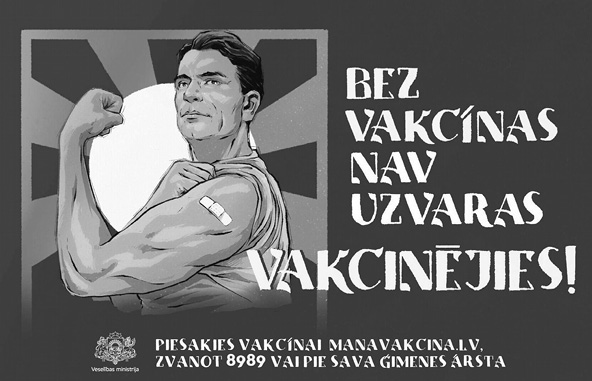
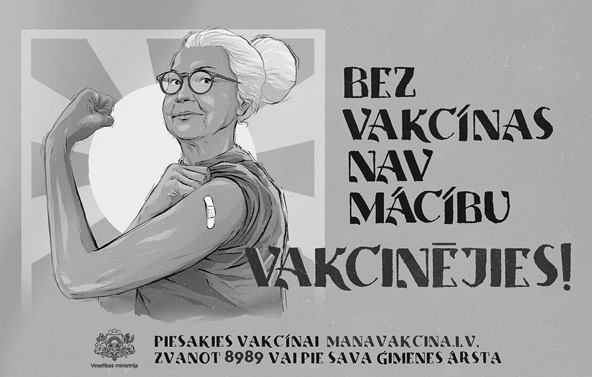
The material of this research reveals a similar picture. Most examples are with one element replaced (52 % of the Lithuanian examples of substitution, 66 % of the Latvian examples); examples with two replaced elements are also frequent (10 % in Lithuanian and 23 % in Latvian). Advertising campaign slogans have examples of one or two element substitution (examples 1–8, Table 1).
|
No |
Original anti-paremia (Latvian) with literal translation in English |
Number of changed elements |
Original paremia (Latvian) with source and literal translation to English |
English equivalent paremia with source |
|
(1) |
“Bez vakcīnas nav uzvaras” (There is no victory without a vaccine) |
1 |
“Bez cīņas nav uzvaras” (There is no victory without a fight, LSP: 47) |
“No gain without pain” (ALSP: 52) |
|
(2) |
“Bez vakcīnas nav mācību” (There is no studying without a vaccine) |
2 |
||
|
(3) |
“Bez vakcīnas nav ceļojumu” (There is no travelling without a vaccine) |
2 |
||
|
(4) |
“Bez vakcīnas nav ballīšu” (There are no parties without a vaccine) |
2 |
||
|
(5) |
“Bez vakcīnas nav teātra” (There is no theatre without a vaccine) |
2 |
||
|
(6) |
“Bez vakcīnas nav sacensību” (There are no competitions without a vaccine) |
2 |
||
|
(7) |
“Bez vakcīnas nav harmonijas” (There is no harmony without a vaccine) |
2 |
||
|
(8) |
“Bez vakcīnas nav čomu” (There are no guys without a vaccine) |
2 |
Table 1. Social advertising campaign by the Latvian Health Ministry consisting of eight posters (July 2021) [1]
(9) Lith. “Tas ne virusas, kuris nesvajoja tapti koronavirusu” (This is not a virus that does not dream of becoming a coronavirus, Urnėžiūtė 2021). Compare Lith. “Blogas kareivis, kuris nesitiki būti generolu” (He is a bad soldier if he does not expect to become a general, ELPP).
Single cases of substitution where more elements of the prototypical proverb are changed were found. In both researched languages there are anti-paremia examples in which three paremia elements were changed, for example:
(10) Lith. “Su kauke visos mergos gražios...” (Wearing a mask, all girls are pretty, [2]). Compare Lith. “Naktį visos katės pilkos”, and English equivalent proverb “All cats are alike grey in the night” (both: GPP: 361).
(11) Lat. “Skrienot no Koronas var uzkrist uz sarūsējušas naglas” (Running from corona you can fall on a rusty nail, [3]). Compare Lat. “No vilka bēg, uz lāci krīt” (Running from a wolf runs into a bear, LSP: 187; ALSP: 238), and English equivalent proverb “Out of the frying pan (and) into the fire” (ALSP: 51, 238).
In Lithuanian, one anti-paremia was identified in which four elements were changed:
(12) Lith. “Kiek babytę nebaugink, o vis tiek į turgų nori...” (No matter how long you scare grandma, she still wants to go to the market, [2]). Compare Lith. “Kaip vilką neliuobk – vis miškan žiūri” (No matter how much you feed the wolf, he still looks at the forest, GPP: 532, without English equivalent). The English equivalent proverb is found in another source: “The wolf may change his coat but not his disposition” (ALSP: 239).
It is worthwhile noting that in each of the aforementioned twelve examples, a component of an existing paremia is replaced with a different word belonging to the same grammatical category (for example a noun, verb or adjective). Moreover, Mate Debak, a scholar specialising in the semantics and pragmatics of English anti-proverbs, identified the same phenomenon in his research (Debak 2017: 8).
Some substitution anti-paremias are based on wordplay:
(13) Lith. “Bute ar nebūti?” (In an apartment or not to be, [4]). Compare Lith. “Būti ar nebūti” (English original: “To be or not to be...”, W. Shakespeare Hamlet).
According to type of transformation, this anti-paremia is a lexical substitution of one element. However, here the phonetic similarity of both words, i.e. the play on words using phonetic substitution, must be considered (Vulāne 2020: 12; Zaikauskienė 2012: 93). This anti-paremia is created employing paronomasia, a figure of speech in which a completely different meaning is created by changing only individual sounds (letters) in the word of the prototypical paremia. This method is one of the most popular ways of playing with words in several languages, for example German, Hungarian, English, French and Russian (Hrisztova-Gotthardt et al. 2009). Consequently, in this case, one word in prototypical paremia is substituted by a paronym, i.e. a very similar-sounding word that is extremely important in a specific situation, for example būti – bute, būti to be, bute in the apartment.
Another basis for wordplay is the names of significant individuals in the pandemic narrative, i.e. common words to which these personal names are related. For example:
(14) Lat. “Pēc jebkura kariņa nāk mieriņš” (After any war comes peace, [5]). Compare Lat. “Pēc tumsas nāk gaisma” (After darkness comes light, ALSP: 230), and English equivalent “The darkest hour is that before the dawn” (ALSP: 33).
One interpretation of this anti-paremia is that it is an example of lexical substitution, with two common words replaced. However, it can also be read as a play on personal names. In 2021, the Latvian Prime Minister was Krišjānis Kariņš. His surname Kariņš is a diminutive form of the word karš, war. From the current perspective, this play on words with the names of two high-ranking state officials was even clairvoyant, as Kariņš is no longer Latvian Prime Minister, and since 2023 the Speaker of Parliament has been Daiga Mieriņa, whose surname is related to the word miers, peace. Thus, example No. 14 can also be read as: After any Kariņš, here comes Mieriņa.
2 . S u p p l e m e n t a t i o n. Gabryel distinguishes only two anti-proverbs coined by the method of supplementation in the German material she collected and does not further classify them (Gabryel 2022: 158). Mieder explains that “proverb parodies which pervert the basic meaning of a given text by changing one word, perhaps are a bit more sophisticated as examples of adding comments” (2003: 6).
In the researched Lithuanian and Latvian anti-paremia sample, supplementation examples account for more than half of the total number. As already mentioned, over 30 such anti-paremias were selected from the articles of the pandemworder brothers. One of their articles is titled “Pandemword Sayings: They Will Never Sound the Same Again”, and consists of traditional sayings with their innovative interpretations in the context of the pandemic, i.e. examples of supplementation.
In this research, examples of supplementation according to changes in meaning were subdivided into those in which the addition of the text does not change the meaning of the traditional paremia, and those where demetaphorisation occurs.
O n l y S u p p l e m e n t a t i o n. Supplementation can be used to elaborate a thought, expanding it without changing its meaning. Added single words or entire comments were identified in the studied sample in 25 % of Lithuanian examples and 18 % of Latvian.
The meaning of a traditional paremia can be changed (adapted to the current situation) by adding just one word. For instance:
(15) Lith. “Mąstau, vadinasi, esu namuose” (I think, therefore I am at home, [4]). Compare Lith. “Mąstau, vadinasi, esu” (I think, therefore I am, from Latin Cogito, ergo sum, René Descartes, 1637).
Often, a comment is added to the unchanged paremia or anti-paremia, i.e. an interpretation or explanation, for example:
(16) Lith. “Kai gryčia visad švari, nebijai nė svečių – aš vis tiek bijočiau, maža ką užneš” (When the house is always clean, you are not afraid of guests coming over – I would still be afraid, they might bring something,3 [6]). Compare Lith. “Kai gryčia visad švari, nebijai nė svečių” (When the house is always clean, you are not afraid of guests coming over, ELPP).
(17) Lat. “Bez vakcīnas nav čomu – intraverta cilvēka sapnis” (There are no guys without a vaccine – an introvert’s dream, comment in the delfi.lv portal, Oct 2021). Compare Lat. “Bez vakcīnas nav čomu” (There are no guys without a vaccine; see above, Table 1).
Such a way of creating anti-paremias is very popular (Zaikauskienė 2012: 145) as
there exists a long tradition of proverb parodies – sometimes called fractured proverbs or anti-proverbs – created by adding contradictory comments to the original proverbs (Mieder 2003: 5).
S u p p l e m e n t a t i o n t h a t i n d i c a t e s d e m e t a p h o r i s a t i o n. Another group of anti-paremias created by supplementation depicts demetaphorisation – when classical paremias based on trope are comprehended almost directly (Kudirkienė 2007: 16; Zaikauskienė 2012: 43). Zaikauskienė, drawing on the terminology of foreign researchers, describes this type of semantic shift as double semantic actualisation. In this process, the direct lexical meanings of phraseological components appear to be “revived”, allowing examples to be interpreted both literally and figuratively (Zaikauskienė 2012: 134). In Latvian linguistics, other terms are employed to describe this phenomenon: literalisation or rendering literally (from the Latin litera; Veisbergs 1986: 113; Liepa 2011: 187; similarly also Komenda-Earle 2008: 172).
This research sample consists of 36 % Lithuanian and 2 % Latvian examples. All the Lithuanian anti-paremias in this group were coined by the pandemworder brothers. For instance:
(18) Lith. “Akis muilinti – taip, reikia plauti viską, kartoju – viską” (You have to soap your eyes – yes, you need to wash everything, I am repeating – everything, [6]). Compare Lith. “akis muilinti – meluoti norint apgauti, apgaudinėti” (Soap eyes – tell lies with the intention of cheating, FŽ: 23).
(19) Lat. “Ja jums nav visi mājās, tas nozīmē, ka kāds pārkāpj pašizolēšanās noteikumus” (If not everybody is at home it means somebody is violating the rules of self-isolation, FB, April 2020). Compare Lat. “Nav visi mājās – saka par garīgi slimu, nesaprātīgu personu” (Not everybody at home – about a mentally ill, silly person, LFV: 639). The English equivalent paremia is “Not playing with a full deck” (1. Not mentally sound; crazy or mentally deranged. 2. Not very bright or intelligent; dimwitted, [7]).
3 . R e d u c t i o n. Of 103 examples reviewed by Gabryel, only two are made with reductions of traditional proverbs, eliminating part of the text of a traditional paremia and making a substitution (2022: 158).
Examples of this type make up only a small part of the researched anti-paremia sample, 2 % Lithuanian and 5 % Latvian. For example:
(20) Lith. “Geri vaikai tėvų nelanko” (Good children do not visit their parents, [4]). Compare Lith. “Geri vaikai tėvų klauso, kas neklauso, valgo duoną sausą” (Good children obey their parents. Those who don’t, eat very dry bread, ELPP).4
(21) Lat. “Vakcinē ko vakcinēdams, apdomā galu” (Vaccinate what you vaccinate, think about the end; #aizstājarvakcīnu, Twitter, Feb 2021). Compare Lat. “Dari ko darīdams, apdomā galu; šuj ko šūdams, aizmet mezglu” (Do what you do but think about the end; sew what you sew but tie a knot, LSP: 54). The English equivalent proverb is “In every beginning think of the end” (ALSP: 16).
4 . C r o s s - C o n t a m i n a t i o n o f s e v e r a l p a r e m i a s. There are very few cases in the researched sample of several paremias being combined into a single sentence or saying. One such example in each of the languages studied was found:
(22) Lith. “Ateis laikas skaičiuoti viščiukus ir kapoti ministrams galvas” (The time will come to count chickens and chop ministers’ heads off; Mykolas Katkus, [8]). Compare Lith. “viščiukus skaičiuoja rudenį” (Chicken are counted in autumn, ELPP) and Lith. “galvas kapoti – bausti, šalinti iš pareigų” < “kailį kapoti – mušti, lupti” (chop heads – punish, fire from the position < chop the skin – beat, punish harshly, FŽ: 248).
(23) Lat. “Krietnā Eva nepagurusi skaidroja, ka kampaņa ar saukli ‘Bez vakcīnas nav uzvaras! Maijs, miers, darbs, vakcīna!’ aicina visus būt vienotiem, jo bez vienotas rīcības – vakcinēšanās – vīrusu uzveikt nav iespējams” (Virtuous Eva explained tirelessly that a campaign with a slogan “There is no victory without a vaccine! May, Peace, Work, Vaccine!” invites everyone to be united because without unified behaviour – vaccination – the virus cannot be conquered, [9]). Compare Lat. “Bez vakcīnas nav uzvaras!” (There is no victory without a vaccine; see above, Table 1.) and Lat. “Maijs, miers, darbs!” (May, Peace, Work! [Political slogan in the Soviet Union related to 1st May celebrations], [10]).
A similar situation – just one contaminated anti-paremia – is also present in Gabryelʼs analysis of the German material (2022: 158).
The diagram below is a concluding illustration of the distribution of all examples by transformation type in percentage (Fig. 2).
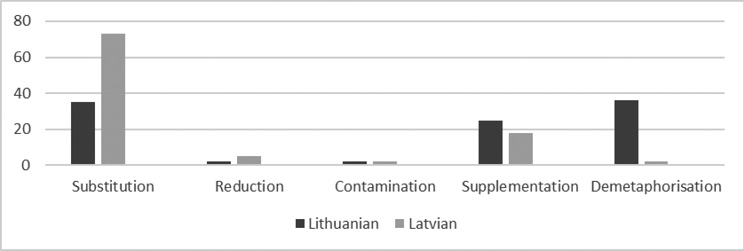
Fig. 2. Analysis of the researched anti-paremias by transformation type
A traditional paremia adaptation or transformation usually contains a word that suggests a topic, problem or situation (Zaikauskienė 2012: 137). In the discourse of the Covid-19 pandemic, these are the names of pandemic-specific realities, and they help classify the reviewed examples into semantic groups.
Gabryel distinguishes five semantic groups of anti-proverbs from the pandemic period: prevention (additional information is provided for this group, as Covid-19 prevention measures were diverse: distance, hygiene, masks, tests, vaccinations, movement restrictions, quarantine), infectiousness, vaccine advocates, vaccine opponents, other proverbs (for example related to vaccine manufacturers or the Minister of Health; Gabryel 2022: 149–150).
Aderemi Raji-Oyelade, a researcher of anti-proverbs in African languages during the Covid-19 pandemic, classifies examples into six semantic groups: lockdown, social distancing, spread and awareness, invocation, hygiene (this group comprises protective masks and hand washing) and mortality, emphasising that
the set of Covid-19 anti-proverbs collected are verbal reflections on the reality of the pandemic, the experience of lockdown, social distancing, hygiene as well as the invocation and reification of the morbid potential and presence of the virus in the community (2022: 229).
Regarding the afore-mentioned classifications, the semantic groups and subgroups identified in this research sample of Covid-19 anti-paremias are as follow:
1) vaccination;
2) human behaviour;
3) distance, restrictions;
4) coronavirus;
5) masks;
6) immunity.
1 . V a c c i n a t i o n. This is the biggest semantic group among the Latvian pandemic anti-paremias (57 %), the majority of which were coined not at the beginning of the pandemic but in 2021.5 The Lithuanian examples make up only 10 % of the researched sample. Here are some instances:
(24) Lith. “Skiepyk vėją laukuose” (Vaccinate the wind in the fields, [11]). Compare Lith. “Gaudyk vėją lauke” (Catch the wind in the field, GPP: 519, without English equivalent).
(25) Lat. “Ir jāvakcinējas, ir jāvakcinējas un ir jāvakcinējas!” (You need to vaccinate, vaccinate and vaccinate!, Prime Minister of Latvia Krišjānis Kariņš, spring/summer 2021). Compare Latv. “Mācīties, mācīties un vēlreiz mācīties!” (Learn, learn and learn [Sovietic slogan, V. I. Lenin], Ābece: 92).
2 . H u m a n b e h a v i o u r. This group comprises examples depicting peopleʼs behaviour and interactions during the pandemic. Almost half (47 %) of the Lithuanian pandemic anti-paremias in this sample belong to this semantic group. The Latvian examples make up 10 %. For instance:
(26) Lith. “Išnešti muilą – tai bus kita deficitinė prekė” (Take a soap out – it will be the next deficit item, [6]). Compare Lith. phraseologism “muilą išnešti – pabėgti, išsigelbėti” (Take a soap out – to escape, save yourself, FŽ: 432).
(27) Lith. “Draugą per Skype pažinsi” (You will get to know your friend via Skype, [2]). Compare Lith. “Draugą pažinsi nelaimėje”, and English equivalent “A friend in need is a friend indeed” (both GPP: 199).
(28) Lat. “Tauta sagājusi griķī” (People are all about buckwheat [went crazy; references out-of-control buying of buckwheat at the beginning of the pandemic], [3]). Compare Lat. Jargon “Saiet sviestā idioma – 3. Sajukt prātā” (go about butter, idiom: 3. Go crazy, [12]), and English equivalent “Go crazy” (1. To become mentally unstable. Typically used hyperbolically. 2. To act in an excited, uninhibited manner; to go wild, [13]).
(29) Lat. “Pēdējais smejas tas, kam klepojot nav jānosmok” (The one who coughs and is not doomed to suffocate laughs last, FB, 2021). Comparing: Lat. “Visgardāk smejas tas, kas smejas pēdējais”, and English equivalent proverb “He laughs best who laughs last” (both: ALSP: 69, 224).
3 . D i s t a n c e , r e s t r i c t i o n s. This is also a significant semantic group of anti-paremias from the pandemic period accounting for 26 % of the Lithuanian and 13 % of the Latvian examples. For example:
(30) Lith. “Nušluostyti kam nosį – jūs rimtai? Juk sakėm per 1 metrą vienas nuo kito!” (Wipe someone’s nose – are you serious? After all, we said within 1 metre of each other!, [6]). Compare Lith. “nosį nušluostyti – 1. pasirodyti gudresniam, vikresniam; 2. sugėdinti; 3. pamokyti, apgauti” (Wipe someone’s nose – 1. To show yourself as smarter; 2. Make somebody ashamed of himself; 3. To teach a lesson, cheat, FŽ: 462–463).
(31) Lat. “Katrs pats ir savas karantīnas kalējs” (Every man is the smith of his own quarantine, Twitter, Dec 2020). Compare Lat. “Katrs pats savas laimes kalējs” (Every man is the smith of his own fortune, LSP: 97, ALSP: 194), and English equivalent proverb “Every man is the smith of his own fortune” (ALSP: 43).
4 . C o r o n a v i r u s. Twelve percent of the Lithuanian anti-paremias and 18 % of the Latvian examined in this article are related to Covid-19 itself (the disease and the virus that causes it). Here are a few instances:
(32) Lith. “Prieš koroną nepakosėsi” (You cannot cough against corona, [2]). Compare Lith. “Prieš vėją nepapūsi”, and English equivalent proverbs “Puff not against the wind” (both: GPP: 520) and “Do not kick against the pricks” (ALSP: 68).
(33) Lat. “šņāca kā ar COVIDu slima lokomotīve” (Wheezes like a locomotive sick with Covid, [3]). Compare Lat. phraseologism “Kā lokomotīve – Saka, ja kāds stipri šņāc vai elš” (Like a locomotive – it is said when a person wheezes or breathes hard, LFV: 611).
5 . M a s k s . This is one of the smallest semantic groups of anti-proverbs reviewed in this research. It includes 3 % of the Lithuanian and 2 % of the Latvian examples.
(34) Lith. “Pagal kaukę sutinka, pagal protą palydi...” (One is met according to the mask but accompanied according to the mind, [2]). Compare Lith. “Pagal rūbus sutinka, pagal protą palydi” (One is met according to the clothing but accompanied according to the mind, GPP: 433, without English example).
(35) Lat. “Divi zaķi ar vienu masku” (Two rabbits with one mask, [14]).6 Compare Lat. “Nošaut divus zaķus ar vienu šāvienu” (Kill two rabbits with one shot, LFV: 1380; ALSP: 241), and English equivalent proverb “Kill two birds with one stone” (ALSP: 68).
6 . I m m u n i t y. This is the smallest of the semantic groups in the collected anti-paremia sample. Only one example was found in Lithuanian, and none in Latvian.
(36) Lith. “Pasitaikė kaip durniui imunitetas...” (It happened like immunity for a fool, [2]). Comparing: Lith. “Pasitaikė kaip aklai vištai grūdas” (It happened like a grain for a blind chicken, GPP: 547, without English example), and English equivalent proverb “Every dog has his day” (ALSP: 240).
Generalising the distribution of anti-paremias into semantic groups, the following diagram reflects the results obtained (Fig. 3).
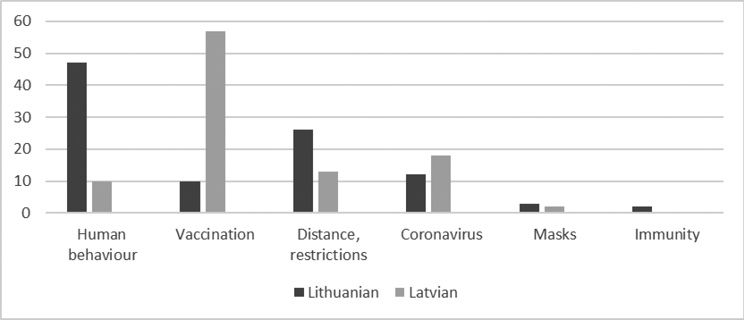
Fig. 3. Analysis of the researched anti-paremias by semantic group
At the beginning of the pandemic in Lithuania, individuals created anti-paremias specifically to make a joke and to brighten the spirits. There was no such thing in Latvia.
In both countries, paremia transformations (proverbs, phraseological expressions, well-known quotations) already started in spring 2020, i.e. the beginning of the pandemic, and were used in billboard campaigns and posters.
No completely identical anti-paremias from the same prototypical paremias were found in the studied languages.
In one instance, anti-paremias are formed from the same prototypical paremia by incorporating different comments using supplementation with demetaphorisation:
(37) Lith. “Ne visi namie – aj aj aj, o juk karantinas” (Not everybody at home – ai ai ai there is quarantine, [6]). Compare Lith. phraseologism “ne visi namie – pusprotis, kvailokas” (Not everybody at home – a silly person, FŽ: 445).
For a Latvian example see above No. 19.
Both languages also use Descartes’ 17th-century maxim “I think, therefore I am” as a prototypical paremia, although it is coined in different ways of transformation, during different periods of the pandemic, and both anti-paremias also belong to different semantic groups7:
(38) Lat. “Es domāju, tātad vakcinēju” (I think therefore I vaccinate, #aizstājarvakcīnu, Twitter, Feb 2021).
For a Lithuanian example see above: No. 15.
This once again shows that different things were relevant to people at different times of the pandemic (at the beginning restrictions on movement, in the second year vaccination). Anti-proverbs with different semantics were coined to emphasise this among other linguistic innovations.
Based on the classification of paremia transformations, substitution is indicated as the most dominant type across both languages studied. This transformation, which involves replacing elements of traditional proverbs with altered or opposing content, accounts for a substantial 35 % of the Lithuanian sample and an even more pronounced 73 % of the Latvian sample. This reveals a strong tendency in both languages – particularly in Latvian – to modify established paremias creatively through substitution, perhaps reflecting evolving social attitudes or a desire for rhetorical impact. In contrast, the least represented category in both languages was contamination, where elements from multiple paremias are combined into a single new unit. This form of transformation constituted merely 2 % of the sample in each language, suggesting that such complex intertextual play is relatively rare or less culturally embedded.
Further semantic analysis of the anti-paremias showed notable thematic distinction between the two languages. In Lithuanian, the majority of anti-paremias was focused on aspects of human behaviour, highlighting moral, social, or psychological observations. However, the Latvian sample featured a predominance of anti-paremias related to vaccination, probably reflecting specific societal discourses or public health concerns prevalent at the time these expressions were created. This difference underscores the influence of temporal and cultural contexts in shaping the thematic direction of paremic transformations.
Ābece – Oto Ņesterovs, Jāzeps Osmanis. Ābece 1. klasei, Rīga, 1978.
ALSP – Angļu un latviešu sakāmvārdi un parunas = English & Latvian Proverbs and Sayings, sast. Gunta Štrauhmane, Rīga: Zvaigzne ABC, 2018.
ELPP – Lietuvių patarlės ir priežodžiai, 2019–2025 (https://archyvas.llti.lt/eLPP/).
FB – Facebook (www.facebook.com).
FŽ – Frazeologijos žodynas, Vilnius: Lietuvių kalbos institutas, 2001.
GPP – Kazys Grigas. Patarlių paralelės, Vilnius: Vaga, 1987.
LFV – Alīse Laua, Aija Ezeriņa, Silvija Veinberga. Latviešu frazeoloģijas vārdnīca, Rīga: Avots, 2000.
LSP – Latviešu sakāmvārdi un parunas, Rīga: Valters un Rapa, 1955.
Twitter – Twitter challenge #aizstājarvakcīnu, Feb 2021 (www.twitter.com).
[1] Social advertising campaign by the Latvian Health Ministry consisting of eight posters (https://tv3.lv/zinas/latvija/sabiedriba/bez-vakcinas-nav-uzvaras-veselibas-ministrija-sakusi-reklamas-kampanu-vakcinacijas-pret-covid-19-sekmesanai/).
[2] Rytis Zemkauskas, a post in social media network FB, 13 April 2020 (https://www.facebook.com/Rytis.Zemkauskas/?locale=lt_LT).
[3] Cālis (Chicken) forum delfi.lv, March 2020 (https://calis.delfi.lv/forums/tema/18404049-korona-viruss-3dala-tuvojas/).
[4] Lithuanian Billboard campaign, Lithuanian Radio and Television, Spring 2020 (https://www.lrt.lt/naujienos/gyvenimas/13/1159063/bute-ar-nebuti-tokiais-kurybingais-sukiais-vilnius-ragins-lietuvius-likti-namuose).
[5] Latvian Billboard campaign, Autumn 2021, a post in FB by Latvian journalist Anda Leiškalne, 2 September 2021 (https://www.facebook.com/anda.leiskalne).
[6] Eduardas Klimenka, Gabrielius Klimenka, 5 April 2020 (https://www.bernardinai.lt/2020-04-05-pandemzodiniai-posakiai-jie-niekad-nebeskambes-kaip-anksciau/).
[7] Farlex Dictionary of Idioms (https://idioms.thefreedictionary.com/not+playing+with+a+full+deck).
[8] „Komunikacijos specialistas: pasibaigus pandemijai, galėsime skaičiuoti viščiukus ir kapoti galvas ministrams“, LRT Forumas, 12 October 2021 (https://www.lrt.lt/naujienos/lietuvoje/2/1518239/komunikacijos-specialistas-pasibaigus-pandemijai-galesime-skaiciuoti-visciukus-ir-kapoti-galvas-ministrams).
[9] Sandris Vanzovičs, 17 July 2021 (https://neatkariga.nra.lv/lasamgabali/352566-mes-zinam-kur-jus-nedziedajat-saja-nedela).
[10] Toms Treibergs, “Miers, darbs, maijs – preses fotogrāfa Dominika Gedzjuna tvertā kādreizējā Latvija”, Lsm.lv, 6 January 2022 (https://www.lsm.lv/raksts/kultura/maksla/miers-darbs-maijs-preses-fotografa-dominika-gedzjuna-tverta-kadreizeja-latvija.a437559/).
[11] Povilas Girdenis, single posts in social media network FB, autumn 2021 (https://www.facebook.com/povilas.girdenis).
[12] Tēzaurs, sast. Andrejs Spektors, Rīga: LU MII Mākslīgā intelekta laboratorija, 2009–2025 (https://tezaurs.lv).
[13] Farlex Dictionary of Idioms (https://idioms.thefreedictionary.com/go+crazy).
[14] Health Ministry of the Republic of Latvia (https://esparveselibu.lv/kampana/nelauj-slimibamsevi-nokert).
Aleksaitė Agnė, Urnėžiūtė Rita 2020. „Pandemijos kalba ir mes“, Gimtoji kalba 11 (641), p. 3–7.
Aleksaitė Agnė, Urnėžiūtė Rita 2024. “Creative Responses to Covid-19 Pandemic in Lithuania: From Neologisms to Reinterpretation of Folklore”, Bulletin of Taras Shevchenko National University of Kyiv. Literary Studies. Linguistics. Folklore Studies 2 (36), p. 5–9 (https://philology-journal.com/index.php/journal/article/view/229).
Billere Olga 2007. “Antisakāmvārdi mūsdienu valodā: jaunveidojumu modeļi un to pētīšanas problēmas”, Vārds un tā pētīšanas aspekti 11, p. 305–311.
Debak Mate 2017. Semantics and Pragmatics of Anti-proverbs: graduation thesis, Zagreb: University of Zagreb.
Gabryel Anna 2022. “Der Klügere impft nach – innovative Transformationen von Sprichwörtern während der SARS-COV-2-Pandemie”, Heteroglossia (13) Studia kulturoznawczofilologiczne, p. 143–164 (https://doi.org/10.34864/heteroglossia.issn.2084-1302.nr13.art8).
Hiiemäe Reet, Kalda Mare, Kõiva Mare, Voolaid Piret 2021. “Vernacular Reactions to COVID-19 in Estonia: Crisis Folklore and Coping”, Folklore 82, p. 21–52 (https://doi.org/10.7592/FEJF2021.82.estonia).
Hrisztova-Gotthardt Hrisztalina, Litovkina Anna, Barta Péter, Vargha Katalin 2009. “Paronomasie oder wie ein Sprichwort zum Antisprichwort wird”, Acta Ethnographica Hungarica 54 (1), p. 77–94 (https://doi.org/10.1556/AEthn.54.2009.1.7).
Komenda-Earle Barbara 2008. “Sprichwörter und Antisprichwörter: Kultur und (Anti)Kultur?”, Colloquia germanica stetinensia 16, p. 169–179.
Kudirkienė Lilija 2007. „Patarlės interpretacija. Diachroninis aspektas“, Tautosakos darbai 33, p. 13–25.
Liepa Dite 2011. Latvijas preses valoda, Rīga: LU Latviešu valodas institūts.
Liepa Dite 2021. “Sabiedrības lingvistiskā jaunrade Covid 19 pandēmijas laikā: valodas izteiksmes līdzekļu raksturojums”, in: Valoda – 2021. Valoda dažādu kultūru kontekstā. XXXI Zinātnisko rakstu krājums, Daugavpils: DU, p. 158–167.
Liparte Evija 2022. “Tiger, Louse, Cow, and so on: About the Animalisation of COVID-19”, Studii şi cercetări de onomastică şi lexicologie (SCOL) 15 (1–2), p. 222–243 (https://www.revistascol.ro/images/site_ro/2022/14_liparte.pdf).
Litovkina Anna T. et al. 2021. Anti-Proverbs in Five Languages. Structural Features and Verbal Humor Devices, Cham: Palgrave Macmillan (https://doi.org/10.1007/978-3-030-89062-9).
Mieder Wolfgang 2000. Aphorismen, Sprichwörter, Zitate: von Goethe und Schiller bis Victor Klemperer, Bern, Berlin, Bruxelles, Frankfurt am Main, New York, Oxford, Wien: Lang.
Mieder Wolfgang 2003. Wisecracks! Fractured Proverbs, Shelburne, Vermont: The New England Press, Inc.
Mieder Wolfgang 2004. Proverbs: A Handbook, London: Greenwood Press.
Mieder Wolfgang 2012. Proverbs Are Never Out of Season: Popular Wisdom in the Modern Age, New York, Washington, D.C. Baltimore, Bern, Frankfurt, Berlin, Brussels, Vienna, Oxford: Peter Lang.
Mieder Wolfgang 2016. Tradition and Innovation in Folk Literature, New York: Routledge.
Racėnaitė Radvilė 2024. “ʻGood Children do not Visit Their Parentsʼ. Proverbs and Social Advertising during the Covid-19 Outbreak in Lithuania”, in: International Conference “Small Genres of Folklore: Local Contexts and Comparative parallels” In Honour of the 100th Anniversary of Kazys Grigas; Abstracts, Vilnius: Institute of Lithuanian Literature and Folklore, p. 35.
Raji-Oyelade Aderemi 2022. “COVID-19 (Post)Proverbials: Twisting the Word against the Virus”, Proverbium 39, p. 224–244.
Urnėžiūtė Rita 2021. „Metų žodžio ir Metų posakio rinkimų užkulisiai, arba kalbinė kūryba kaip atsakas į pasikeitusį gyvenimą“, alfa.lt, 22 Jan (https://www.alfa.lt/lietuva/metu-zodzio-ir-metu-posakio-rinkimu-uzkulisiai-arba-kalbine-kuryba-kaip-atsakas-i-pasikeitusi-gyvenima/-50436611/).
Veisbergs Andrejs 1986. “Frazeoloģismu okazionāla lietošana latviešu valodā”, Latviešu valodas kultūras jautājumi 22, p. 111–122.
Villers Damien 2024. “Definition Matters: The Pitfalls Of Proverb Studies”, Proverbium 41, p. 154–173 (https://doi.org/ 10.29162/pv.41.1.556).
Vulāne Anna 2020. “Vai ežagata ir elektroniskā žagata?”, Valodas prakse: vērojumi un ieteikumi 15, p. 5–19.
Zaikauskienė Dalia 2004. „Nauji metai – nauji lapai. Šiuolaikinės patarlių raidos tendencijos“, Tautosakos darbai 21 (28), p. 127–136.
Zaikauskienė Dalia 2008. „Formos ir turinio pokyčiai tradicinių lietuvių patarlių perdirbiniuose“, Tautosakos darbai 35, p. 84–93.
Zaikauskienė Dalia 2010. „Lietuvių paremijų funkcijos. Тeorinės pastabos“, Tautosakos darbai 40, p. 97–107.
Zaikauskienė Dalia 2012. Lietuvių paremijos XX–XXI a. sandūroje: tradicija ir inovacija: daktaro disertacija, Vilnius: Vilniaus universitetas
Zaikauskienė Dalia 2014. „Gyvoji paremijų vartosena elektroniniame diskurse: interneto komentarai“, Tautosakos darbai 47, p. 69–91.
1 Parody, satire and the display of wit are also written about by Mieder 2016: XII; Zaikauskienė 2004: 135; Zaikauskienė 2012: 144, etc.
2 This corresponds to Zaikauskienė’s research conclusions on anti-paremias in Lithuanian, the majority of which are coined by the method of lexical substitution (Zaikauskienė 2012: 197; Zaikauskienė 2014: 73).
3 Here and in the further examples expanded is used as in the original. In their list of anti-paremias the pandemworder brothers provide a traditional proverb in bold followed by their coined commentary on that proverb in normal font.
4 On this anti-paremia and its transformations during the Covid-19 outbreak in Lithuania see also: Aleksaitė, Urnėžiūtė 2020: 5; Racėnaitė 2024.
5 It is worth noting that a challenge was held on Twitter for several days in February 2021 with the tag #aizstājarvakcīnu, “replace the word with ‘vaccine’”. In addition to several hundred titles of various films, books, songs, fragments of popular poems in which individual words are replaced by the word vaccine, several anti-paremias were also found. These examples were created by the substitution of one or more words.
6 About this billboard campaign see [14], about the anti-paremias see also Liparte 2022: 236.
7 Anti-paremias have been created for Descartes’ maxim in various languages since the 18th century (see Mieder 2000: 247).