
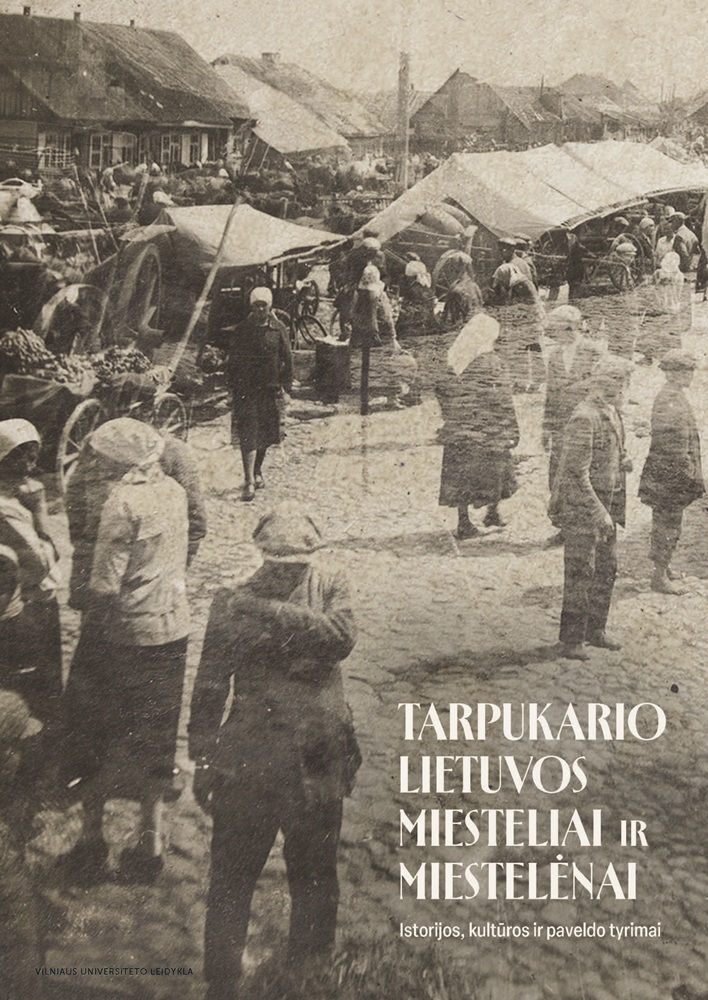
This article is of importance for the research of Kražiai, a small-sized town, and the issues of the architecture of small Lithuanian towns. Primarily, this article challenges the widespread claim that Kražiai was completely destroyed in 1941 by a massive fire caused by military action. Research in situ, while adhering to the perspective of an architect, allows identifying a sizable number of residential houses in Kražiai built before the outbreak of WW2. It is of importance to note that, even, in the afterwar years, such houses were being built by following prewar architecture and spacing traditions. Such circumstances pose difficulties in identifying the period of the construction of specific buildings – and yet they have contributed to the continuity of the traditional skylines of small-sized towns, which were later significantly modified by the Soviet and kolkhoz construction ideologies. In addition, on the grounds of the case of Kražiai, the article suggests a potential typology of the architecture of residential houses of the interwar years. A question is raised regarding the importance of preservation of such architecture.

This work is licensed under a Creative Commons Attribution 4.0 International License.