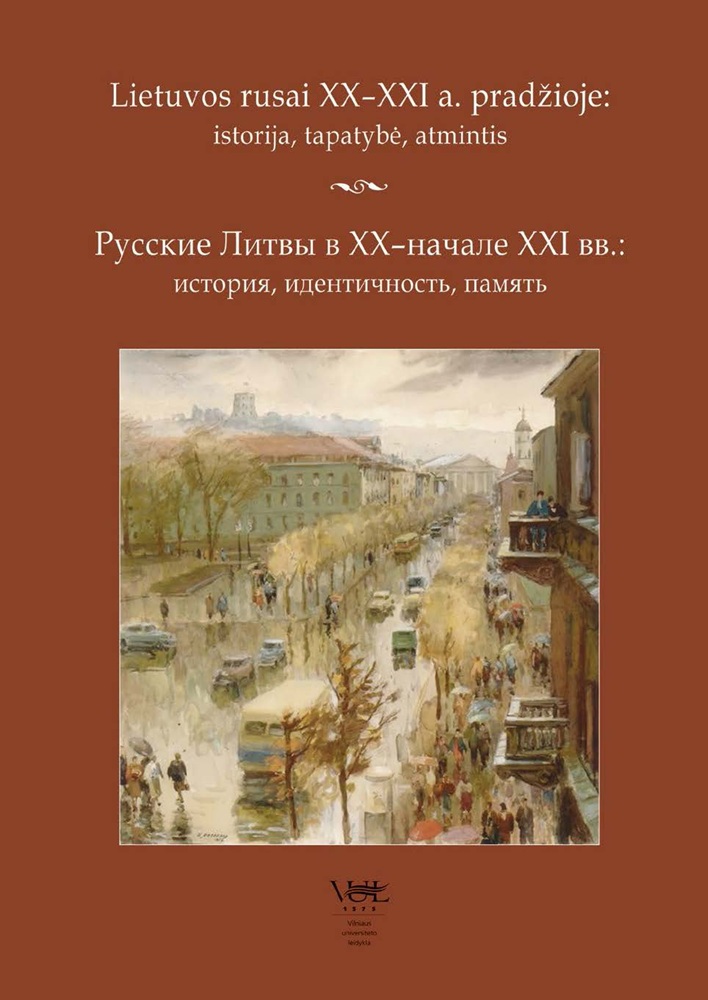
Russians in Lithuania constitute an important, complex, and intriguing subject. It brings together three major themes: Russians as a community, Russia as a state and cultural sphere, and the influence of Russian culture in Lithuania (and in Europe more broadly). These phenomena are closely connected, yet not identical. The primary object of analysis in the book “Russians in Lithuania in the Late 20th and Early 21st Century: History, Identity, Memory” is the Russian community in Lithuania. Four scholars representing different disciplines - historians Andrius Marcinkevičius and Grigorijus Potašenko, literary scholar Pavel Lavrinec, and sociologist Monika Frėjutė-Rakauskienė - examine the factors shaping Russian adaptation in Lithuania in the late 20th and early 21st centuries, as well as literature, postwar migration, identity, and memory. The book offers a renewed and substantially expanded analysis of the development of Russian identity in Lithuania and its historical memory in the late 20th and early 21st centuries. It highlights links both to the traditions of the Grand Duchy of Lithuania and to official and alternative identities during the Soviet period, as well as transformations of Russian identity in Lithuania after 1990. To date, no comparable systematic study focusing on these emerging themes and challenges of Lithuania’s Russian community has been undertaken in the country.
Edited by Grigorijus Potašenko, Pavel Lavrinec, Andrius Marcinkevičius