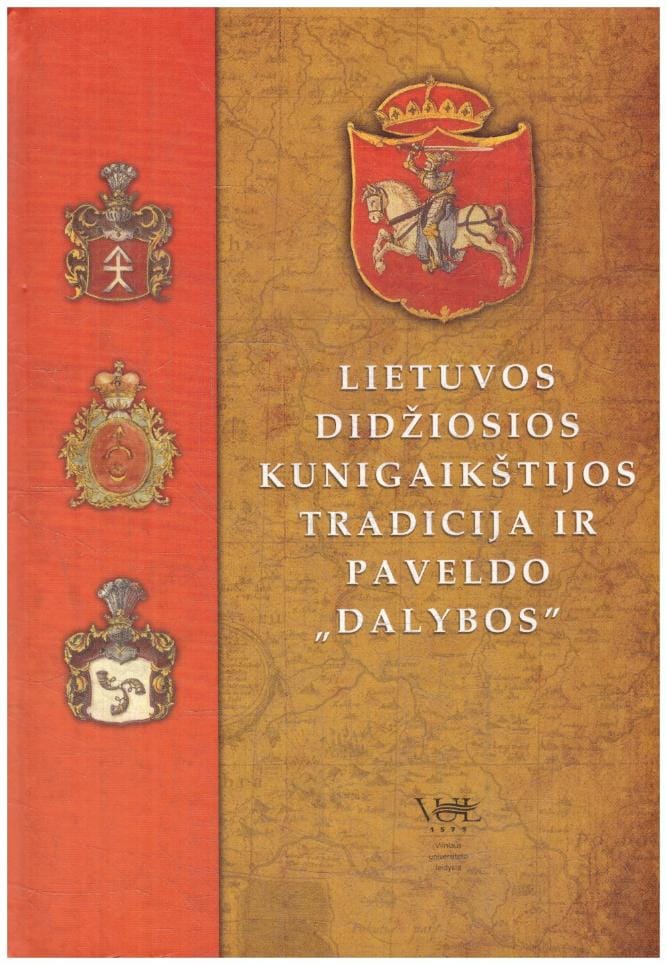
This collection of articles examines stereotypical images inherited from traditional historiographies, identities shaped by the traditions of coexistence in the Grand Duchy of Lithuania, and processes of integration. It also explores how the identities of modern nations and Lithuania’s ethnic groups emerged and developed through interaction with diverse ethnic, linguistic, and confessional communities and cultures.The volume is divided into three sections. The first addresses the “division” of the heritage of the Grand Duchy of Lithuania in Lithuanian, Polish, Belarusian, and Russian historiographies, as well as interpretations of the Grand Duchy of Lithuania as an empire. The second section brings together contributions by E. Gudavičius, Z. Norkus, D. Katz, G. Kirkienė, and S. Temčinas, which explore new issues in the history of the Grand Duchy of Lithuania, including Lithuanian national self-awareness in the fourteenth century; the concept of the Grand Duchy of Lithuania as an empire; religious identities in the Slavic lands from the fourteenth to the eighteenth centuries; the integration of Orthodox Christians into the society of the Grand Duchy of Lithuania in the fifteenth and sixteenth centuries; and representations of the Grand Duchy of Lithuania in Jewish tradition.The third section is devoted to an analysis of the legacy of the Grand Duchy of Lithuania in the identities of modern states, nations, and ethnic minorities. This publication is a part of a project “The “Division” of the Heritage of the Grand Duchy of Lithuania. The Tradition of the Grand Duchy of Lithuania: Identities of Modern States, Nations, and Ethnic Minorities in Historical Contexts”.
Edited by Alfredas Bumblauskas, Šarūnas Liekis, Grigorijus Potašenko